
Official statement
Other statements from this video 20 ▾
- □ Faut-il vraiment bloquer les traductions automatiques par IA de votre site en noindex ?
- □ Les recherches site: polluent-elles vos données Search Console ?
- □ Pourquoi Google vous demande d'ignorer les scores de PageSpeed Insights ?
- □ Faut-il vraiment arrêter d'optimiser les Core Web Vitals à tout prix ?
- □ Faut-il se méfier d'un domaine expiré racheté ?
- □ L'IA peut-elle vraiment produire du contenu SEO de qualité avec une simple relecture humaine ?
- □ La traduction automatique peut-elle vraiment pénaliser votre classement SEO ?
- □ Les liens d'affiliation pénalisent-ils vraiment le référencement de vos pages ?
- □ Faut-il vraiment réparer tous les backlinks cassés pointant vers votre site ?
- □ NextJS impose-t-il vraiment des bonnes pratiques SEO spécifiques ?
- □ Peut-on canonicaliser des pages à 93% identiques sans risque pour son SEO ?
- □ Faut-il rediriger ou désactiver un sous-domaine SEO non utilisé ?
- □ Faut-il vraiment faire correspondre le titre et le H1 d'une page ?
- □ Le contenu localisé échappe-t-il vraiment à la pénalité pour duplicate content ?
- □ Pourquoi Google déconseille-t-il d'utiliser les requêtes site: pour vérifier l'indexation ?
- □ Pourquoi un bon classement ne garantit-il pas un CTR élevé sur Google ?
- □ Les erreurs JavaScript dans la console impactent-elles vraiment le référencement de votre site ?
- □ Pourquoi afficher toutes les variantes produits à Googlebot peut-il détruire votre indexation ?
- □ Faut-il vraiment une page dédiée par vidéo pour ranker dans les résultats enrichis ?
- □ La syndication de contenu est-elle un pari risqué pour votre visibilité organique ?
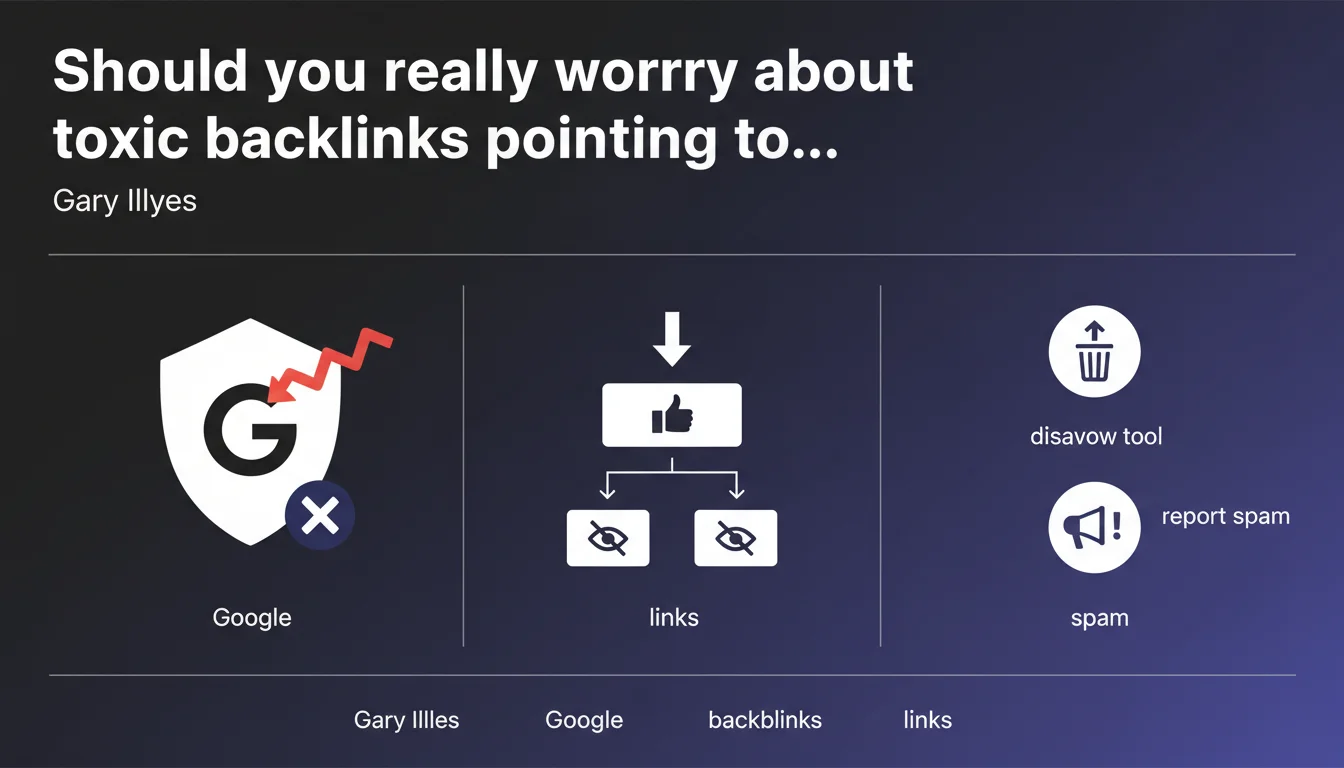
Google claims to automatically ignore irrelevant or toxic links pointing to a site. The search engine recommends not wasting time monitoring these questionable backlinks, except in exceptional situations requiring the disavow tool. Most audits focused on cleaning up link profiles would therefore be unnecessary.
What you need to understand
What does it actually mean to "ignore" a toxic link?
When Google says ignore a link, it means that link is not factored into the PageRank calculation or the evaluation of the target site's relevance. The engine detects artificial, spam, or irrelevant linking patterns and neutralizes them automatically.
Concretely, these links don't help you — but according to Gary Illyes, they don't penalize you either. Google distinguishes between ignored links (filtered silently) and manual actions, which involve active sanctions.
Why does Google keep emphasizing this recommendation?
Because SEOs spend considerable time auditing and cleaning link profiles that, in 99% of cases, have no negative impact. Google wants to reduce the use of the disavow tool, which is often misused.
This statement reflects Google's recurring messaging over the years: algorithms are robust enough to sort things out. The underlying message? Focus your efforts on more profitable levers.
When should you still take action?
Gary Illyes mentions two scenarios: using the disavow tool if necessary, and reporting spam. "If necessary" remains vague, but history shows this mainly concerns sites that have received manual action for artificial links.
Spam reporting, on the other hand, targets massive negative link attacks or spam networks that Google detects too late. In other words: exceptional cases.
- Google automatically ignores the vast majority of irrelevant or spam links pointing to a site
- The disavow tool remains available but is rarely necessary for most sites
- Toxic links are not synonymous with automatic penalties — Google filters them without taking negative action against the target site
- Time spent on link profile cleanup would be better invested in content creation and acquiring quality links
- Cases justifying manual action (disavow, reporting) mainly involve manual actions or massive spam attacks
SEO Expert opinion
Is this statement consistent with observed practices?
Yes and no. In practice, we do see that many sites with objectively questionable link profiles perform very well in the SERPs. Google really does seem capable of filtering out the noise. But — and this is where it gets tricky — some sites see their rankings stagnate or drop after receiving waves of spam links.
Is this correlation or causation? Hard to prove. [To verify] Google publishes no data on the false positive rate of its spam filters. In other words: how many legitimate links are ignored by mistake, and how many toxic links slip through the cracks?
What nuances should we add to this claim?
The phrasing "very effective at ignoring" remains vague. Very effective means what? 95%? 99.9%? And more importantly, effective in what contexts? A niche site with 200 backlinks doesn't have the same profile as an e-commerce site with 500,000 links.
Let's be honest: Gary Illyes is probably talking about the majority of standard cases. But sites with a history of aggressive link building, or those victims of targeted negative SEO, may not fall into this "general" category. The disavow tool exists for a reason.
In what cases does this rule not apply?
First case: you've received a manual action for artificial links. Then ignoring the problem won't help — you need to clean up, disavow, and request reconsideration. Google explicitly states this.
Second case: you notice a sudden drop in organic traffic correlated with the appearance of thousands of spam links in a few days. Even if Google "ignores" these links in theory, quick action via disavow can be a precautionary measure. It's rare, but not unheard of.
Practical impact and recommendations
What should you actually do with this information?
Stop panicking every time an SEO tool alerts you to dozens of "toxic links." These tools use proprietary metrics (Trust Flow, Domain Authority…) that don't necessarily reflect Google's view. A link "toxic" according to Ahrefs or SEMrush isn't necessarily problematic for Google.
Focus your efforts on acquiring quality links rather than compulsive cleanup. Create content that naturally deserves backlinks, invest in press relations, link baiting, and editorial partnerships. It's more profitable.
What mistakes should you absolutely avoid?
Don't disavow links without manually verifying their nature. Many SEOs use the disavow tool like a vacuum cleaner for anything that looks suspicious, and end up neutralizing perfectly legitimate links — sometimes even editorial links earned through hard work.
Another mistake: believing a competitor can seriously harm you by buying thousands of spam links pointing to your site. Google has repeated: negative SEO through backlinks is extremely difficult to pull off thanks to automatic filters. Unless it's an ultra-targeted and sophisticated attack, you have nothing to fear.
How do you verify your site doesn't need cleanup?
Check Search Console: do you have a manual action notified? If not, you're probably clean. Check the evolution of your organic traffic over 6-12 months: a sudden unexplained drop may warrant a link profile audit.
But in 90% of cases, if your rankings are stable or growing, and you've never aggressively practiced black hat techniques, you have no reason to touch the disavow tool.
- Check Search Console to detect any potential manual actions on your site
- Only disavow links if you have a documented reason to do so (manual action, proven negative SEO)
- Focus your budget and time on acquiring quality backlinks rather than cleanup
- Ignore "toxic links" alerts from third-party tools — they massively overestimate real risk
- If you've historically practiced aggressive link building, do a manual audit before disavowing anything
- Monitor the evolution of your organic traffic: a drop correlated with massive spam links appearing warrants investigation
In summary: do nothing unless you have a manual action or tangible proof of negative impact. Google manages filtering toxic links far better than any third-party tool. Your time is more valuable elsewhere.
These optimizations and link profile audits can however prove complex to conduct alone, especially if your backlink history is murky or you have doubts about your profile's health. In that case, calling on a specialized SEO agency can provide expert insight and personalized support to secure your strategy without risk of missteps.
❓ Frequently Asked Questions
Dois-je utiliser l'outil de désaveu si des outils SEO me signalent des liens toxiques ?
Un concurrent peut-il nuire à mon site en achetant des milliers de liens spam vers mes pages ?
Comment savoir si mes liens sont vraiment problématiques pour Google ?
Google ignore-t-il vraiment tous les liens toxiques sans exception ?
Puis-je faire plus de mal que de bien en désavouant des liens par précaution ?
🎥 From the same video 20
Other SEO insights extracted from this same Google Search Central video · published on 13/06/2024
🎥 Watch the full video on YouTube →
💬 Comments (0)
Be the first to comment.