
Official statement
Other statements from this video 16 ▾
- □ Les Google Search Essentials suffisent-ils vraiment pour bien se positionner dans Google ?
- □ Le contenu « centré sur l'utilisateur » est-il vraiment le critère de classement que Google prétend ?
- □ Le Trust est-il vraiment le pilier central de l'E-E-A-T selon Google ?
- □ L'expérience de première main est-elle devenue un critère de ranking incontournable ?
- □ L'expertise du créateur de contenu est-elle vraiment un critère de classement déterminant ?
- □ L'autorité thématique suffit-elle à se positionner comme source de référence aux yeux de Google ?
- □ Pourquoi Google insiste-t-il autant sur les fuseaux horaires dans les données structurées de dates ?
- □ Faut-il vraiment modifier la date de publication après chaque mise à jour d'article ?
- □ Faut-il vraiment supprimer toutes les dates secondaires d'une page pour optimiser son SEO ?
- □ Google se fiche-t-il vraiment de votre structure éditoriale pour les actualités récurrentes ?
- □ Faut-il bannir les logos et filigranes de vos images pour améliorer votre SEO ?
- □ Google News : est-ce vraiment automatique ou existe-t-il des critères cachés ?
- □ Pourquoi Google News impose-t-il une transparence totale sur l'identité des auteurs ?
- □ Pourquoi Google exige-t-il que le contenu éditorial prime sur la publicité ?
- □ Les pop-ups et publicités tuent-elles vraiment votre référencement ?
- □ Comment éviter que Google confonde votre paywall avec du cloaking ?
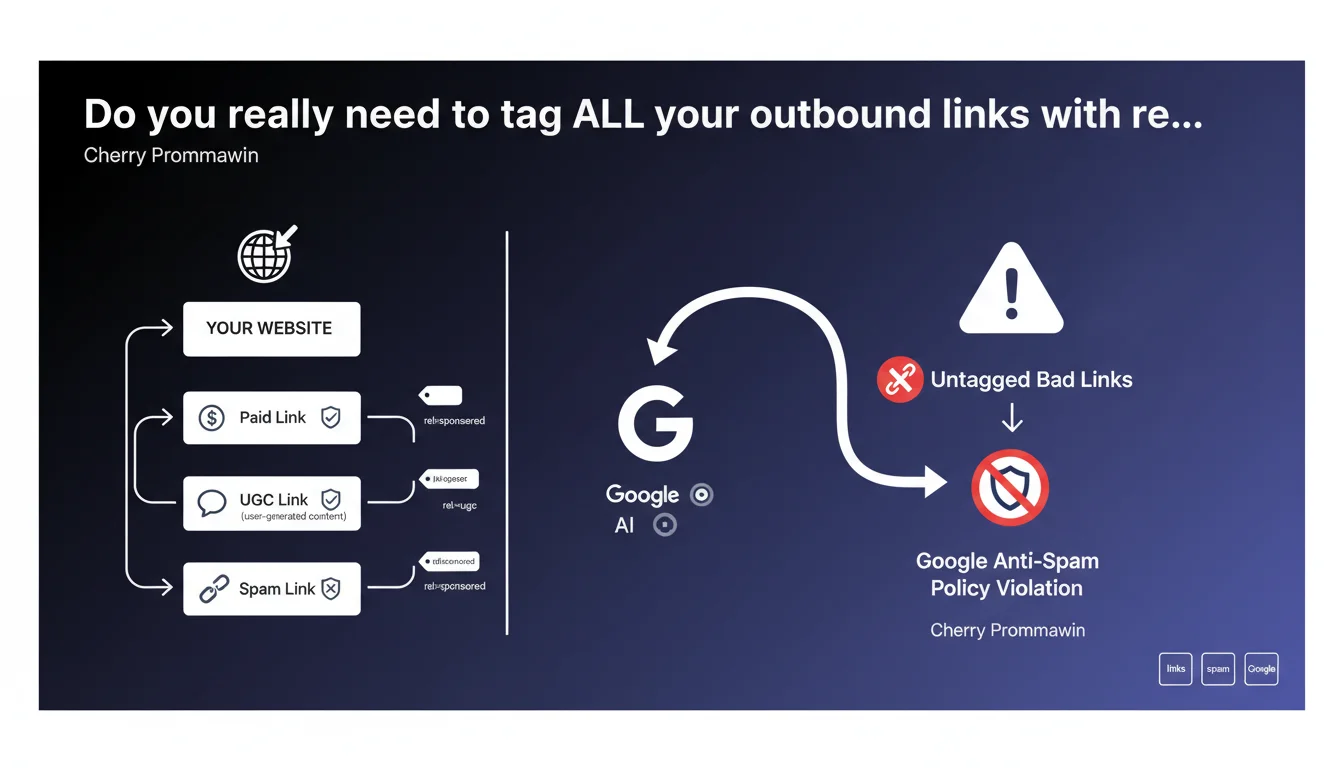
Google now explicitly requires the use of rel="sponsored" attributes for paid links and rel="ugc" for user-generated content. Failing to qualify these links can constitute a violation of their anti-spam policies, with serious consequences. The message is clear: any link that isn't editorial must be labeled.
What you need to understand
Why does Google insist so much on these link attributes?
Google wants to distinguish natural editorial links from those that are paid or generated by third parties. The rel="sponsored" and rel="ugc" attributes allow the engine to adjust its algorithm accordingly — particularly to prevent purchased links or user spam from manipulating PageRank.
Historically, only nofollow existed to qualify these links. Since September 2019, Google introduced these two new values to add more granularity. What was once optional has now become a clearly stated obligation in their guidelines.
What types of links are subject to this requirement?
Sponsored or paid links — whether they're paid partnerships, sponsored articles, advertising placements, or commercial exchanges — must carry the rel="sponsored" attribute. No exceptions.
User-generated links (blog comments, forums, user profiles, signatures) must display rel="ugc". The idea: you don't have complete editorial control over this content, so Google needs to know.
What happens if you don't qualify them correctly?
Google refers to anti-spam policy violations. In practice, this can lead to a manual action, an algorithmic penalty, or — in the worst case — partial or total deindexing of your site.
The risk is real for sites that monetize heavily through undisclosed affiliate links or that leave user spam unqualified. Google doesn't pull punches when it comes to link manipulation.
- rel="sponsored" for all paid or commercial links
- rel="ugc" for all unmoderated user-generated content
- Ability to combine multiple attributes: rel="ugc nofollow" for example
- Failure to qualify can trigger a manual or algorithmic penalty
- Google treats these attributes as signals, not absolute directives — but it's risky to ignore them
SEO Expert opinion
Is this requirement consistent with observed field practices?
Yes and no. In practice, many sites have never systematically qualified their links — and got away with it. Google has long tolerated approximation, especially on smaller sites. But Cherry Prommawin's statement is hardening the tone: what was a "best practice" is becoming an explicit obligation.
The problem is that Google remains vague about tolerance thresholds. How many unqualified links before a penalty? What's the acceptable margin for error? [Needs verification] — no public data on this. We're navigating blindly.
What nuances should be applied to this directive?
First point: Google treats these attributes as signals, not strict directives. This means it can ignore your rel="sponsored" if it determines the link is natural — or conversely, penalize an unqualified link if it detects a suspicious pattern.
Second nuance: pure editorial links don't need any attribute. If you cite a source, a competitor, or a useful resource without financial consideration, leave the link as is. That's the essence of the web.
In what cases doesn't this rule really apply?
Internal links are obviously not affected. Same for links to your own social profiles or subsidiary platforms — unless you're being paid to display them, which would be... odd.
Navigation links (footer, header, sidebar) to partners or sponsors must, however, be qualified. Same goes for third-party widgets that automatically insert links: it's third-party content, so potentially ugc or sponsored depending on context.
Practical impact and recommendations
What should you do concretely right now?
Start with a comprehensive audit of your outbound links. Identify all paid links, affiliates, sponsored links, or links from partnerships. Then scan UGC areas: comments, forums, user profiles. Qualify all of that properly.
If you use a CMS like WordPress, plugins can automate the task for comments. For affiliate links, check your shortcodes or automatic insertion scripts. The idea: don't let anything slip through.
What mistakes should you absolutely avoid?
Don't over-qualify your natural editorial links. A link to a cited resource without compensation should stay clean. Conversely, don't underestimate the impact of an "informal" partnership: if you're exchanging services or content, it's commercial — so sponsored.
Another trap: forgetting historical links. If you have sponsored articles published two or three years ago, they must be updated retroactively. Google has no statute of limitations on link spam.
How do you verify that your site is compliant?
Use Screaming Frog or a similar crawler to extract all your outbound links. Filter by external domain, then cross-reference with your list of partnerships, affiliations, and UGC areas. Anything missing an attribute needs to be fixed.
Also check Search Console: if Google detected an issue with unqualified links, you'll likely get a notification in the Manual Actions section. But prevention is better than cure.
- Audit all outbound links with an SEO crawler
- Systematically qualify paid links with rel="sponsored"
- Add rel="ugc" to all unmoderated user content
- Retroactively update old sponsored articles
- Automate qualification on new publications (templates, plugins)
- Regularly check Search Console for potential manual actions
- Train editorial and technical teams on these requirements
❓ Frequently Asked Questions
Peut-on cumuler plusieurs attributs rel sur un même lien ?
Les liens affiliés doivent-ils porter rel=sponsored ou rel=nofollow ?
Que se passe-t-il si j'oublie de qualifier quelques liens par erreur ?
Faut-il qualifier les liens dans les signatures d'emails ou les widgets tiers ?
Les liens vers mes propres réseaux sociaux doivent-ils être qualifiés ?
🎥 From the same video 16
Other SEO insights extracted from this same Google Search Central video · published on 15/05/2023
🎥 Watch the full video on YouTube →
💬 Comments (0)
Be the first to comment.