
Official statement
Other statements from this video 12 ▾
- □ Faut-il se fier à PageSpeed Insights ou à la Search Console pour mesurer la vitesse de son site ?
- □ Google indexe-t-il vraiment tout le contenu de votre site ?
- □ Pourquoi Googlebot ignore-t-il vos liens JavaScript si vous n'utilisez pas de balises <a> ?
- □ Google a-t-il vraiment abandonné l'idée d'un score SEO global ?
- □ Faut-il vraiment écrire « naturellement » pour ranker sur Google ?
- □ Faut-il vraiment supprimer son fichier de désaveu de liens ?
- □ Faut-il vraiment éviter d'implémenter le Schema markup via Google Tag Manager ?
- □ Robots.txt vs meta robots : pourquoi bloquer le crawl peut-il nuire à la désindexation ?
- □ Peut-on dupliquer la même URL dans plusieurs fichiers sitemap sans risque SEO ?
- □ Comment indexer le contenu d'une iframe sans indexer la page source ?
- □ HSTS et preload list : une fausse piste pour le référencement ?
- □ Pourquoi un nom de domaine descriptif ne garantit-il pas votre classement sur sa requête ?
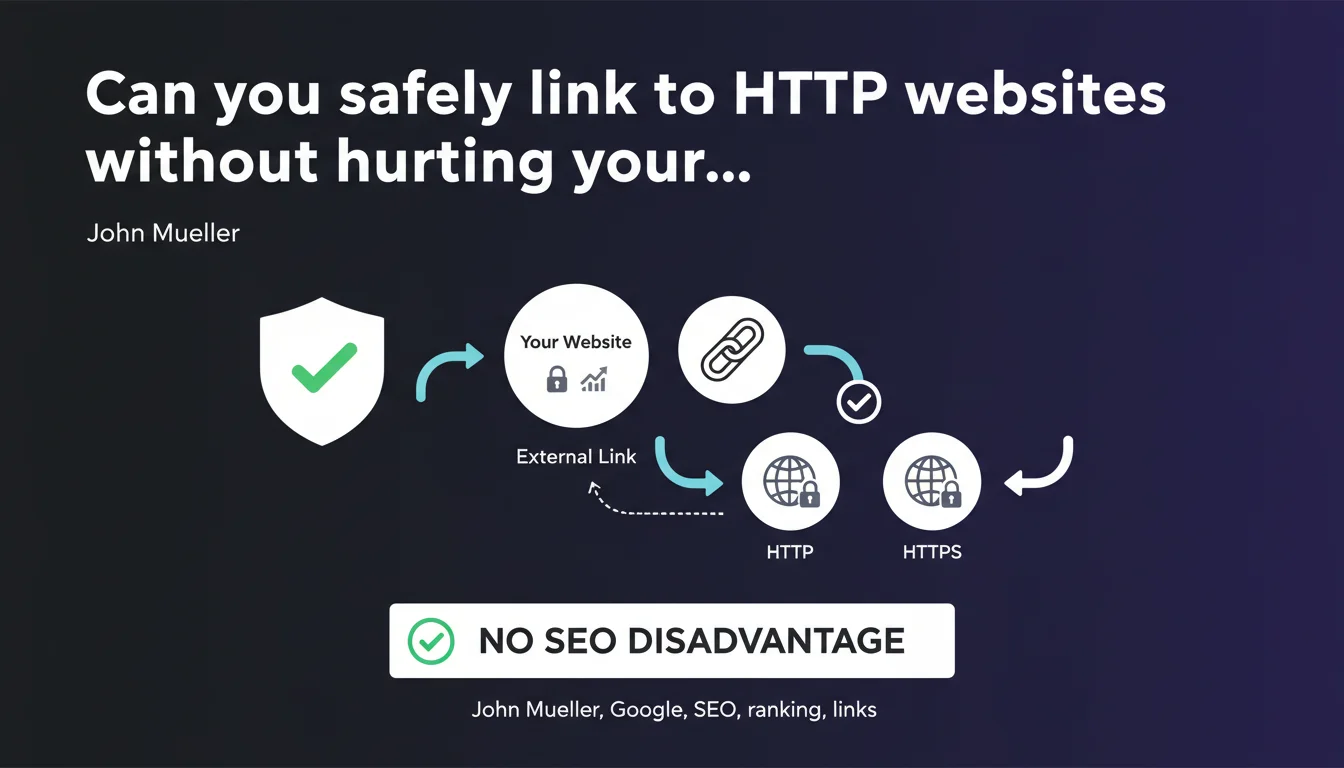
Google confirms there is no SEO penalty for creating outbound links to HTTP pages. Your site will not be negatively impacted for pointing to unsecured resources. Only visitor security can be affected, not your rankings.
What you need to understand
Why does Google make this distinction between inbound and outbound HTTP?
The nuance is critical. Google applies a different trust filter depending on link direction. If your site is HTTP, you lose a potential ranking signal — this has been documented since 2014. But if you create a link from your HTTPS site to an external HTTP page, there is no impact on your own rankings.
The logic holds: you don't control the security of third-party sites. Penalizing a site for another's technical choices would make no sense. Google evaluates the quality of your content and your sources, not their technical stack.
Does this mean we can completely ignore HTTPS in our outbound links?
Not so fast. The absence of an SEO penalty does not mean the absence of problems. An outbound HTTP link can trigger security warnings in your visitors' browsers, especially if your page is HTTPS. Chrome notably displays warnings about mixed content.
The result? Your users click less, worry, leave. Your bounce rate climbs, your time on site drops. And that, indirectly, Google captures through behavioral signals.
What are the concrete situations where this statement applies?
You cite an academic source published in 2005, available only in HTTP. You reference a government archive document never migrated to HTTPS. You point to a technical resource hosted on an old server without an SSL certificate.
In these specific cases, John Mueller tells you: don't censor yourself. The informational value of the link matters more than its protocol. But as soon as an HTTPS version exists, prioritize it systematically.
- HTTP outbound links trigger no direct penalty from Google's algorithm
- The protocol of the target site does not impact the PageRank transmitted by your link
- Browsers can nonetheless display security warnings that degrade user experience
- Google evaluates the editorial relevance of the link, not the technical configuration of the destination
- This rule applies only to outbound links, not to your own HTTPS protocol
SEO Expert opinion
Is this statement consistent with real-world observations?
Yes, and it has been verified for years. No serious SEO audit has ever revealed a negative correlation between the presence of outbound HTTP links and ranking drops. Sites that cite old but relevant HTTP sources are not penalized.
However — and this is where the devil hides — we observe indirect problems. Modern browsers sometimes block loading HTTP resources from HTTPS pages (images, scripts). If your link triggers an HTTP download from a secure page, some users see a blank screen. They leave. Google records a negative signal.
What nuances should be added to this official position?
Mueller speaks of standard editorial links. He does not cover edge cases: temporary redirects to HTTP, links in iframes, mixed resources loaded via JavaScript. In these configurations, browsers apply stricter security rules than Google.
Another point: the statement doesn't mention quality perception. A site that points massively to HTTP resources in 2025 sends a dubious editorial signal. No algorithmic penalty, certainly, but an impression of negligence that can affect your credibility.
In what contexts does this recommendation become problematic?
E-commerce and SaaS sites must exercise increased caution. Their users are hypersensitive to security indicators. An HTTP outbound link on a payment or conversion page can trigger massive abandonment.
Media sites and news blogs have fewer constraints — as long as cited sources are editorial and relevant. But as soon as an HTTP link leads to a suspicious or unmaintained site, you associate your brand with technical negligence. [Verify regularly] via crawl tools that detect expired or missing certificates.
Practical impact and recommendations
What should you concretely do with HTTP outbound links?
First step: audit your external links. Use Screaming Frog, Oncrawl or your preferred crawler with a filter on HTTP outbound links. Identify those with a functioning HTTPS version — and update them immediately.
For links without an HTTPS alternative, ask yourself two questions. Is the resource irreplaceable? If yes, keep the HTTP link with an explanatory note for your visitors. If no, find an equivalent HTTPS source or remove the link.
What errors should you avoid when managing these links?
Don't automatically redirect all HTTP links to HTTPS without verification. Some sites haven't properly configured their migration — you risk sending your visitors to 404 pages or invalid certificates. Test each redirect manually.
Also avoid systematically nofollowing your HTTP outbound links. It's unnecessary — Google doesn't penalize these links, so no need to devalue them. Keep nofollow for paid links, UGC, or unverified links, based on their editorial nature.
How do you maintain consistent policy over the long term?
Integrate quarterly verification of your outbound links into your SEO calendar. Sites regularly migrate to HTTPS — what was HTTP yesterday can be HTTPS today. An automated crawl alerts you to new opportunities.
For editorial teams, create a clear directive: systematically prioritize HTTPS when available, but don't prevent yourself from citing a reference HTTP source. The arbitration is made on informational value, not protocol.
- Crawl all your outbound links to identify those in HTTP
- Manually verify if an HTTPS version exists and works
- Update links to HTTPS when possible
- Keep HTTP links only for irreplaceable resources
- Add contextual note if the HTTP link may generate browser warning
- Schedule quarterly automated audit of external protocols
- Train writers to prioritize HTTPS without dogmatism
- Don't apply nofollow systematically to HTTP outbound links
❓ Frequently Asked Questions
Un lien sortant HTTP transmet-il moins de PageRank qu'un lien HTTPS ?
Dois-je ajouter un attribut nofollow sur mes liens HTTP sortants ?
Les navigateurs peuvent-ils bloquer mes liens HTTP sortants ?
Faut-il vérifier régulièrement si mes liens HTTP ont migré vers HTTPS ?
Google peut-il me pénaliser si je pointe vers un site HTTP piraté ?
🎥 From the same video 12
Other SEO insights extracted from this same Google Search Central video · published on 04/07/2022
🎥 Watch the full video on YouTube →
💬 Comments (0)
Be the first to comment.