
Official statement
What you need to understand
What was the question asked to Google about negative reviews?
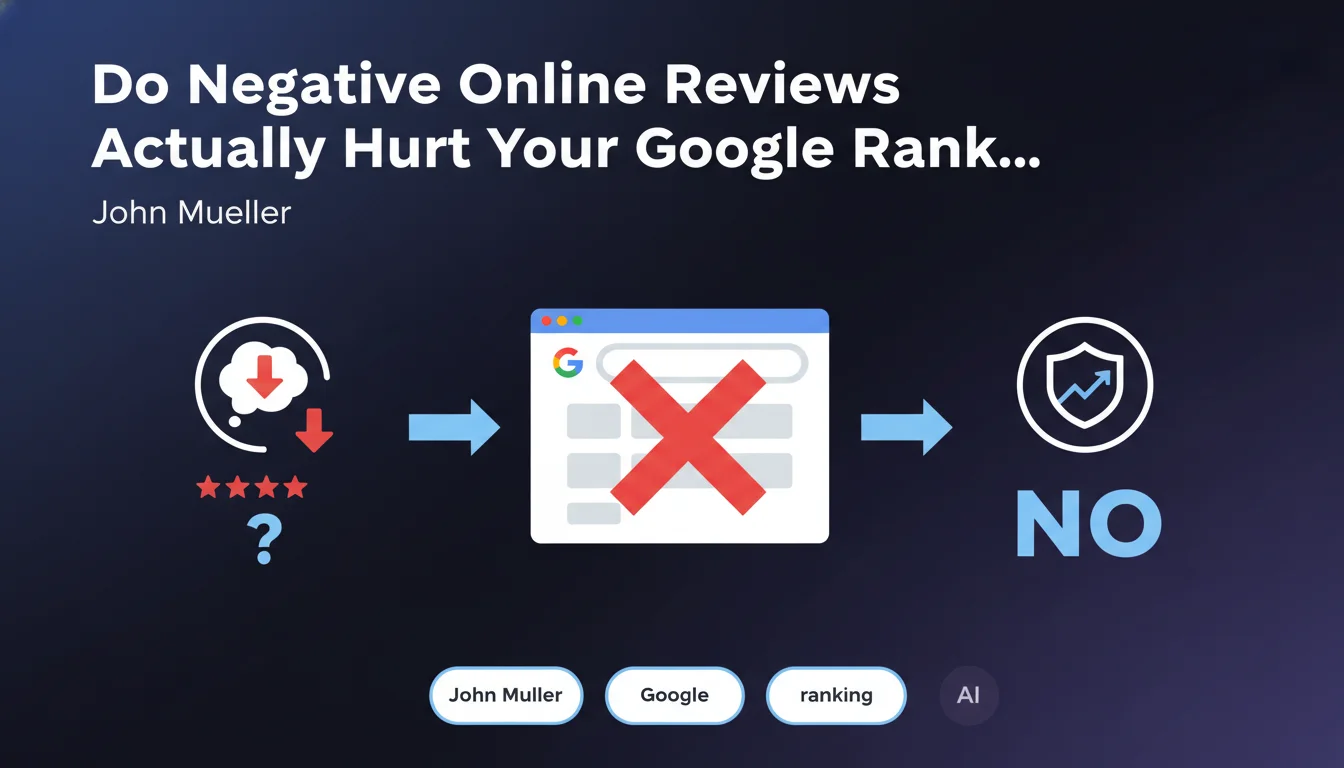
A webmaster asked whether web pages containing negative criticism about their site could impact their ranking in search results. This question reflects a frequent concern: can negative content published by third parties harm our SEO?
John Mueller was very clear in his response: no, negative reviews on other sites do not negatively impact your positioning. Google does not penalize a site because others speak negatively about it.
How does Google interpret mentions of your brand?
Google considers mentions of your brand as signals of notoriety, whether positive or negative. A citation remains a citation, and it demonstrates your presence in the web ecosystem.
If these mentions include links to your site, it's even more beneficial from an SEO perspective. Backlinks retain their value, regardless of the negative editorial context.
What are the key takeaways from this statement?
- No algorithmic penalty for negative reviews published on other sites
- Brand mentions are considered as positive notoriety signals
- Links from negative pages retain their classic SEO value
- Google does not perform sentiment analysis to adjust rankings
- Online reputation and SEO are two distinct issues
SEO Expert opinion
Does this statement align with real-world observations?
After 15 years of practice, this statement indeed corresponds to empirical observations. Sites with controversies or public criticism do not suffer automatic demotion in the SERPs.
I've observed that certain sites with significant bad buzz maintain excellent positions, precisely because controversy generates mentions and links. Google clearly separates popularity and reputation.
What important nuances should be added to this rule?
Be careful though: if negative reviews concern security issues, spam, or dangerous content, Google may intervene manually. It's then not a question of negative reviews but of guideline violations.
Moreover, even if your SEO isn't impacted, your click-through rate may decrease if users see negative results in positions 2-3. The business impact exists even without an algorithmic penalty.
In what cases could this rule have exceptions?
For YMYL (Your Money Your Life) sites, a massive accumulation of negative reviews documenting dangerous practices could trigger a manual action. It's not the review itself that penalizes, but the practices it reveals.
Furthermore, if you respond aggressively to criticism on your own site or create low-quality content to defend yourself, this can harm your E-E-A-T and your SEO.
Practical impact and recommendations
What should you actually do when facing negative reviews?
First, don't panic if you discover criticism on other sites. Your priority remains producing quality content and improving your user experience.
Focus on managing your online reputation rather than attempting SEO manipulation. Respond professionally to criticism and create positive content to balance the SERPs for your brand.
What mistakes should you absolutely avoid in this situation?
Never attempt to remove negative links through reverse negative SEO techniques. This can be counterproductive and cause you to lose notoriety signals.
Also avoid creating satellite sites to drown out criticism. Google detects these manipulations and it could trigger a real penalty. Don't over-optimize your link anchors to counter negative mentions.
How can you turn this situation into an SEO opportunity?
Use criticism as an opportunity to create content: FAQs, explanatory pages, positive customer testimonials. This enriches your site with relevant content that can capture long-tail traffic.
Work on your content marketing strategy to naturally generate more positive mentions and links. The best defense remains a solid and authentic online presence.
- Monitor your online reputation with monitoring tools (Google Alerts, Mention, etc.)
- Create quality content addressing legitimate concerns raised
- Develop a strategy of authentic customer testimonials
- Optimize your profiles on review platforms (Google My Business, Trustpilot)
- Never request removal of legitimate negative links
- Respond professionally to criticism on your own site and social networks
- Continue your classic SEO efforts without overreacting to negative mentions
- Document improvements made following customer feedback
💬 Comments (0)
Be the first to comment.