
Official statement
Other statements from this video 8 ▾
- □ Pourquoi la limite de 15 Mo de Googlebot n'est-elle documentée que maintenant ?
- □ Quelles sont les 3 seules exigences techniques absolues pour être indexé par Google ?
- □ Pourquoi Google a-t-il divisé ses guidelines en règles strictes et simples recommandations ?
- □ Comment prioriser vos actions SEO selon le système de classification de Google ?
- □ L'accessibilité Googlebot est-elle vraiment une condition binaire pour l'indexation ?
- □ Google distingue-t-il vraiment les « exigences absolues » des « bonnes pratiques » en SEO ?
- □ Google distingue-t-il vraiment les changements de documentation des changements d'algorithme ?
- □ HTTPS et vitesse : peut-on vraiment s'en passer pour ranker sur Google ?
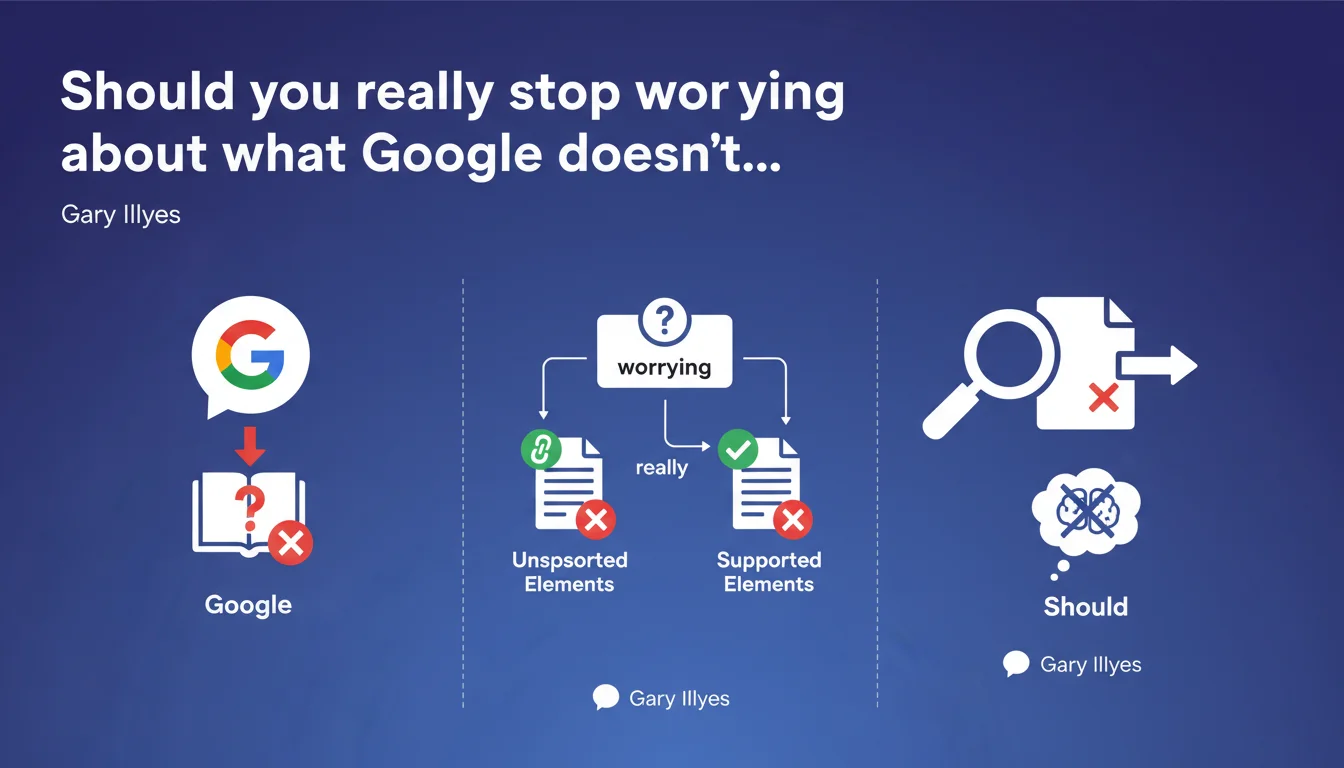
Google now explicitly documents the elements it does NOT use (meta keywords, etc.) alongside what it supports. This inverted transparency answers SEO professionals' recurring request to understand what to stop using, rather than guessing from Google's silence.
What you need to understand
Why is Google changing its approach now?
For years, Google simply documented what works. If a tag or attribute didn't appear in the official documentation, it was up to us to guess whether it was ignored, deprecated, or simply forgotten.
The problem? This lack of information created a vacuum that SEO myths love to fill. Result: teams wasting time on pointless optimizations because nobody ever clearly said "stop doing that".
What will this documentation actually cover?
Google started with meta keywords, the textbook example of zombie elements. But the goal is to go further: obsolete tags, ignored attributes, unsupported formats.
Concretely, instead of searching "does Google use X?" and landing on outdated forum answers, you'll have an official source that explicitly says "no, that's useless".
How does this clarification really help practitioners?
It enables prioritization. When you audit a site with 47 possible optimizations and 3 weeks ahead of you, knowing what serves absolutely no purpose frees up time and energy.
It also ends internal debates. No more arguing for hours with a developer who swears that meta keywords "might potentially help anyway".
- Google now documents what it does not use, not just what it supports
- This approach answers a recurring request from SEO professionals
- It helps avoid unnecessary optimizations based on persistent myths
- The meta keywords tag is the first documented example of this new policy
- This inverted transparency facilitates SEO project prioritization
SEO Expert opinion
Will this documentation really be comprehensive?
Let's be honest: Google won't publish a complete list overnight. It will be gradual, probably driven by recurring questions. And some edge cases will remain unclear—that's the nature of the algorithm itself.
The real test will be seeing how fast this documentation grows. If in six months we're still at meta keywords and two other anecdotal examples, the impact will remain symbolic. [To verify]: is a regular update planned or is this a one-time PR move?
Does this transparency hide something?
When Google suddenly becomes very clear on a topic, it's often because there's been too much noise or too many bad practices. Meta keywords probably resurfaced in Search Console questions or audits sold by unscrupulous agencies.
But beware: what Google doesn't officially support doesn't always mean zero impact. We've seen correlations between certain "unsupported" attributes and ranking fluctuations. Correlation isn't causation, but that's not a reason to ignore real-world observations.
Does this initiative really change the game?
For experienced SEOs, it's comfort: official confirmation of what we already knew. For juniors or clients reading 2008 articles, it's a weapon against misinformation.
The real benefit? Reducing opportunity cost. Every hour spent on a pointless optimization is an hour not invested in what actually works: content, structure, performance, user experience.
Practical impact and recommendations
What should you actually do with this information?
Start by auditing your site to identify elements documented as unsupported. Meta keywords is the first, but keep an eye on updates to this official documentation.
Then remove them—or at minimum, stop wasting time maintaining them. If your CMS has been automatically generating meta keywords since 2009, it's time to disable that feature.
What mistakes should you avoid when interpreting this documentation?
Don't confuse "unsupported" with "penalizing". Google never said that meta keywords cost you rankings. It's simply ignored. Important distinction.
Another trap: don't turn this list into an excuse to do nothing else. Just because Google clarifies what doesn't work doesn't mean it's giving you a magic recipe for what does. SEO remains a balancing act of continuous adjustment.
How do you integrate this approach into your SEO audits?
Create a dedicated section in your reports: "Unsupported Elements Detected". This shows the client that you're cleaning up the superficial and focusing on what matters.
Use this documentation as a reference when arbitrating with technical teams. An official Google source beats "I read on a blog that...".
- Check whether your site still uses meta keywords or other elements documented as unsupported
- Remove or disable automatic generation of these elements in your CMS
- Monitor updates to Google's official documentation on unsupported elements
- Integrate this verification into your recurring SEO audit processes
- Train your teams to distinguish between "unsupported" and "penalizing"
- Use this documentation as leverage in internal technical discussions
❓ Frequently Asked Questions
Est-ce que garder la meta keywords peut pénaliser mon site ?
Google va-t-il documenter tous les éléments non supportés d'un coup ?
Comment savoir si un élément est vraiment non supporté s'il n'apparaît pas encore dans cette documentation ?
Cette documentation remplace-t-elle les tests et observations terrain ?
Dois-je retirer immédiatement tous les éléments listés comme non supportés ?
🎥 From the same video 8
Other SEO insights extracted from this same Google Search Central video · published on 22/12/2022
🎥 Watch the full video on YouTube →
💬 Comments (0)
Be the first to comment.