
Official statement
Other statements from this video 6 ▾
- □ Are social media profiles really websites from an SEO perspective?
- □ Is a website really still the number one tool for maximizing your online visibility in 2024?
- □ Why does owning a website give you far more control over monetization than relying on social media platforms?
- □ Does a clean website really boost your credibility in Google's eyes?
- □ Why does Google still prioritize the open web over native mobile apps?
- □ Do you really still need a website to rank on Google in 2024?
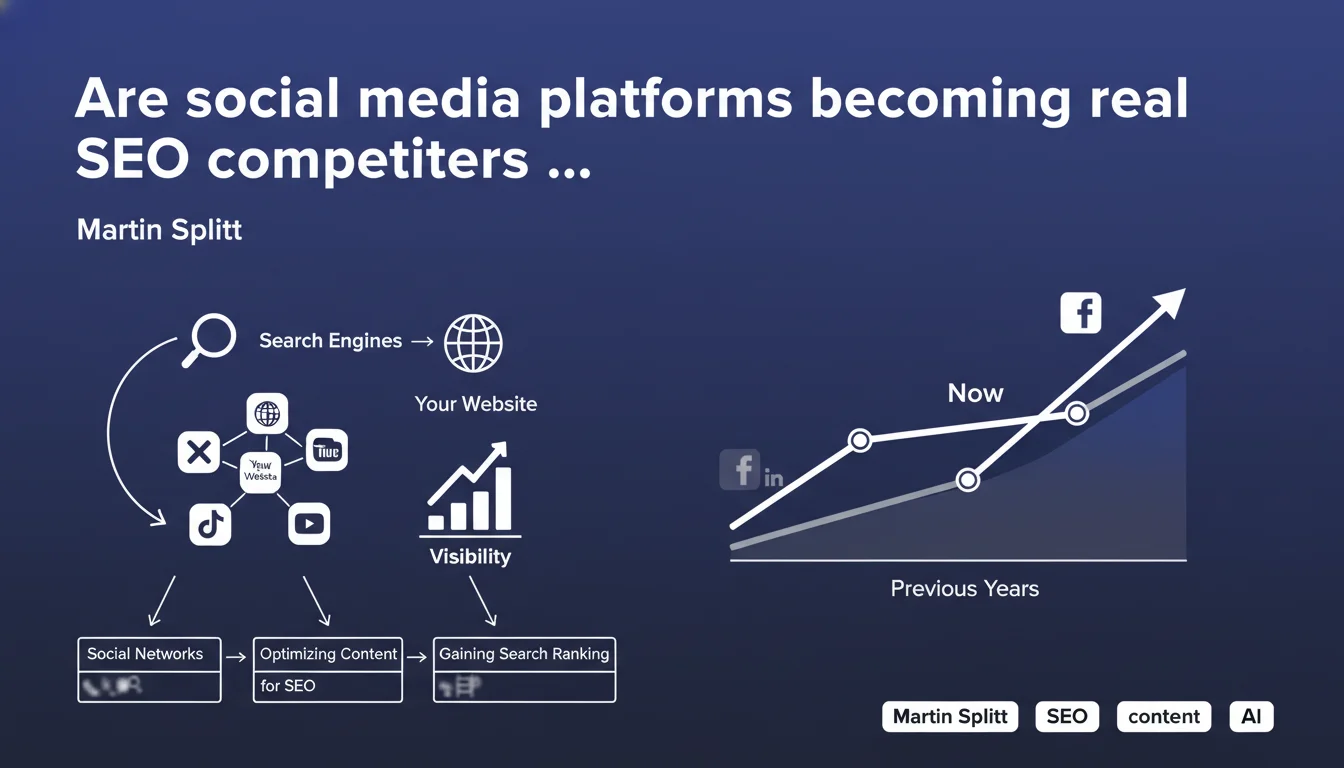
Social platforms are now actively optimizing their content for Google and gaining visibility in SERPs, where they were virtually absent before. This strategic shift is reshaping organic traffic distribution and forcing traditional websites to reconsider their positioning against these new SEO players.
What you need to understand
Why this sudden turnaround from social networks?
For years, social platforms deliberately blocked or limited Googlebot's access to their content. Facebook, Twitter (X), Instagram — all prioritized a closed ecosystem where traffic remained captive. SEO simply wasn't their priority.
Today, the situation is changing dramatically. These same platforms now understand that organic search represents an untapped source of traffic. They're optimizing their pages, structuring their data, making their content crawlable. Martin Splitt observes it: they're gaining visibility.
What does this actually change in the SERPs?
You've probably noticed it: Reddit threads, X posts, TikTok or YouTube Shorts videos now appear in good positions for informational queries. Google values this user-generated, fresh, conversational content.
The search engine integrates these results into its featured snippets, video carousels, people also ask sections. Competition no longer comes only from traditional websites — it comes from platforms that aggregate millions of daily conversations.
Are social networks really applying the same SEO rules as we do?
Not exactly. They benefit from a massive structural advantage: colossal domain authority, astronomical content volume, permanent freshness, high user engagement. Their SEO optimization doesn't need to be perfect — their sheer weight does the rest.
- Crawl budget: virtually unlimited for these giants
- Backlinks: millions of natural links already point to their domains
- Freshness: content published continuously, 24/7
- Engagement: exceptional behavioral metrics (time spent, interactions)
- Structure: progressive adoption of Schema.org and other structured markup
SEO Expert opinion
Is this statement consistent with field observations?
Absolutely. Any SEO practitioner has witnessed Reddit's rise in SERPs over the past few months. Threads years old are climbing to the first page for competitive queries. YouTube dominates how-to searches. LinkedIn captures B2B traffic.
This is no accident. These platforms have all invested in their SEO infrastructure: improved crawling, optimized title/meta tags, implementation of structured data, robust XML sitemaps. The signal is clear: they want their share of the Google pie.
What nuances should be added to this claim?
Splitt remains vague on one crucial point: Does Google actively favor these platforms, or does it simply reward their technical optimization and user relevance? [To be verified]
Several troubling observations: poorly structured Reddit content, poorly sourced, sometimes contradictory, outranks documented articles from specialized sites. Is this solely due to user engagement? Or is there an algorithmic bias favoring UGC platforms deemed more authentic?
In what cases does this dynamic work against you?
If your content is purely informational, conversational, or relies on Q&A, you're in direct competition with these platforms. A carefully written practical guide can lose against a spontaneous Reddit thread if Google believes the latter better answers user intent.
Conversely, if your added value relies on deep technical expertise, proprietary data, detailed case studies, or commercial/transactional content, the impact remains limited. Social networks excel at conversation, not technical exhaustiveness or direct purchase.
Practical impact and recommendations
What should you do concretely in the face of this new reality?
First rule: don't ignore social platforms in your SEO strategy. If you only produce content on your website, you're leaving traffic on the table. Invest in an active presence on platforms relevant to your industry.
Second axis: optimize your content for user engagement as much as for robots. Google values behavioral signals — time spent, bounce rate, interactions. If your article loses to a Reddit thread, it might be because it's less digestible, less conversational, less engaging.
How to adapt your content strategy without overhauling everything?
Segment your production. For generic informational topics, create short, conversational versions to publish on social platforms, with a link to your in-depth content. Use these platforms as entry points, not final destinations.
For technical or commercial topics, focus on the differentiated expertise that social networks can't provide: exclusive data, proprietary methodologies, client case studies, interactive tools. That's where your website keeps a decisive advantage.
- Audit your target queries: which ones already show massive social content in SERPs?
- Establish an optimized presence on 2-3 strategically relevant platforms for your industry
- Structure your social content with relevant keywords, appropriate hashtags, clear descriptions
- Create bridges between your social content and your pillar pages
- Track your rankings against social content using your usual rank tracking tools
- Test hybrid formats: short videos, carousels, threads — then analyze their SEO impact
- Strengthen engagement signals on your website: UX improvement, load time, readability
❓ Frequently Asked Questions
Faut-il désormais publier tout son contenu sur les réseaux sociaux plutôt que sur son site ?
Est-ce que Google favorise volontairement les plateformes sociales dans son algorithme ?
Quelles plateformes sociales sont les plus visibles dans les résultats Google actuellement ?
Comment optimiser un profil ou une publication sociale pour le référencement ?
Les backlinks depuis les réseaux sociaux ont-ils plus de valeur maintenant ?
🎥 From the same video 6
Other SEO insights extracted from this same Google Search Central video · published on 12/02/2026
🎥 Watch the full video on YouTube →
💬 Comments (0)
Be the first to comment.