
Official statement
Other statements from this video 10 ▾
- □ Pourquoi le SEO Starter Guide de Google cartonne-t-il à ce point ?
- □ Faut-il encore se préoccuper de HTTPS pour le référencement ?
- □ La compatibilité mobile est-elle vraiment devenue un non-sujet SEO ?
- □ Le nombre de mots est-il vraiment un facteur de classement Google ?
- □ La structure HTML a-t-elle vraiment peu d'impact sur le classement Google ?
- □ Peut-on vraiment faire confiance aux CMS modernes pour gérer les balises title automatiquement ?
- □ Les mots-clés dans le nom de domaine influencent-ils encore le référencement ?
- □ Faut-il supprimer la balise meta keywords de votre site ?
- □ Faut-il vraiment changer de nom de domaine pour améliorer son SEO ?
- □ Faut-il abandonner les templates HTML optimisés au profit du contenu unique ?
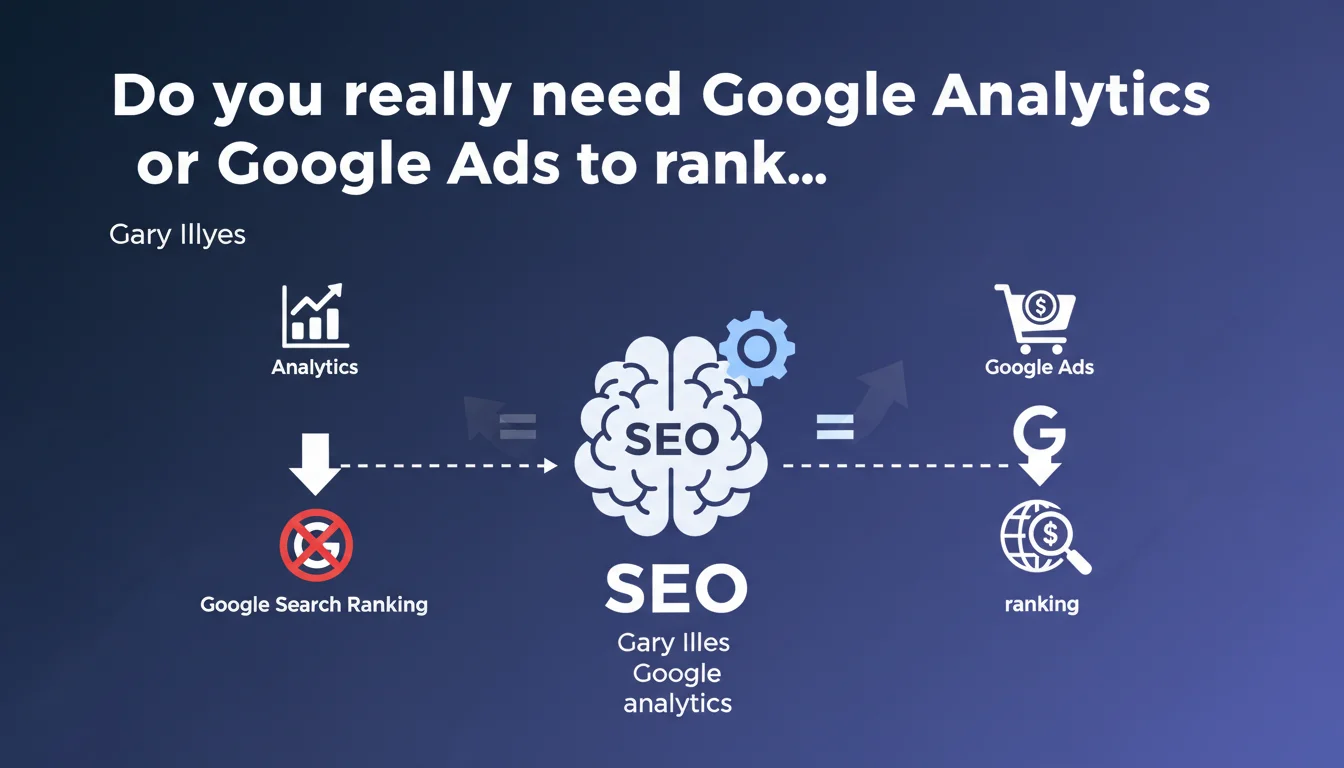
Gary Illyes affirms that no Google product (Analytics, Ads, Tag Manager, Chrome) influences organic search ranking. There is no SEO advantage to using the Google ecosystem, despite persistent industry beliefs. A statement that contradicts certain field observations and deserves to be confronted with algorithmic reality.
What you need to understand
Why does Google insist so much on this neutrality?
This statement responds to a deeply rooted belief in the SEO community: the idea that Google would favor sites using its ecosystem. Analytics, Ads, Tag Manager, Chrome... the list is long of services whose use could theoretically give an algorithmic boost.
Gary Illyes is clear-cut. No signal from these products reaches the ranking systems of organic search. It's a strict technical separation, for obvious legal reasons — but also to preserve the credibility of the index.
Is this technical separation truly airtight?
Google maintains strict partitions between its divisions to avoid conflicts of interest. Search teams do not have access to a specific site's Analytics or Ads data to adjust its ranking.
That said — and this is where it gets complicated — some indirect signals can still play a role. Chrome uploads aggregated data about user experience (Core Web Vitals, notably). But these metrics are anonymized and do not create an advantage for sites using Chrome or Analytics. This is user signal, not product favoritism.
What fuels this persistent rumor?
Several factors. First, a correlation bias: well-optimized sites often use Google's entire ecosystem to monitor their performance. Cause and effect are confused.
Next, Google long maintained a certain ambiguity on these questions — which naturally feeds theories. And then there were historical precedents: Google+ definitely benefited from preferential treatment in the SERPs at one time. Even if that's over, it leaves traces in the collective memory of the industry.
- No signal from Analytics, Ads, or Tag Manager influences organic ranking
- Technical partitions between Google divisions are maintained for legal reasons
- Chrome data sends aggregated signals (CWV), but no preferential treatment by site
- The correlation between use of Google's ecosystem and good ranking is an observation bias
- This statement aims to shut down rumors that damage the credibility of the index
SEO Expert opinion
Is this statement consistent with field observations?
On paper, yes. In practice... it's more nuanced. No one has ever produced solid empirical evidence that using Analytics or Ads boosts ranking. Large-scale tests show nothing significant.
But there are gray areas. Sites with an active Google Search Console account are sometimes reindexed more quickly after fixing errors. This isn't a ranking advantage, rather a shortcut to communicate with Google — but it can indirectly speed up the resolution of technical issues. [To verify]: does Google prioritize crawling sites with an active and verified GSC account?
What nuances should be added to this official message?
First nuance: indirect effect. Using Analytics or Ads doesn't give a direct SEO advantage, but these tools allow you to better understand your audience and optimize accordingly. A better-optimized site ranks better. That's common sense, not favoritism.
Second nuance: aggregated signals. Chrome collects real usage data (CrUX) that feeds Core Web Vitals. These metrics influence ranking. So technically, Chrome plays a role — but not as a product giving an advantage to Chrome users. It's subtle, but crucial.
Third nuance: Google Business Profile. For local, having a well-optimized profile is clearly a visibility factor. But again, this isn't a product advantage — it's structured presence in an ecosystem designed to value local data.
In what cases might this rule not apply?
Let's be honest: Google has made exceptions in the past. Google+ had special treatment in the SERPs. YouTube benefits from disproportionate visibility in search results — but is this favoritism or a reflection of the platform's dominance in the video market? Hard to tell.
Another edge case: AMP. At one time, AMP pages benefited from a ranking advantage for mobile. Google later corrected course by integrating Core Web Vitals as a broader criterion. But for a while, using Google technology definitely gave a boost. History could repeat itself with other initiatives — AI Overviews, for example.
Practical impact and recommendations
What should you concretely do with this information?
Don't feel obligated to use Analytics or Ads for SEO reasons. If you prefer Matomo, Plausible, or something else for privacy, go ahead. No negative impact on your ranking.
However, Search Console remains essential. It's not a ranking advantage, but it's the only official channel to receive critical alerts (penalties, indexing errors, Core Web Vitals). Not using it is shooting yourself in the foot.
What mistakes should you avoid following this statement?
Classic mistake: abandon Analytics thinking that it frees up budget or simplifies the stack. If you don't have a solid alternative to monitor your traffic and user behavior, you're flying blind. SEO without data is improvisation.
Another trap: believing that this neutrality applies to proprietary formats. YouTube in the SERPs, Google Maps locally, Google Merchant Center for e-commerce... these are separate ecosystems. Ignoring these channels under the pretext of SEO neutrality would be a strategic error.
How can you verify that your site doesn't depend on a non-existent advantage?
Do a dependency audit: list all Google services used on your site. Ask yourself for each: am I using it for good reasons (monitoring, optimization, UX) or because I believed it would boost my SEO?
If the answer leans toward the second option, reassess your priorities. Focus on fundamentals: quality content, user experience, E-E-A-T signals, internal linking, natural backlinks. These are the levers that make the difference, not your choice of analytics tool.
- Use Search Console without hesitation — it's a monitoring tool, not a ranking lever
- Choose your analytics tool based on your real needs (privacy, features, cost), not for SEO reasons
- Don't neglect Google Business Profile if you have a local dimension — it's a separate ecosystem
- Verify that your structured data is properly implemented — that does influence visibility
- Focus your efforts on SEO fundamentals rather than beliefs about the Google ecosystem
- Regularly audit your technical stack to ensure it serves your business goals, not SEO myths
❓ Frequently Asked Questions
Est-ce que désinstaller Google Analytics peut nuire à mon SEO ?
Google Search Console donne-t-il un avantage de ranking ?
YouTube bénéficie-t-il d'un traitement de faveur dans les résultats de recherche ?
Les données Chrome influencent-elles vraiment le ranking ?
Faut-il utiliser Google Ads pour améliorer son référencement naturel ?
🎥 From the same video 10
Other SEO insights extracted from this same Google Search Central video · published on 25/01/2024
🎥 Watch the full video on YouTube →
💬 Comments (0)
Be the first to comment.