
Official statement
Other statements from this video 10 ▾
- □ Pourquoi le SEO Starter Guide de Google cartonne-t-il à ce point ?
- □ Faut-il encore se préoccuper de HTTPS pour le référencement ?
- □ La compatibilité mobile est-elle vraiment devenue un non-sujet SEO ?
- □ Le nombre de mots est-il vraiment un facteur de classement Google ?
- □ La structure HTML a-t-elle vraiment peu d'impact sur le classement Google ?
- □ Les mots-clés dans le nom de domaine influencent-ils encore le référencement ?
- □ Faut-il supprimer la balise meta keywords de votre site ?
- □ Faut-il vraiment utiliser Google Analytics ou Google Ads pour mieux ranker ?
- □ Faut-il vraiment changer de nom de domaine pour améliorer son SEO ?
- □ Faut-il abandonner les templates HTML optimisés au profit du contenu unique ?
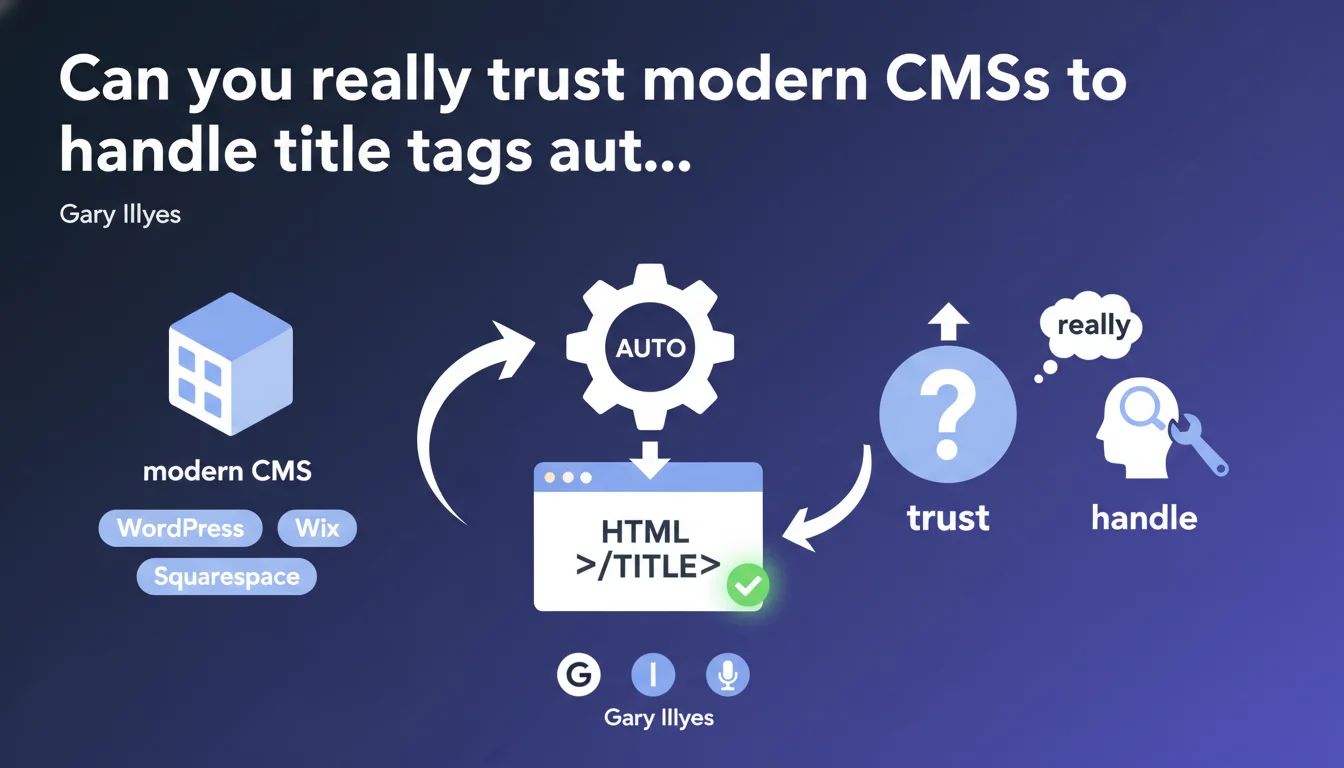
Gary Illyes claims that modern CMSs (WordPress, Wix, Squarespace) automatically generate correct HTML title tags, without requiring manual code verification. This statement suggests that Google considers the basic technical management of title tags as a problem already solved by mainstream platforms.
What you need to understand
Gary Illyes is attempting to reassure non-technical users: the title tag would be automatically generated correctly by popular CMSs. The intent is clear — to downplay the technical aspect of SEO for beginners.
But this claim deserves scrutiny, as it relies on an idealized vision of CMSs and overlooks several on-the-ground realities that every professional knows.
What does a title generated "correctly" mean according to Google?
Google doesn't clarify what "correctly" means. Is it simply the technical presence of the tag in the HTML? Or a tag optimized for SEO, with relevant keywords, appropriate length, and engaging wording?
This distinction is crucial. Technically, yes, WordPress generates a <title> by default. But this default title is often mediocre: site name + separator + page name, without semantic optimization or search intent consideration.
Are modern CMSs truly reliable on this front?
Let's be straightforward: automatic generation works, but with significant limitations. Native WordPress, without an SEO plugin, creates basic titles often duplicated across pages. Wix and Squarespace have improved, but their templates can generate repetitive structures.
Poorly coded themes, visual builders like Elementor or Divi, plugins that conflict with each other — all of this can break automatic generation. Not to mention custom configurations where developers override standards.
Why this statement now?
This communication likely aims to reduce support tickets and basic questions that Google receives. By repeating that "CMSs handle this," they hope to filter out technical concerns from beginners.
It's also consistent with Google's overall strategy: simplify SEO, make it accessible, minimize perceived complexity. But this simplification is misleading for anyone seeking genuine performance.
- Technical presence ≠ SEO optimization — a title existing doesn't mean it's effective
- CMSs generate default titles, but rarely optimized for SERP performance
- This statement targets novices, not professionals aiming to maximize visibility
- Complexity lies in customization and optimization, not in basic generation
SEO Expert opinion
Does this claim reflect ground-level reality?
Let's be honest — yes and no. Technically, Gary Illyes is right: mainstream CMSs do generate a title tag. It's present in the HTML, syntactically correct, and Google can index it.
But here's the catch: technical presence and SEO effectiveness are two radically different things. An automatic WordPress title without an SEO plugin often looks like "My Article – Site Name". It's functional, but far from optimized.
Professionals know this — you never leave titles on automatic. You customize them via Yoast, Rank Math, or similar. You test variations. You integrate strategic keywords. You optimize length. You craft compelling wording. This statement ignores this entire dimension.
What are the limitations and blind spots of this claim?
First blind spot: not all CMSs are equal. WordPress with a good SEO plugin? Flawless. Shopify? It depends on the theme. A custom CMS built in-house? Anything is possible, from the best to the worst.
Second blind spot: atypical configurations. Multilingual sites with hreflang, sites with dynamic filters, pages generated client-side in JavaScript — automatic generation can quickly become problematic. [To verify] that this automation works correctly in these specific contexts.
Third point — and this is critical: Google itself rewrites titles in SERPs for several years now. So even if your CMS generates a perfect title, Google may decide to ignore it and display something else. This statement doesn't address this contradiction.
What strategic interpretation should you take from this?
This statement is a reassurance message for the general public, not strategic advice for professionals. Google regularly communicates this way — oversimplifying to democratize SEO.
Practically speaking? If you're working on a WordPress site with Yoast or Rank Math, yes, technical generation is reliable. But that doesn't exempt you from auditing, customizing, and optimizing. The real added value of SEO never lies in simply having a tag present, but in its measurable effectiveness.
And frankly, if Google thinks this automation is sufficient, why do SERP positions vary so much depending on title wording? Because quality matters, not just technical existence.
Practical impact and recommendations
Should you still manually verify your title tags?
Absolutely. Even if your CMS technically generates a title, manual auditing remains essential. Check for duplications (especially on e-commerce sites with thousands of product pages), monitor lengths, detect titles truncated in SERPs.
Use Google Search Console to identify pages without titles or with problematic ones. Crawl your site with Screaming Frog or OnCrawl for a comprehensive overview. Never blindly trust automation.
How do you optimize titles beyond automatic generation?
Automatic generation covers the bare minimum. But serious SEO optimization begins where automation ends. Customize titles for each strategic page, integrate long-tail keywords, test CTR-oriented formulations.
Monitor Google's rewrites. If Search Console shows Google displaying a different title than yours, analyze why. Sometimes Google gets it wrong. Often, your title simply wasn't relevant enough.
For high-volume sites, automate intelligently via dynamic templates — but with precise rules, not just "Product Name + Site Name". Leverage taxonomies, product attributes, search intents. This optimization level often requires support from a specialized SEO agency, capable of in-depth audits of your configurations and deploying personalization strategies at scale. When managing thousands of pages, every optimization detail counts — and that's where external expertise can shift your performance.
What errors should you avoid despite automatic generation?
Never leave default settings without auditing. On WordPress, verify your SEO plugin is properly configured and doesn't conflict with your theme. On Shopify or Wix, systematically test actual display in source code.
Avoid generic titles like "Home", "Homepage", or "Welcome" — even if technically present, they're disastrous for SEO. Each page must have a unique, descriptive title, beyond any CMS default generation.
- Audit all title tags across your site, even on reputed reliable CMSs
- Detect and fix duplicate titles (common on e-commerce sites)
- Check title length (55-60 characters recommended to avoid truncation)
- Customize titles on strategic pages beyond automatic generation
- Monitor Google's rewrites via Search Console and adjust if needed
- Test actual SERP display, not just the CMS interface
- Configure SEO plugins/extensions correctly without creating conflicts
- Implement intelligent dynamic templates for high-volume sites
❓ Frequently Asked Questions
Un site WordPress sans plugin SEO génère-t-il des titles corrects ?
Google réécrit-il les titles même si le CMS les génère correctement ?
Faut-il vérifier les titles sur Wix ou Squarespace ?
Les titles générés automatiquement sont-ils suffisants pour ranker ?
Comment détecter si mon CMS génère correctement les titles ?
🎥 From the same video 10
Other SEO insights extracted from this same Google Search Central video · published on 25/01/2024
🎥 Watch the full video on YouTube →
💬 Comments (0)
Be the first to comment.