
Official statement
What you need to understand
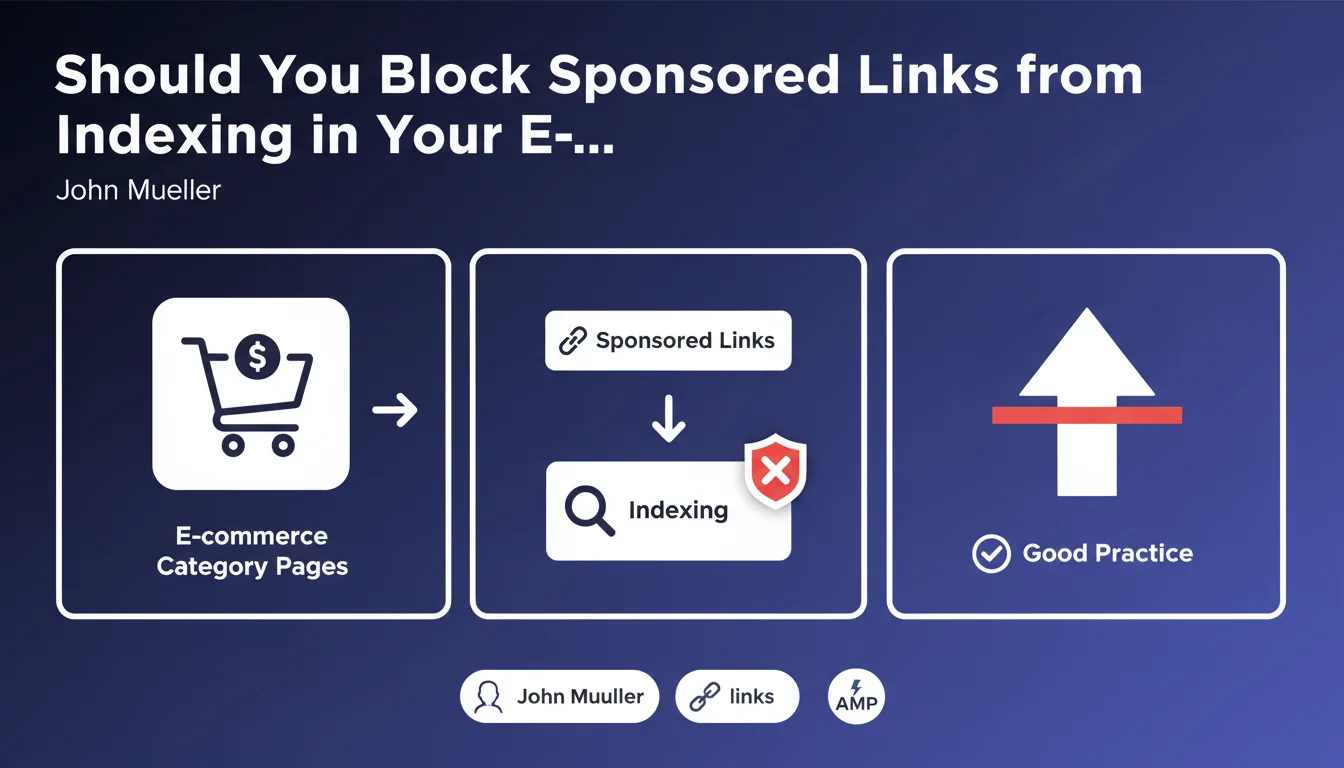
Google's John Mueller has clarified the search engine's position regarding the integration of sponsored or advertising links within product listings on e-commerce category pages.
This practice, popularized by giants like Amazon, involves mixing sponsored products with organic results in category listings. The question posed to Mueller concerned the SEO impact of this approach.
Google's answer is clear: integrating these sponsored links is not problematic in itself, but only if measures are taken to prevent their indexing. Mueller specifies that sites that manage this situation well take care to prevent these links from being crawled and indexed.
- Sponsored links in category pages are not prohibited by Google
- It is recommended to block them from indexing using various methods
- The nofollow (or sponsored) attribute is the most obvious solution
- This practice allows you to monetize pages without negative SEO impact
- Major sites like Amazon already apply these principles (theoretically)
SEO Expert opinion
This position from Google is consistent with their general doctrine on paid links. The search engine wants to clearly distinguish what is editorial content from what is advertising. By preventing the indexing of these sponsored links, you avoid Google considering them as ranking signals.
However, it's important to nuance: concrete implementation varies considerably from one site to another. If you examine Amazon's source code, you'll find that link attribute management is not always as strict as one might imagine. Large sites often benefit from a certain tolerance due to their established authority.
For medium-sized e-commerce sites, it's preferable to be stricter than industry giants. Your margin for maneuver with guidelines is proportional to your domain authority.
Practical impact and recommendations
- Audit your category pages to identify all sponsored or advertising links currently present
- Implement the rel="sponsored" attribute (or at minimum rel="nofollow") on all links to paid products
- Check in Search Console that these sponsored links are not generating counted internal links
- Use JavaScript to dynamically load sponsored content after initial rendering, making it invisible to crawlers
- Visually separate sponsored products from organic results for user experience (visible "sponsored" mention)
- Document your strategy for managing commercial links in your internal guidelines
- Regularly test with Google's URL Inspection tool that sponsored links are not being followed
- Avoid using these sponsored links as primary navigation or structural internal linking
Summary: You can monetize your category pages with sponsored links without SEO risk, provided you properly isolate them from your natural link architecture.
Technical implementation of these recommendations requires coordination between SEO, development, and commercial teams. The balance between monetization and search engine optimization can prove delicate to find, particularly on large catalogs. For a custom implementation that respects guidelines while maximizing your advertising revenue, support from an SEO agency specialized in e-commerce can save you valuable time and avoid costly mistakes.
💬 Comments (0)
Be the first to comment.