
Official statement
Other statements from this video 10 ▾
- □ Pourquoi Google transforme-t-il ses Webmaster Guidelines en Search Essentials ?
- □ Les Search Essentials sont-elles vraiment essentielles pour ranker sur Google ?
- □ Comment optimiser l'affichage de votre nom de site sur mobile avec les données structurées ?
- □ Pourquoi Google recommande-t-il de vérifier votre favicon suite au changement d'affichage des noms de sites ?
- □ Faut-il encore se soucier de Panda et Penguin en SEO ?
- □ Google publie-t-il enfin un historique complet de ses mises à jour de classement ?
- □ Pourquoi Google documente-t-il certains systèmes de classement et pas d'autres ?
- □ Pourquoi Google communique-t-il sur ses mises à jour et qu'est-ce que ça change pour les SEO ?
- □ Pourquoi Google renvoie-t-il vers la Search Central Help Community pour comprendre les changements de trafic ?
- □ Pourquoi Google demande-t-il des retours sur sa documentation SEO ?
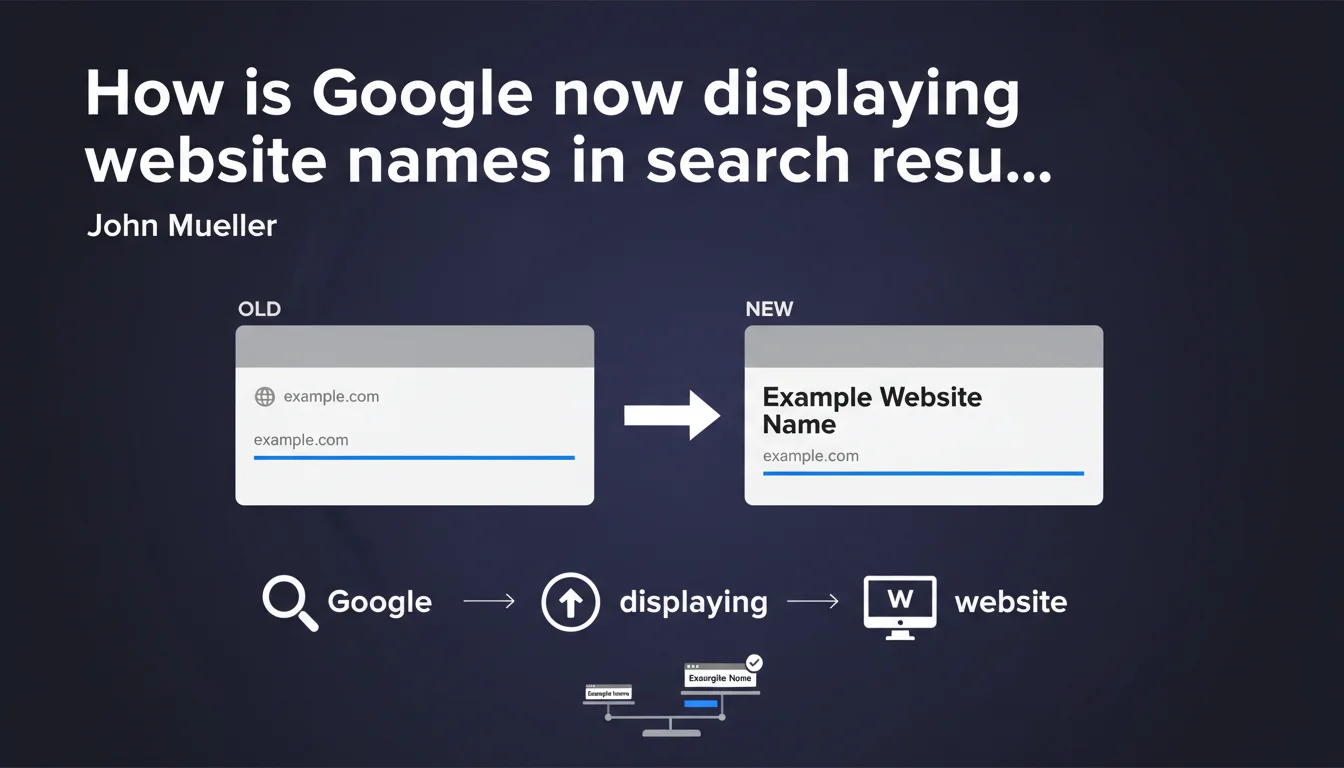
Google is changing how website names appear in SERPs by making them more prominent while freeing up space for page titles. This evolution aims to improve user identification of websites. SEOs must verify that their website names are displaying correctly.
What you need to understand
What exactly is changing in search result display?
Google is redesigning the presentation of search results by giving greater visibility to the website name. Previously, the domain name appeared discreetly. Now, it becomes a distinct and highlighted visual element.
This change comes with a reorganization of the space allocated to the page title. The objective: make it easier for users to quickly identify websites while preserving title readability.
Why is Google introducing this modification?
The logic is straightforward: improve user experience by making the source of information immediately recognizable. A user should be able to identify at a glance whether the result comes from a website they know and trust.
This evolution is in line with Google's ongoing efforts to promote website authority and reputation. A clearly displayed website name can influence click-through rate, especially for established brands.
How does Google determine which name to display?
Google relies on several signals to extract the website name: structured WebSite markup, homepage titles, HTML elements like <title> and other contextual clues.
The problem is that Google doesn't guarantee it will use exactly what you've defined. It can rewrite or adapt the name based on its own interpretation of what best represents your website.
- Increased visibility of website name in search results
- Space reorganization for the page title
- UX objective: quick identification of information source
- Potential influence on click-through rate, especially for known brands
- Name determination via structured markup and other HTML signals
SEO Expert opinion
Is this evolution really new?
Not really. Google regularly tests and adjusts SERP display. What's changing here is the formalization of a more pronounced format for website names. Similar tests have been observed for months.
What is interesting — and frustrating — is that Google neither specifies when this rollout will be complete, nor exactly how it chooses the name to display in ambiguous cases. As usual, we're left in the dark. [Needs verification]
What are the risks if Google displays your website name incorrectly?
If Google decides to display a truncated, poorly formatted, or outright incorrect name, your click-through rate can suffer. Imagine a website whose name displays as "SiteWeb123.com" instead of "Recognized Brand Name".
The real problem: you have no complete control. Even with perfect structured markup, Google can choose something else. And good luck getting it corrected.
Does this prominence benefit all websites equally?
No. Established and recognized brands will gain a clear psychological advantage. A user who sees "The New York Times" or "Wikipedia" immediately identifies the source and its credibility.
For lesser-known websites or generic domains, the impact will be neutral or even negative if the displayed name doesn't inspire trust. Concretely, this reinforces the dominance of strong brands in the SERPs.
Practical impact and recommendations
What should you check first on your website?
Immediately check how Google displays your website name in search results. Search your main keywords and observe what appears.
Then verify your WebSite structured markup. Use Google's rich results test to ensure it's properly implemented and recognized.
What technical actions should you implement?
Implement or correct the schema.org WebSite markup on your homepage, clearly specifying the "name" property. This is the most direct signal you can send to Google.
Make sure your homepage title reflects your website or brand name well. Google often uses this as a confirmation signal.
How do you avoid undesirable displays?
Avoid ambiguous or overly long website names in your markup. Google may truncate or rewrite them. Keep it concise and aligned with your brand.
Monitor SERP display regularly. If Google displays an incorrect name, use the feedback form in Search Console — even if effectiveness remains uncertain.
- Verify how your website name currently appears in Google search results
- Check the presence and validity of WebSite schema.org markup
- Ensure your homepage title reflects your brand name
- Test with Google's structured data validation tool
- Monitor display changes after full rollout
- Plan a branding strategy if your domain name is weak
❓ Frequently Asked Questions
Google utilise-t-il toujours le balisage structuré WebSite pour le nom du site ?
Peut-on forcer Google à afficher un nom de site spécifique ?
Cette modification impacte-t-elle le référencement direct des pages ?
Les sites multilingues doivent-ils adapter le nom affiché par langue ?
Un nom de domaine générique est-il désavantagé par ce changement ?
🎥 From the same video 10
Other SEO insights extracted from this same Google Search Central video · published on 21/12/2022
🎥 Watch the full video on YouTube →
💬 Comments (0)
Be the first to comment.