
Official statement
Other statements from this video 10 ▾
- □ Pourquoi Google transforme-t-il ses Webmaster Guidelines en Search Essentials ?
- □ Les Search Essentials sont-elles vraiment essentielles pour ranker sur Google ?
- □ Comment Google affiche-t-il désormais les noms de sites dans les résultats de recherche ?
- □ Comment optimiser l'affichage de votre nom de site sur mobile avec les données structurées ?
- □ Pourquoi Google recommande-t-il de vérifier votre favicon suite au changement d'affichage des noms de sites ?
- □ Google publie-t-il enfin un historique complet de ses mises à jour de classement ?
- □ Pourquoi Google documente-t-il certains systèmes de classement et pas d'autres ?
- □ Pourquoi Google communique-t-il sur ses mises à jour et qu'est-ce que ça change pour les SEO ?
- □ Pourquoi Google renvoie-t-il vers la Search Central Help Community pour comprendre les changements de trafic ?
- □ Pourquoi Google demande-t-il des retours sur sa documentation SEO ?
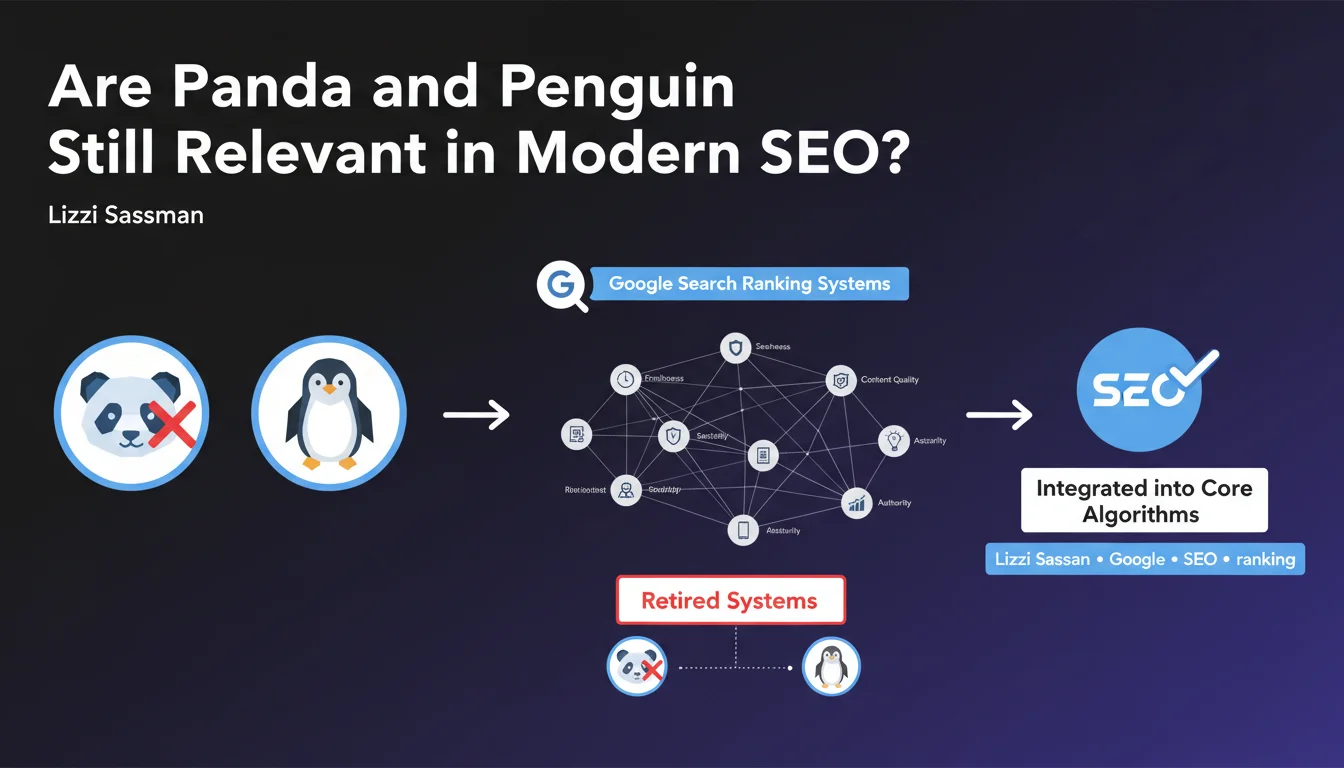
Google has published official documentation listing over 20 ranking systems, including retired systems like Panda and Penguin. This guide centralizes for the first time the information on active and obsolete mechanisms of the search engine, offering a clear reference to distinguish what still matters from what belongs to SEO folklore.
What you need to understand
Google has long maintained a certain ambiguity around its ranking systems. SEOs had to compile scattered statements, patents, and field observations to understand the mechanisms at play.
This official documentation marks a turning point. It explicitly lists active systems and those that have been integrated into the core algorithm. Result: we finally know what is still relevant and what belongs to the past.
Why is Google publishing this documentation now?
Two likely reasons. First, reduce the misinformation circulating in the industry. How many articles still talk about a "Panda update" as if it were a distinct event?
Second, frame communication around its systems. By publishing an official reference, Google controls the narrative and limits hasty interpretations. It's also a way of saying: "Here's what matters, the rest is noise."
Which systems are still active according to this guide?
Google distinguishes between active systems (like RankBrain, BERT, MUM) and retired or merged systems (Panda, Penguin, Hummingbird). This distinction is critical.
A "retired" system doesn't mean its criteria have disappeared. Panda and Penguin, for example, have been absorbed into the core algorithm. Their principles — content quality, link profile — remain central, but are no longer subject to separate updates.
- Active systems: RankBrain, BERT, MUM, Helpful Content, Page Experience, Spam
- Retired/integrated systems: Panda, Penguin, Hummingbird
- Key distinction: An integrated system isn't obsolete; it runs continuously in the core
- Implication: Stop thinking "Panda update" and reason in terms of permanent overall quality
Is this list exhaustive or strategic?
Google lists "over 20 systems," but this is probably a selection. Mechanisms like freshness, result diversity, or exact domain handling exist without being named here.
This documentation serves a public clarity objective, not total technical transparency. Google won't reveal all signals and weightings. What matters: knowing where to focus your efforts.
SEO Expert opinion
Does this documentation change our approach to SEO?
Honestly? Not radically. Seasoned practitioners have known for years that Panda is integrated into the core. This guide confirms what we've already observed in the field.
Where it's useful: training teams, correcting misconceptions internally, and framing discussions with clients. How often do we still hear "We were penalized by Panda"? This doc allows us to properly set the record straight.
Is Google really transparent here?
Let's be clear. Google provides a sanitized view of its systems. Descriptions remain general, without delving into technical details — thresholds, weightings, interactions between systems.
For example, saying that "Helpful Content" favors useful content is true but tautological. How is "helpful" defined? What specific signals are used? There, Google remains evasive. [To verify] in your own tests: correlations between long-form content, user engagement, and ranking persist.
What persistent gray areas remain?
Google says nothing about the relative importance of each system. Does RankBrain weigh more than BERT in a given query? A mystery.
Similarly, the interactions between systems remain opaque. How does Helpful Content dialogue with the spam system? When a signal contradicts another, which takes precedence? These questions are crucial for prioritizing our actions, yet they remain without official answer.
Practical impact and recommendations
What should you do concretely with this information?
First action: stop talking about Panda and Penguin as events. Integrate these principles into your permanent processes. Content quality is no longer a variable to optimize sporadically; it's a continuous requirement.
Second point: focus your efforts on active systems that match your site type. E-commerce? Prioritize Page Experience and Product Reviews. Media outlet? Helpful Content and Freshness are your workhorses.
- Audit your content against Helpful Content system criteria: expertise, originality, added value
- Verify that your link profile remains natural and diversified (ex-Penguin principle now integrated)
- Optimize Core Web Vitals and mobile experience (Page Experience)
- Structure content to facilitate understanding by BERT and MUM (context, semantics)
- Monitor spam signals and clean up regularly (active anti-spam system)
- Train editorial teams on EEAT principles and Helpful Content
What mistakes should you avoid after this publication?
Don't fall into the fractional optimization trap. Trying to optimize for each system separately is a dead end. Systems overlap and influence each other.
Another common mistake: neglecting "retired" systems. Their criteria are still there, simply integrated. Ignoring content quality because "Panda doesn't exist anymore" would be a disaster.
How do you verify that your site aligns with these systems?
Review each active system and assess your compliance. For Helpful Content, ask yourself: "Does this content offer something you can't find elsewhere?" If the answer is no, that's a red flag.
For Core Web Vitals, use official tools (PageSpeed Insights, Search Console). For spam, audit your backlinks and auto-generated content. Each system has its indicators — build a compliance matrix.
This Google documentation is a framing tool more than a tactical revolution. It confirms what experienced SEOs already practice: focus on sustainable quality, user experience, and semantic relevance.
The main challenge: prioritize correctly. Not all sites have the same weaknesses. A thorough audit helps identify which systems impact your visibility most and where to concentrate your resources.
If orchestrating these multiple dimensions — technical, content, experience, authority — seems complex to pilot alone, support from a specialized SEO agency can help you structure a coherent, prioritized approach tailored to your specific context.
❓ Frequently Asked Questions
Panda et Penguin sont-ils vraiment obsolètes ?
Combien de systèmes de classement Google utilise-t-il réellement ?
Dois-je optimiser mon site pour chaque système individuellement ?
Cette documentation révèle-t-elle de nouveaux systèmes inconnus ?
Google va-t-il mettre à jour cette documentation régulièrement ?
🎥 From the same video 10
Other SEO insights extracted from this same Google Search Central video · published on 21/12/2022
🎥 Watch the full video on YouTube →
💬 Comments (0)
Be the first to comment.