
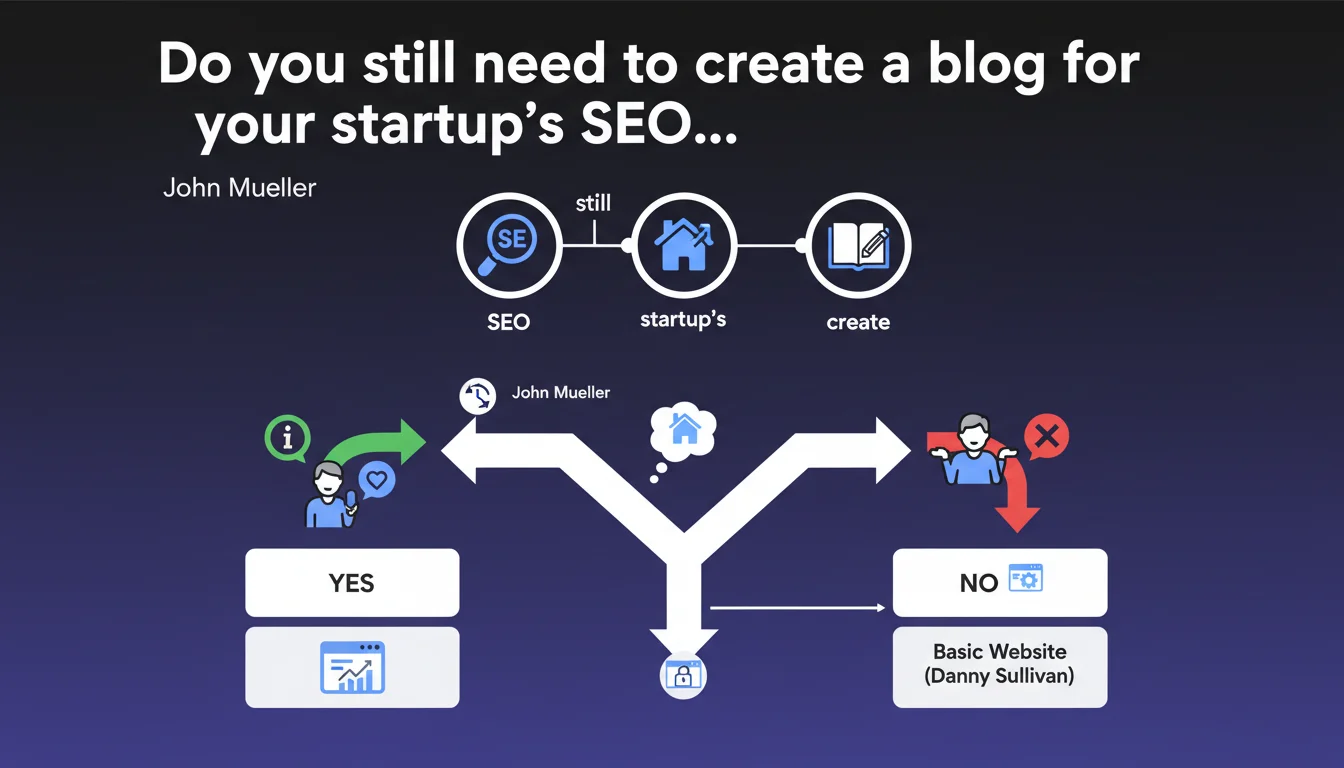
Official statement
What you need to understand
Google is challenging one of the traditional pillars of content marketing: the absolute necessity of having a blog. This statement marks an important turning point in content strategy.
According to Google's spokespeople, creating a blog is no longer a systematic requirement to be visible in search results. This position aligns with a logic of quality over quantity.
The emphasis is now on authenticity and relevance of content. Google prefers a basic but well-designed website over a blog filled with generic articles without real added value.
- A blog is only useful if you genuinely have something to share
- Passion and expertise should take precedence over mere content production
- A basic, well-structured website can be sufficient to get indexed
- Google values quality and usefulness over publication volume
- This approach aligns with the fight against low-quality content and content spam
SEO Expert opinion
This statement perfectly reflects what I've been observing for several years in SERPs. Blogs generating content without real expertise or passion are gradually being demoted in favor of more authentic content.
However, this position needs to be nuanced: for certain sectors like B2B SaaS, niche e-commerce, or professional services, a blog remains a powerful lever. The key lies in intent: if your blog answers real questions from your audience and demonstrates your expertise, it retains its full value.
The evolution toward generative AI and SGE (Search Generative Experience) reinforces this position. Google favors content that demonstrates genuine first-hand expertise rather than compilations of information already available elsewhere.
Practical impact and recommendations
- Audit your current blog: objectively evaluate whether your articles bring real added value or are generic
- Prioritize quality over frequency: it's better to publish 1 expert article per month than 10 superficial ones
- Focus on your main website: optimize your service pages, product pages, and landing pages before thinking about a blog
- Create content only if you have expertise: share your real experience, use cases, and results
- Avoid content farming: don't create a blog just because "you need to have one"
- Invest in alternative formats: videos, podcasts, case studies can advantageously replace a blog without substance
- Optimize your base website: clear structure, internal linking, schema markup, user experience
- If you launch a blog, define a precise editorial line: which topics? What expertise? What differentiation?
In summary: Rethink your content strategy by prioritizing authenticity and expertise. A well-designed website without a blog is better than a blog fed without passion or added value.
Implementing a relevant content strategy and technical optimization of a website can be complex, especially when objectively evaluating the value of your existing content or defining the best approach for your sector. Working with a specialized SEO agency can help you make the right strategic decisions and maximize your visibility with the resources you actually have available.
💬 Comments (0)
Be the first to comment.