
Official statement
Other statements from this video 10 ▾
- □ Does Google really reduce SEO to just two main areas?
- □ Are there really any secrets to ranking first on Google?
- □ Does Google's SEO Starter Guide really contain all the essential techniques you need to rank higher?
- □ Why does Google recommend Search Console over Trends for SEO technical requirements?
- □ Do you really need to chase every emerging trend to rank higher in Google?
- □ Is Google Trends really effective for identifying the right keywords?
- □ Can Google Trends really uncover your hidden SEO opportunities?
- □ Should you really publish your content before seasonal search peaks hit?
- □ Is geographic optimization the missing piece that's holding back your SEO results?
- □ Why do YouTube search trends differ so dramatically from traditional Google web search?
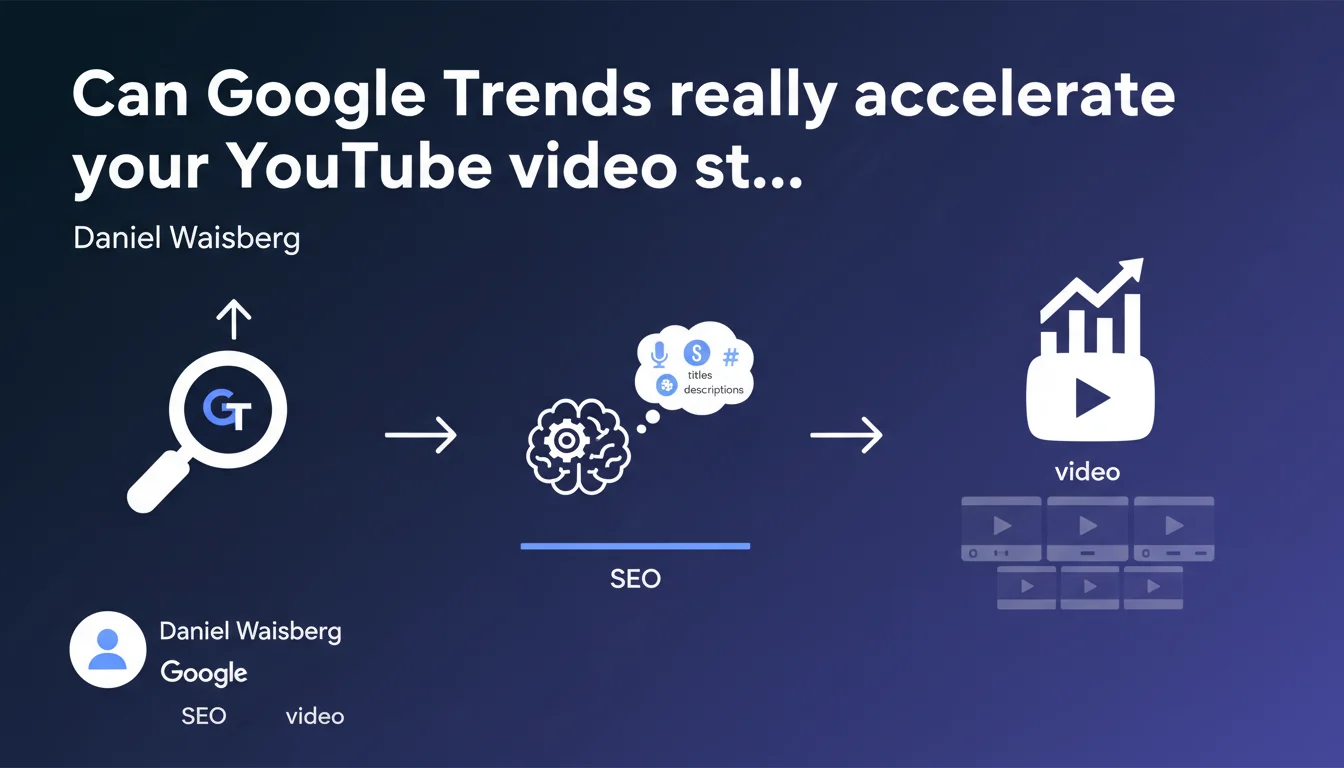
Google confirms that Google Trends is a valuable tool for planning a YouTube video strategy. Classic SEO techniques (title optimization, descriptions) apply directly to YouTube searches. A methodological convergence that simplifies the multi-channel approach.
What you need to understand
Why is Google highlighting Google Trends for YouTube now?
This statement formalizes what many practitioners already do: YouTube functions as a search engine in its own right. Google Trends, originally designed to analyze web search trends, becomes a methodological bridge between classic SEO and video optimization.
The signal is clear — Google wants video content creators to adopt a data-driven approach rather than publishing randomly. Trends enables you to identify seasonal peaks, emerging queries, and geographic interest in a given topic.
What web SEO techniques are applicable to YouTube?
Daniel Waisberg specifically mentions titles and descriptions. Concretely, this means: keyword analysis, search intent identification, crafting compelling titles that incorporate searched terms.
But the list doesn't stop there. Structured timestamps, optimized captions, relevant hashtags, thematic playlists — everything that improves discoverability and user experience falls under video SEO.
Does Google Trends replace existing YouTube SEO tools?
No. Trends provides a macro view of search trends, but doesn't deliver YouTube-specific metrics like thumbnail click-through rates, audience retention, or algorithm suggestions.
It's a complementary tool for the brainstorming and idea validation phase. For fine-tuning optimization, tools like TubeBuddy, VidIQ, or the YouTube API remain essential.
- Google Trends identifies general search trends applicable to YouTube
- Classic SEO principles (optimized titles, descriptions) work on YouTube too
- Trends is a strategic framing tool, not a replacement for YouTube analytics
- Methodological convergence simplifies multi-channel planning (web + video)
SEO Expert opinion
Is this statement really new?
Let's be honest — any SEO professional working on YouTube already uses this approach. What's changing is the official validation from Google. This legitimizes investment in a video strategy integrated into overall SEO.
The timing is no accident. YouTube now represents a massive share of Google search results, particularly through video rich snippets and carousels. Google is pushing creators to professionalize their approach to improve overall index quality.
What nuances should we add to this vision?
The statement remains vague on a critical point: YouTube's recommendation algorithm doesn't work solely on classic SEO signals. Audience retention, click-through rates, and social interactions weigh heavily.
A perfectly SEO-optimized title can fail if the thumbnail is dull or the first 30 seconds don't capture attention. [To verify] — Google doesn't specify the relative weight of SEO signals versus engagement signals in YouTube ranking.
In what cases does this approach show its limits?
For niche content or emerging topics, Google Trends often lacks actionable data. Search volumes are too low to generate relevant insights.
Similarly, Trends doesn't capture trends specific to YouTube — viral formats (shorts, challenges) often emerge outside Google searches. A creator relying solely on Trends risks missing opportunities unique to the video ecosystem.
Practical impact and recommendations
How to integrate Google Trends into your video workflow?
First step: idea validation. Before producing a video, check if the topic generates interest via Trends. Compare multiple angles to identify the most promising one.
Second step: publication timing. Identify seasonal peaks to maximize impact. A video about taxes published in March will have better ROI than one in July.
Third step: linguistic optimization. Trends reveals the actual phrasing used by internet users. Adapt your titles and descriptions accordingly rather than imposing your jargon.
What pitfalls should you absolutely avoid?
Don't blindly trust Trends data for YouTube content. High Google search volume doesn't guarantee equivalent YouTube interest. Always cross-reference with native YouTube analytics.
Also avoid the keyword stuffing trap in descriptions. YouTube penalizes over-optimized content that degrades user experience. The balance between optimization and naturalness remains crucial.
How to measure the effectiveness of this approach?
Compare performance of videos produced with and without prior Trends analysis. Specifically measure YouTube search traffic (distinct from recommendation traffic).
Also monitor correlation between Trends peaks and your view peaks. If no correlation appears, it's because your audience consumes content through other channels (suggestions, subscriptions).
- Use Google Trends to validate topic interest before production
- Identify seasonal peaks to optimize publication schedule
- Adapt titles and descriptions to actual user phrasing
- Systematically cross-reference Trends with native YouTube analytics
- Measure YouTube search traffic separately from recommendation traffic
- Test multiple angles for the same topic via keyword variations
- Avoid keyword stuffing — prioritize natural readability
❓ Frequently Asked Questions
Google Trends affiche-t-il des données spécifiques à YouTube ou uniquement au web ?
Quelle est la fiabilité de Google Trends pour des niches à faible volume ?
Les techniques SEO classiques fonctionnent-elles vraiment sur YouTube ?
Faut-il optimiser différemment les vidéos courtes (Shorts) et longues ?
Google Trends peut-il prédire les tendances YouTube émergentes ?
🎥 From the same video 10
Other SEO insights extracted from this same Google Search Central video · published on 25/09/2024
🎥 Watch the full video on YouTube →
💬 Comments (0)
Be the first to comment.