
Official statement
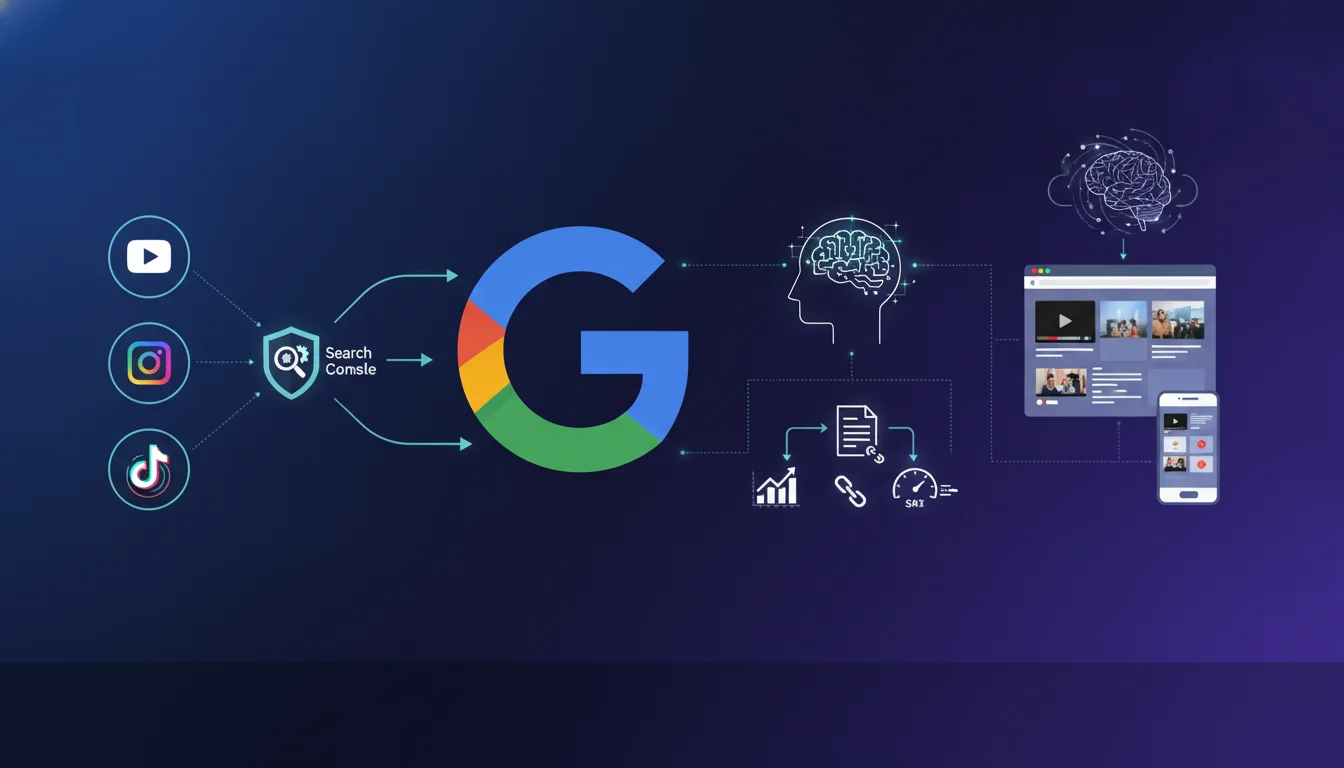
Google now allows you to add Instagram, TikTok, and YouTube profiles to Search Console to monitor their performance in search. This change officially acknowledges that social content can appear in SERPs and deserves structured SEO tracking. Practitioners can finally measure the impact of their presence on these platforms within their overall visibility strategy.
What you need to understand
What does this new feature really change?
Google is expanding the scope of Search Console beyond traditional websites. Until now, the tool was limited to classic web properties (domains, subdomains, URL prefixes). You can now directly link your Instagram, TikTok, and YouTube accounts as distinct properties.
This integration addresses a reality: content published on these platforms regularly appears in Google search results. YouTube videos occupy zero positions or dedicated carousels. Instagram Reels and TikTok clips show up in trending or informational searches. Google implicitly recognizes that this content contributes to your overall SEO footprint.
How does this data display in Search Console?
Each added social profile becomes an independent property in your list. You can view impressions, clicks, CTR, and average positions of your social content when it appears in Google SERPs. Classic filters (queries, pages, countries, devices) apply.
The system distinguishes between the organic performance of your social content in Google Search and the native metrics of the platforms. You see how many times a Reel or YouTube video appears in a Google search, not how many views it totals on the platform itself. It's a complementary visibility angle, not redundant.
Why is Google launching this feature now?
Multiple signals converge. First, Google has intensified the display of short video content in its results over the past two years. "Shorts" or "Reels" carousels are multiplying for both informative and entertaining queries. Secondly, the algorithm increasingly values multi-format content in its relevance assessments.
This openness also recognizes that creators and brands are heavily investing in social without necessarily maintaining a robust website. Google wants to remain relevant for these players by providing them with a unified dashboard of their search visibility, regardless of the nature of their online presence.
- Instagram, TikTok, and YouTube profiles become fully-fledged Search Console properties
- You access the visibility metrics of this content in Google SERPs, not the platform's native stats
- This evolution reflects the growing omnipresence of short videos in search results
- Brands without a traditional website can finally monitor their SEO footprint through their social accounts
- Google unifies visibility tracking for all content formats, including web and social
SEO Expert opinion
Does this integration indicate a real algorithm change?
Not directly. Google was already displaying YouTube, Instagram, and TikTok content in its results well before this announcement. What changes is the transparency of the data. Previously, you had to guess the impact of your social content on your search visibility through third-party tools or manual searches. Now, Google provides you with access to raw numbers.
That said, this openness confirms an underlying trend: Google is increasingly treating social platforms as indexable content sources just like websites. Ranking algorithms are already incorporating signals like freshness, engagement, or thematic relevance of this content. [To be verified] The exact weight of these signals in ranking calculations remains unclear, and Google does not communicate any figures on the relative weight of social content versus traditional web content.
What limits should be anticipated?
First point: not all your posts will show up in Search Console. Only the content that actually appears in Google SERPs generates actionable data. If your Reels or TikToks never rank, you will have no metrics to analyze. This functionality does not replace the native analytics of the platforms.
Second limitation: the granularity of the data. Search Console aggregates performance by property (account), not necessarily by individual post depending on the available level of detail. You can identify the queries that trigger the display of your social content, but the precise link between a query and a specific video may remain unclear. Third point: this integration does not provide any control over the ranking itself. You observe, you do not control. The optimization levers remain those of the platforms (hashtags, descriptions, engagement) and the thematic relevance.
Does this announcement mask a broader strategy?
Clearly. Google seeks to consolidate its position against the native search engines of social platforms. TikTok, Instagram, and YouTube increasingly function as autonomous search engines, especially among 18-34-year-olds. By integrating these accounts into Search Console, Google encourages creators to monitor their visibility on its search engine, not solely on the platforms themselves.
Another angle: this approach facilitates the collection of additional signals for Google. By connecting your TikTok or Instagram account, you potentially allow Google access to enriched metadata about your content, its performance, and its audience. This data likely feeds the AI models that determine which social content deserves to rank. Nothing official on this, but the logic is consistent.
Practical impact and recommendations
What should you do right now?
Start by adding your profiles for Instagram, TikTok, and YouTube in Search Console if you regularly publish on these platforms. The process takes a few minutes: go to the "Settings" section, "Add a property", select the platform type, and connect the account. Validate the requested permissions.
Once connected, monitor the search queries that trigger the display of your social content. Identify the themes where your videos or posts already rank. Cross-reference this data with your native analytics to pinpoint opportunities: a video performing well on YouTube but poorly in Google Search may need a title or description optimization to improve its SEO relevance.
What mistakes should be avoided during integration?
Do not confuse search visibility and native performance. Search Console shows you how your social content appears in Google, not how many views or likes they get on the platform. If you optimize solely for ranking in Google without considering the native algorithms (TikTok, Instagram, YouTube), you risk losing engagement on the platforms themselves.
Another trap: do not neglect thematic coherence. If your website addresses one topic while your social content addresses another, Google may not associate the two in its understanding of your expertise. Your overall SEO footprint remains fragmented. Align topics, vocabulary, and keywords between your web and social properties to strengthen your relevance signals.
How can you integrate this data into your SEO strategy?
Create a consolidated dashboard that combines Search Console (web and social properties), Google Analytics, and the native analytics of the platforms. Identify the queries where you rank with social content but not with your website, and vice versa. Filling these gaps becomes a tactical opportunity: publish a blog post for a query where only a Reel ranks, or create a YouTube video for a topic where only your site appears.
Also, test the impact of optimizing social metadata on your search visibility. Modify the titles, descriptions, or hashtags of social content that generate impressions in Google but have a low CTR. Measure changes over four to six weeks. If you see gains, streamline the process.
- Add your Instagram, TikTok, and YouTube accounts in Search Console through the Settings section
- Analyze the search queries that trigger the display of your social content
- Cross-reference this data with native analytics to identify optimization opportunities
- Check for thematic coherence between your web and social properties
- Test the impact of metadata changes (titles, descriptions) on your search CTR
- Create a consolidated report integrating all your properties for a comprehensive view of your SEO footprint
💬 Comments (0)
Be the first to comment.