
Official statement
What you need to understand
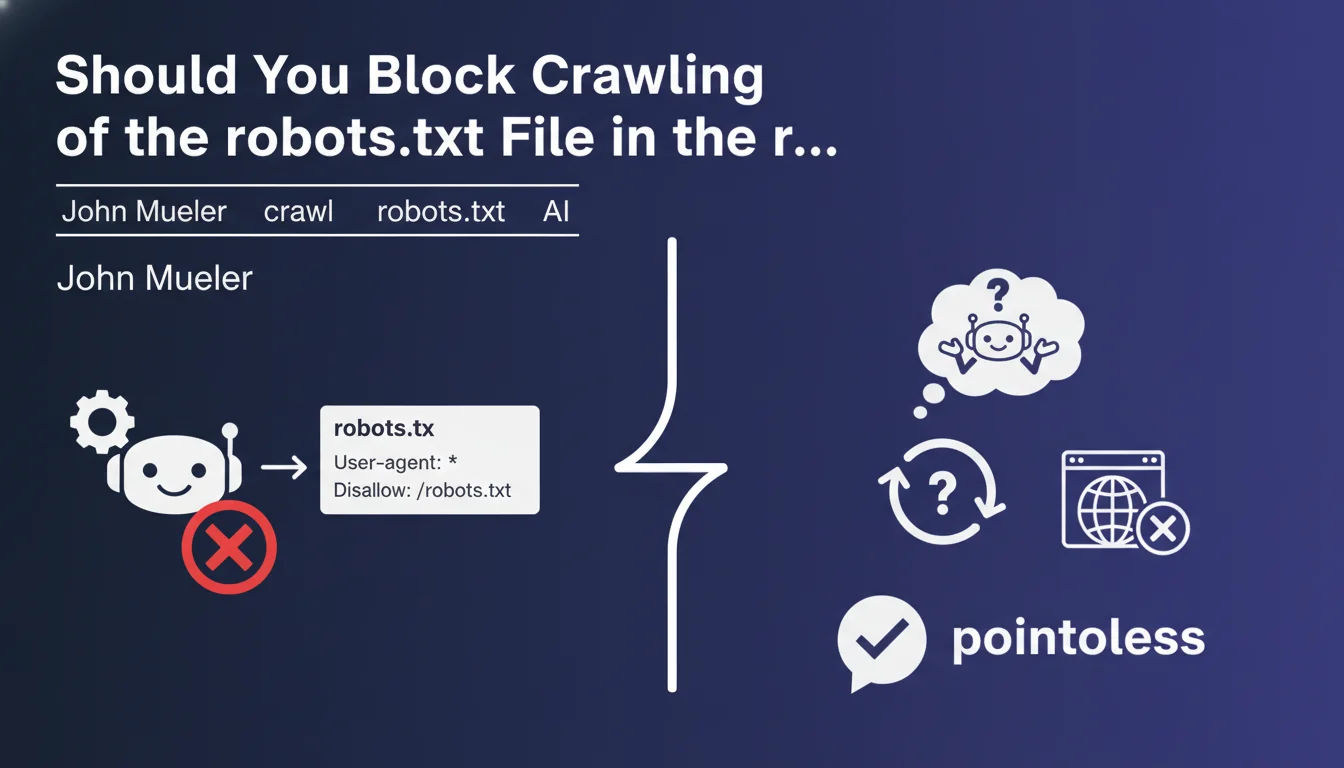
This statement addresses a paradoxical situation that some webmasters attempt to implement: blocking access to the robots.txt file by using... the robots.txt file.
The logical problem is obvious: how could a robot read the prohibition if it's contained in a file it's not allowed to access? This is a pure technical impossibility.
The robots.txt file is necessarily public and must be accessible so that search engines can understand the site's crawl rules. It's the mandatory entry point for any robot before exploring a website.
- The robots.txt must be accessible at the domain's root URL (/robots.txt)
- Search engines consult this file before any other crawl action
- Blocking its own access creates an insurmountable logical contradiction
- This practice reveals a misunderstanding of how robots directives work
SEO Expert opinion
This situation perfectly illustrates a frequent confusion among certain webmasters regarding how the robot exclusion protocol works. The robots.txt is not a security file but a communication file with search engines.
In my practice, I regularly observe attempts to "secure" the robots.txt that demonstrate a fundamental misunderstanding. The robots.txt doesn't prevent access to content; it simply tells well-intentioned robots what they can or cannot crawl.
This anecdote reminds us of the importance of thoroughly mastering SEO fundamentals before manipulating critical files like robots.txt, which can block your entire site if misconfigured.
Practical impact and recommendations
- Never attempt to block access to the robots.txt file itself
- Verify that your robots.txt is accessible via both HTTPS and HTTP at the /robots.txt URL
- Use Search Console to test the syntax and accessibility of your robots.txt
- Clearly distinguish between crawl control (robots.txt) and actual security (server authentication)
- For sensitive content, use server-side protection methods rather than robots.txt
- Regularly audit your robots.txt file to avoid unintentional blocking of important sections
- Train your technical teams on the fundamental principles of the robot exclusion protocol
Optimal robots.txt configuration requires a thorough understanding of technical architecture and crawl priorities. These technical aspects can prove complex to master, particularly for high-volume sites or specific architectures. Support from a specialized SEO agency helps avoid critical errors and establish a crawl strategy aligned with your business objectives, while benefiting from expert perspective on your entire technical ecosystem.
💬 Comments (0)
Be the first to comment.