
Official statement
What you need to understand
What Was Penguin 4.0 and Why Was Google Worried About Spam?
Penguin 4.0 was a major update to Google's anti-spam filter launched in 2016. This filter aimed to penalize sites using artificial link building techniques and anchor text over-optimization.
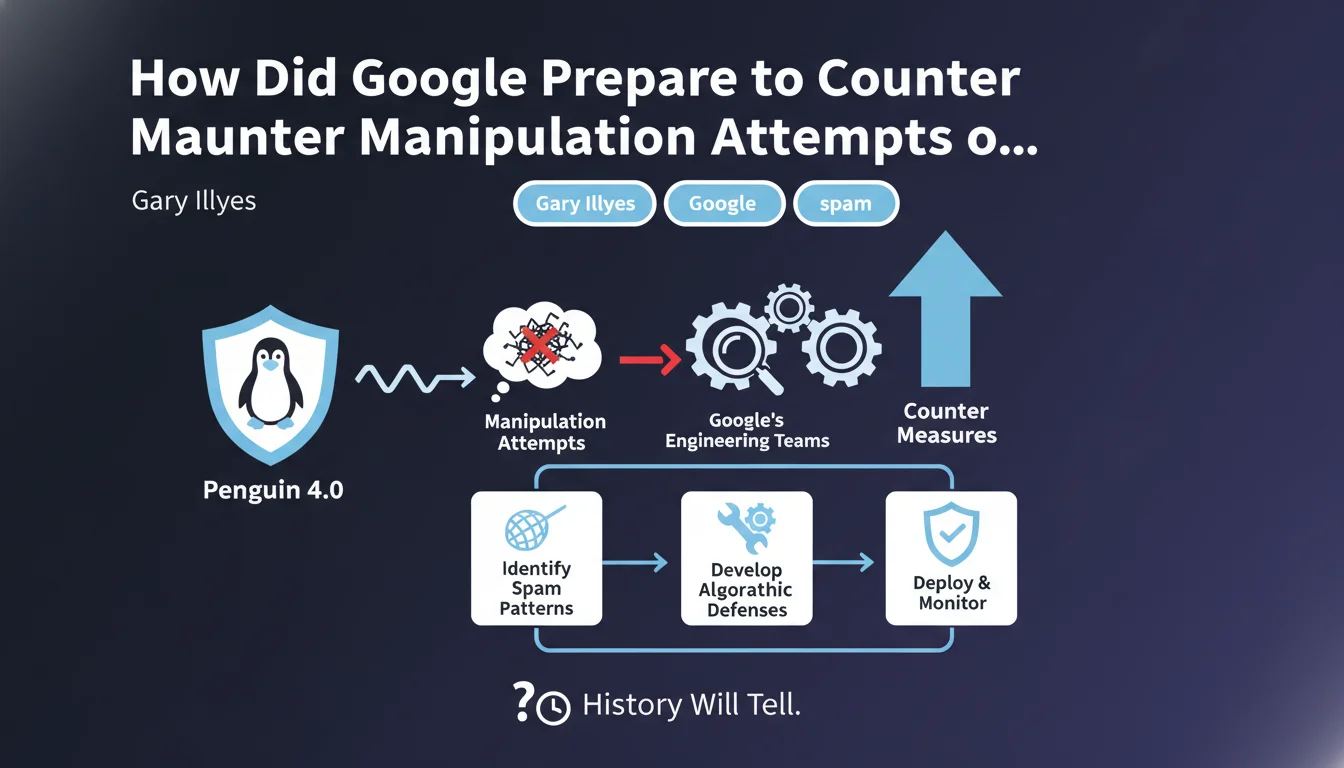
Gary Illyes' statement reveals that Google anticipated manipulation attempts of this new filter. Black hat SEOs are always looking to identify algorithmic loopholes to exploit them, hence this proactive preparation by the teams.
Which Teams Were Mobilized at Google?
Google had deployed dedicated engineering teams specifically to monitor and counter spam attempts. This approach shows that every major algorithmic update is accompanied by an intensive monitoring phase.
This mobilization is not trivial: it confirms that Google doesn't just launch a filter, but refines it in real-time based on observed behaviors.
Why Does This Statement Matter for SEO Practitioners?
This announcement confirms that Google adopts a proactive defensive posture against manipulation. Each new update is followed by an adjustment period where circumvention attempts are tracked.
- Penguin 4.0 operated in real-time, integrated into the core algorithm
- Google actively monitored manipulation patterns post-launch
- Identified spam techniques triggered rapid adjustments to the filter
- This approach applies to all major updates, not just Penguin
- The period following an update is particularly risky for borderline practices
SEO Expert opinion
Does This Active Monitoring by Google Still Apply Today?
Absolutely. Six years after Penguin 4.0, this approach has even intensified and become systematized. Every Core Update, every feature launch is now accompanied by increased algorithmic and human surveillance.
Machine learning systems now allow Google to identify manipulation attempts even more quickly. What took weeks in 2016 is now detected in a few days, even hours for certain flagrant patterns.
What Nuances Should We Add to This Statement?
While Google's vigilance is real, it is not infallible or instantaneous. Spam techniques still temporarily escape the filters, creating opportunities for the most sophisticated manipulators.
The real risk lies in sustainability. A technique that works today can trigger a retroactive penalty tomorrow. This is particularly true for link building: a suspicious link profile can take months to be sanctioned, then cause a sudden drop.
Does This Defensive Approach Reveal a Weakness in Google's Algorithms?
Paradoxically, yes. The fact that Google mobilizes entire teams to monitor manipulation attempts shows that algorithms alone are not sufficient. There is always a time lag between spammers' innovation and the algorithmic response.
This is why Google now combines automatic detection, manual actions, and continuous algorithmic adjustments. This multi-layered strategy explains why some sites are penalized manually while others experience algorithmic drops for similar practices.
Practical impact and recommendations
What Should You Actually Do After Each Major Update?
Adopt a cautious observation posture for at least 3 months after any significant Google announcement. This is the period when adjustments are most frequent and suspicious behaviors are scrutinized.
Meticulously document your SEO actions to be able to quickly identify what might have triggered a drop. Keep a history of link building campaigns, on-page optimizations, and major technical changes.
What Mistakes Should You Absolutely Avoid in the Post-Update Period?
Never attempt to massively exploit an identified loophole just after an update. What looks like an opportunity is often a trap: Google collects data on these behaviors to refine its filters.
Avoid brutal over-corrections. If your site loses rankings, don't massively delete links or drastically modify your content immediately. Calmly analyze the real causes before taking action.
- Maintain a natural link profile with regular and progressive growth
- Diversify your link anchors by favoring brand and generic anchors
- Monitor your backlink profile with professional tools (Ahrefs, Majestic, Semrush)
- Disavow toxic links before they become a problem, not after a penalty
- Document each significant SEO action in a logbook
- Prioritize long-term strategies over quick wins
- Test new tactics on secondary projects, never on your main site
- Stay informed about official Google communications through their channels
How Can You Build a Resilient SEO Strategy Against These Evolutions?
The key is to diversify your traffic sources and never depend on a single technique. A resilient site combines quality content, natural authority, optimal user experience, and multi-channel presence.
Invest in building genuine relationships with your ecosystem: partners, media, influencers. These authentic links withstand all updates because they are legitimate by nature.
💬 Comments (0)
Be the first to comment.