
Official statement
What you need to understand
What exactly is Google Penguin and why does this announcement matter?
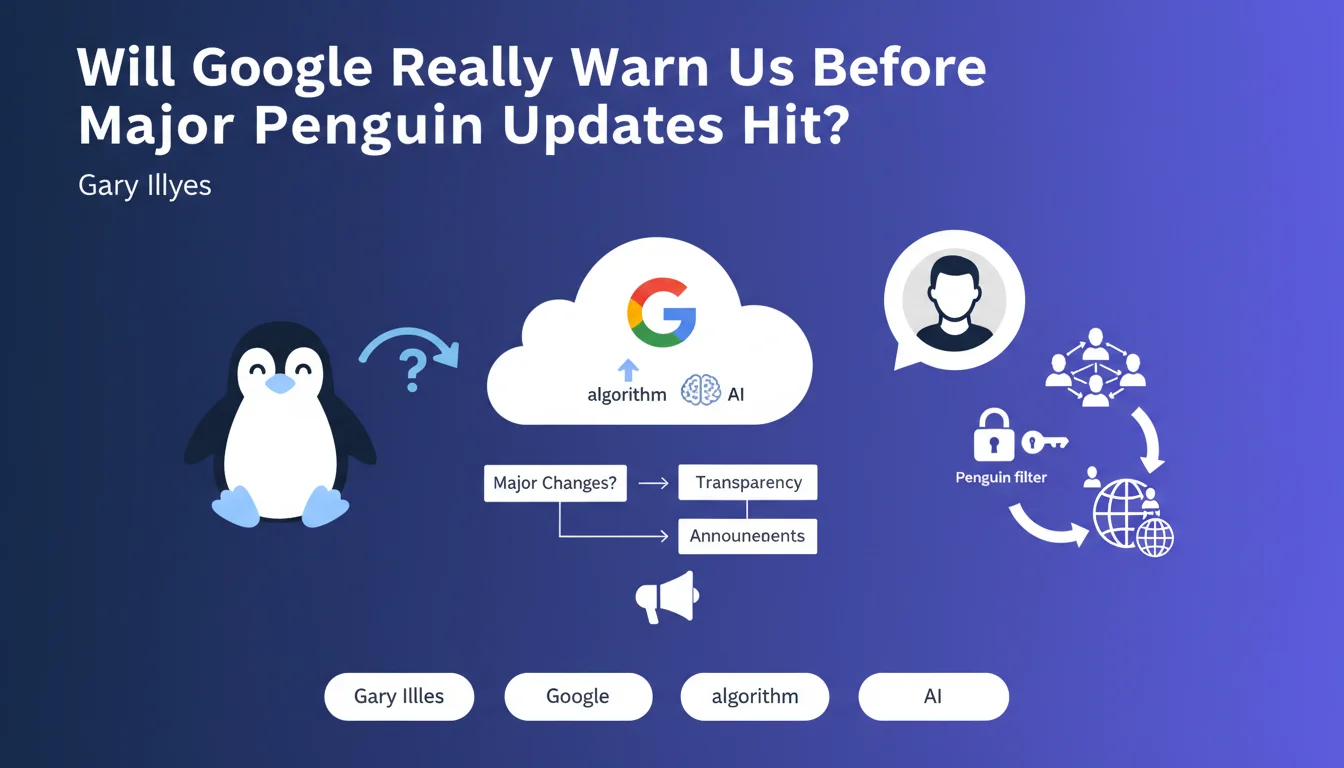
Google Penguin is an algorithmic filter launched in 2012 to penalize sites using abusive link building techniques. This statement marks a turning point in Google's communication strategy.
The transparency commitment announced by Gary Illyes means that Google plans to alert SEO professionals during major modifications to Penguin. This is an implicit acknowledgment of the considerable business impact of this filter.
What does this transparency promise actually mean in practice?
Google commits to communicating only about significant changes to the Penguin algorithm. Minor adjustments and day-to-day operations will remain opaque.
This approach allows SEOs not to be caught off guard by major upheavals while maintaining some confidentiality about the technical details of the filter.
- Limited transparency: only major updates will be announced
- Possible anticipation: SEOs will be able to prepare their strategies in advance
- Risk reduction: fewer unpleasant surprises for compliant sites
- Official communication: end of speculation about Penguin-related fluctuations
Why is Google changing its communication policy now?
Historically, Penguin updates have caused brutal traffic drops without prior warning. This opacity created frustration and distrust within the SEO industry.
By promising more transparency, Google seeks to improve its relationship with webmasters while maintaining the effectiveness of its anti-spam filter. It's a delicate balance between communication and confidentiality.
SEO Expert opinion
Has this statement been consistent with practices observed since then?
In practice, Google has partially kept this transparency promise. Some major updates have indeed been announced, but other significant changes went unnoticed.
The integration of Penguin into the core algorithm in 2016 was communicated, but since then, information has become scarce. The definition of "major changes" remains vague and subjective.
What nuances should we bring to this commitment?
The transparency promise doesn't mean Google will reveal how Penguin works in detail. The precise criteria for detecting link spam will remain confidential to prevent manipulation.
Moreover, with Penguin's integration into the core algorithm, it becomes difficult to distinguish the specific effects of this filter. The promised transparency has diluted into overall algorithmic complexity.
In what context was this communication made?
This statement came in a context where Penguin penalties created major uncertainty for businesses. Penalized sites could wait months before a possible recovery.
The transparency commitment also aimed to encourage white hat practices by reassuring clean sites that they wouldn't be victims of arbitrary unannounced changes.
Practical impact and recommendations
How should you adapt your link building strategy in light of this announcement?
The transparency promise shouldn't reassure you to the point of dropping your guard. Penguin operates in real-time and acts even without official announcements.
Focus on building a natural and diversified link profile. Avoid any technique that could be perceived as manipulative, whether an update is announced or not.
- Regularly audit your backlink profile with specialized tools
- Disavow toxic links via Google Search Console proactively
- Prioritize quality over quantity in your link acquisition strategy
- Diversify your anchor texts for a natural and balanced profile
- Monitor your competitors to detect sector-wide fluctuations
- Document all your link building actions to track history
What should you do if your site is impacted by a Penguin update?
In case of a sudden drop in rankings, first identify whether Penguin is the cause. Analyze your backlinks to detect low-quality or over-optimized links.
Clean up your link profile by contacting webmasters to remove problematic links, then use the disavow tool for non-removable links. Recovery can take several weeks.
What mistakes should you absolutely avoid in your post-Penguin strategy?
Don't panic and don't mass-disavow your links without thorough analysis. Hasty action can cause more damage than a thoughtful approach.
Also avoid falling back into artificial link building habits after recovery. Penguin monitors continuously, and a second penalty is always harder to fix.
💬 Comments (0)
Be the first to comment.