
Official statement
Other statements from this video 7 ▾
- □ Google sépare-t-il vraiment Search et Ads comme il le prétend ?
- □ Google favorise-t-il vraiment les gros sites avec un support SEO privilégié ?
- □ Les PBN sont-ils vraiment tous considérés comme du spam par Google ?
- □ Google surveille-t-il les forums d'aide pour détecter le spam ?
- □ Pourquoi Google déconseille-t-il l'utilisation des LLM dans les forums d'aide ?
- □ Le feedback des Product Experts influence-t-il vraiment la documentation Google et Search Console ?
- □ Pourquoi le SEO technique n'a-t-il pas les mêmes priorités selon les marchés ?
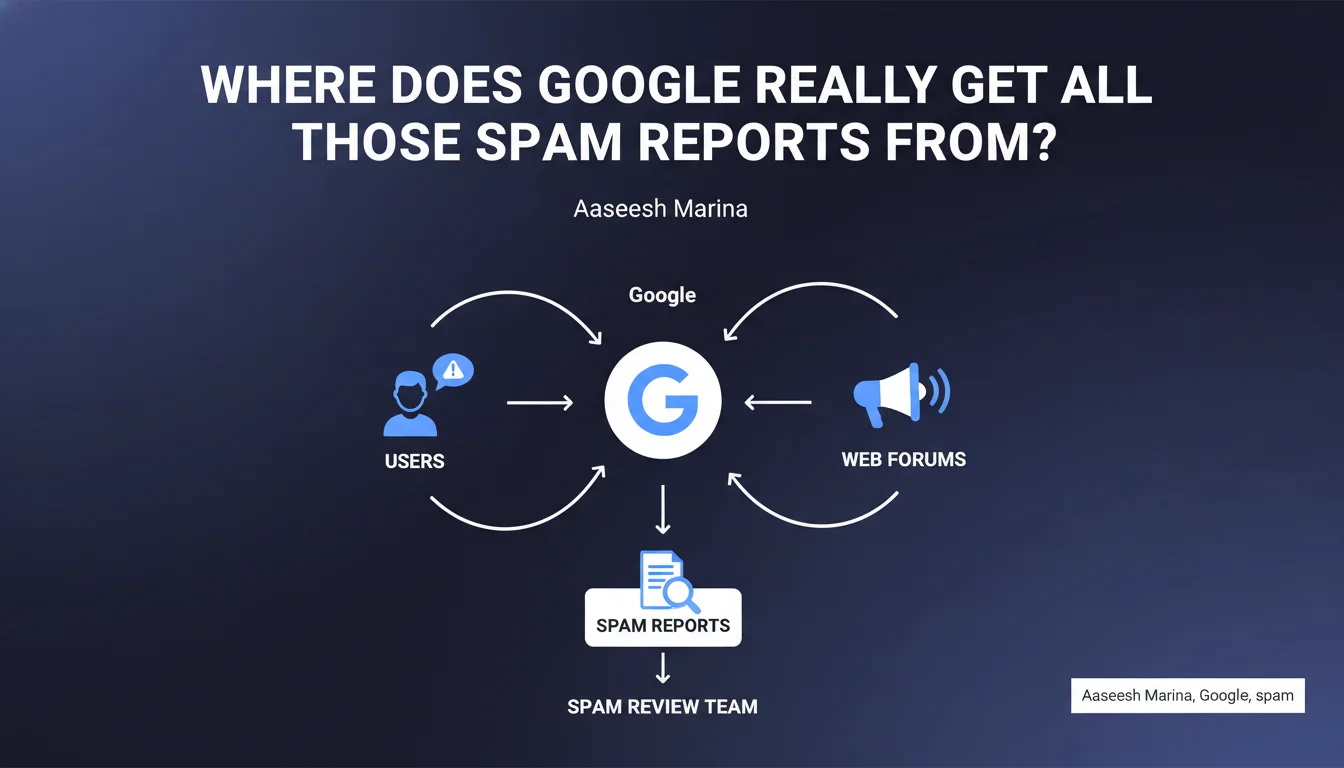
Google receives spam reports from multiple sources, not just official forums. Any user can submit a report if they believe a site violates the rules. This multiplicity of channels makes spam detection more distributed and diffused than many people realize.
What you need to understand
What reporting channels are actually available?
Google doesn't limit itself to a single entry point for collecting spam reports. The webspam team aggregates data from varied sources: public reporting forms, internal reports, algorithmic detections, and probably even indirect signals from user behavior patterns.
The key takeaway here: any user can contribute to identifying problematic sites. Google support forums are just one channel among many. This statement is likely meant to clarify that not all reports go through a single visible public window.
Why does Google emphasize this multiplicity?
The goal is twofold. First, reassure users: your reports matter, even if they don't go through official forums. Second, discourage the misconception that only forum reports get processed—which would be a narrow view of the process.
This relative transparency also shows that Google wants to avoid excessive concentration on a single reporting channel, which could create bottlenecks or bias in how reports are handled.
What are the implications for spam detection?
The diversity of sources enriches detection coverage. If spam slips past automated algorithms, a user can report it. If nobody notices it publicly, other internal channels might catch it.
This also means that the visibility of spam isn't correlated with how likely it is to be addressed. A site can receive a manual action without ever being publicly reported on a forum.
- Multiple channels: public forms, internal reports, algorithmic detections, behavioral signals
- Any user can report: no need to go through official forums
- Expanded coverage: reduces the risk that spam falls through the cracks
- No visible hierarchy among sources: Google doesn't say which channels take priority
SEO Expert opinion
Does this transparency hide a deeper opacity?
Let's be honest: saying reports come from "multiple sources" without specifying them precisely means staying in the dark. What exactly are these sources? What's their relative weighting? Google won't say.
You could reasonably assume that certain internal channels—those used by Google teams or trusted partners—carry more weight than a simple public form. But this hierarchy remains invisible. [To verify]: no public data allows us to confirm the actual weighting between sources.
Are public reports really treated with equal priority?
Real-world experience shows that some spam reports submitted through public forms never result in visible action. Either because the spam isn't flagrant enough, or because Google prioritizes other signals.
This statement says nothing about processing timelines or prioritization criteria. Does a report from an average user get the same chance of review as an internal or algorithmic report? Probably not. But Google will never say so explicitly.
Should SEOs really be encouraged to report their competitors?
That's a thorny subject. Some professionals use the spam form as a competitive weapon. Google knows this—and this statement could be read as a reminder that anyone can report, though it doesn't guarantee systematic action.
In practice, the best reports are those about obvious spam (link networks, cloaking, massive scraping). Reporting a competitor simply because they're outperforming you is counterproductive—and Google has enough data to spot abusive reports.
Practical impact and recommendations
What should you do if you spot obvious spam?
Use Google's official spam reporting form. Be precise: include the URL, the type of manipulation (links, duplicate content, cloaking), and provide tangible evidence if possible.
Don't expect a quick response. Google doesn't systematically communicate about the outcomes of reports. Sometimes manual action takes weeks, sometimes it never comes. Patience and realism are essential.
How can you protect your site against abusive reports?
Best defense: stay clean. No borderline tactics, no sketchy link networks, no massive low-value generated content. If your site follows the guidelines, an abusive report will have zero consequences.
Monitor Search Console regularly for any manual actions. If you get one, address it quickly and submit a detailed reconsideration request. Google is usually quite responsive on reconsiderations if the issue is fixed.
What mistakes should you avoid when reporting?
Don't report a competitor just because they're beating you. Google detects malicious reports and they'll have no effect—worse, it can damage your credibility if you're part of a partner program.
Also avoid vague reports. "This site is doing spam" with no specific details won't get processed. Be factual, specific, and document your claims.
- Use the official form to report obvious spam, with supporting evidence
- Never report a competitor out of frustration—focus on optimizing your own site
- Monitor Search Console for any manual actions
- Stay compliant with guidelines: the best defense against abusive reports
- If you get a manual action, fix it quickly and submit a detailed reconsideration request
❓ Frequently Asked Questions
Puis-je signaler un concurrent qui me dépasse dans les résultats ?
Les signalements via les forums sont-ils prioritaires ?
Combien de temps faut-il attendre après un signalement ?
Mon site peut-il être pénalisé suite à un signalement malveillant ?
Dois-je signaler tous les spams que je croise ?
🎥 From the same video 7
Other SEO insights extracted from this same Google Search Central video · published on 21/02/2024
🎥 Watch the full video on YouTube →
💬 Comments (0)
Be the first to comment.