
Official statement
What you need to understand
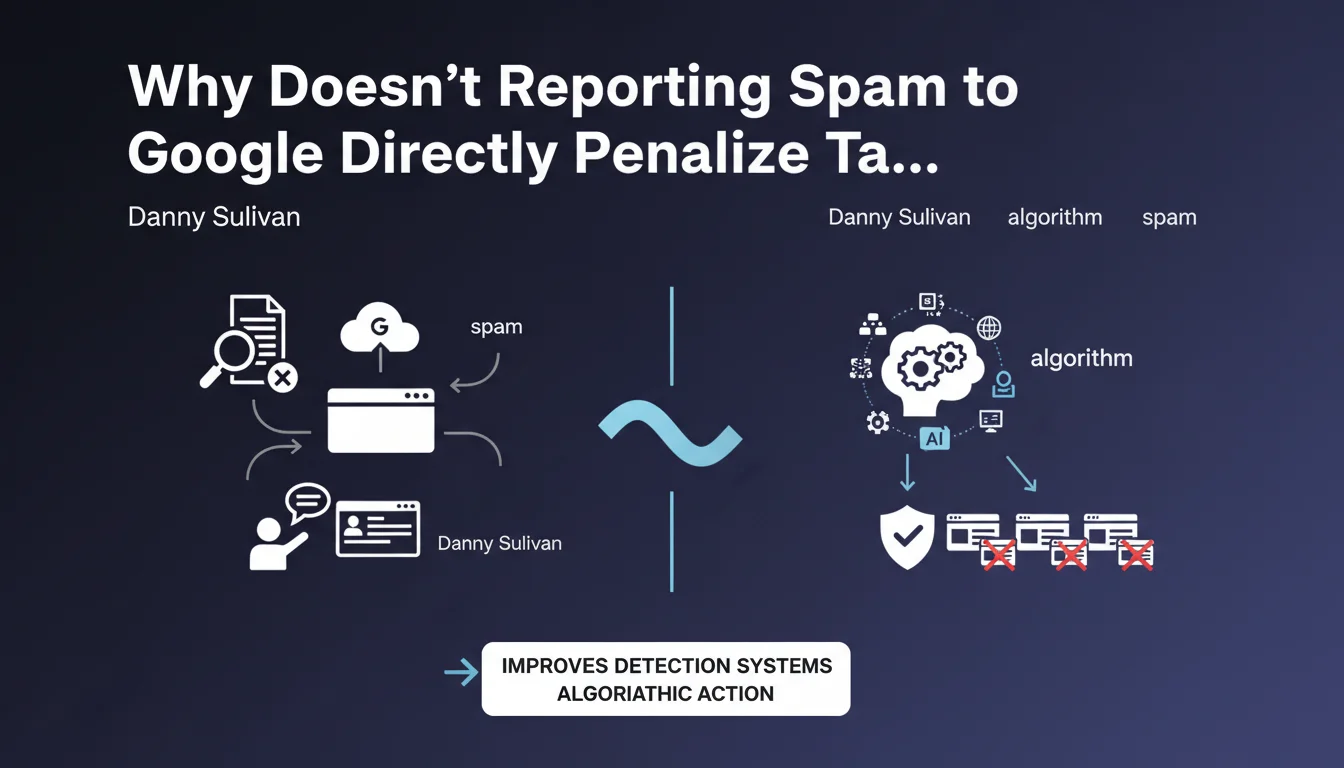
Google has formalized a practice unknown to many SEO practitioners: spam reports submitted through their form do not trigger immediate manual actions against the reported sites.
These reports actually serve to feed and refine Google's automatic detection algorithms. The collected data helps identify spam patterns on a larger scale, rather than treating each case individually.
This systemic approach means that the impact of a report is indirect and delayed over time. Google improves its filters, which can then automatically detect and handle thousands of sites with similar characteristics.
- Spam reports feed Google's machine learning systems
- No manual action is taken following an individual report
- The effect manifests at the algorithmic level, globally rather than in a targeted manner
- The form has been updated to allow precise categorization of the types of spam reported
SEO Expert opinion
This statement is perfectly consistent with field observations from recent years. Professionals have indeed found that reporting a competitor using blackhat techniques never produced visible short-term results.
This approach has undeniable technical logic: manually processing millions of reports would be impossible at Google's scale. Machine learning enables superior efficiency by identifying recurring patterns rather than isolated cases.
However, an important nuance: manual actions still exist for the most flagrant cases, but they are initiated by Google's internal teams, not by external reports. Mass spammers and site networks can therefore still be subject to manual penalties discovered through other means.
Practical impact and recommendations
- Don't rely on reports to quickly drop a competitor in the SERPs
- Continue reporting spam that you encounter: it improves the ecosystem long-term
- Focus your efforts on optimizing your own site rather than denouncing competitors
- Be precise in your reports: use the appropriate form categories to maximize their usefulness
- Document spam practices you observe with screenshots and precise URLs
- Never consider reporting as a viable defensive SEO strategy
- Invest in quality: improved algorithms will eventually favor legitimate sites anyway
- Monitor algorithmic developments rather than waiting for manual actions on your reports
A deep understanding of these algorithmic mechanisms and their integration into a holistic SEO strategy requires extensive expertise. As Google's ecosystem constantly evolves with regular updates to its detection systems, ongoing technical monitoring becomes essential. For businesses seeking to effectively navigate these subtleties and build a sustainable presence in search results, partnering with a specialized SEO agency can prove valuable to benefit from up-to-date expertise and a personalized strategy tailored to your industry.
💬 Comments (0)
Be the first to comment.