
Official statement
Other statements from this video 7 ▾
- □ Google sépare-t-il vraiment Search et Ads comme il le prétend ?
- □ Les PBN sont-ils vraiment tous considérés comme du spam par Google ?
- □ Google surveille-t-il les forums d'aide pour détecter le spam ?
- □ Comment Google collecte-t-il réellement les signalements de spam web ?
- □ Pourquoi Google déconseille-t-il l'utilisation des LLM dans les forums d'aide ?
- □ Le feedback des Product Experts influence-t-il vraiment la documentation Google et Search Console ?
- □ Pourquoi le SEO technique n'a-t-il pas les mêmes priorités selon les marchés ?
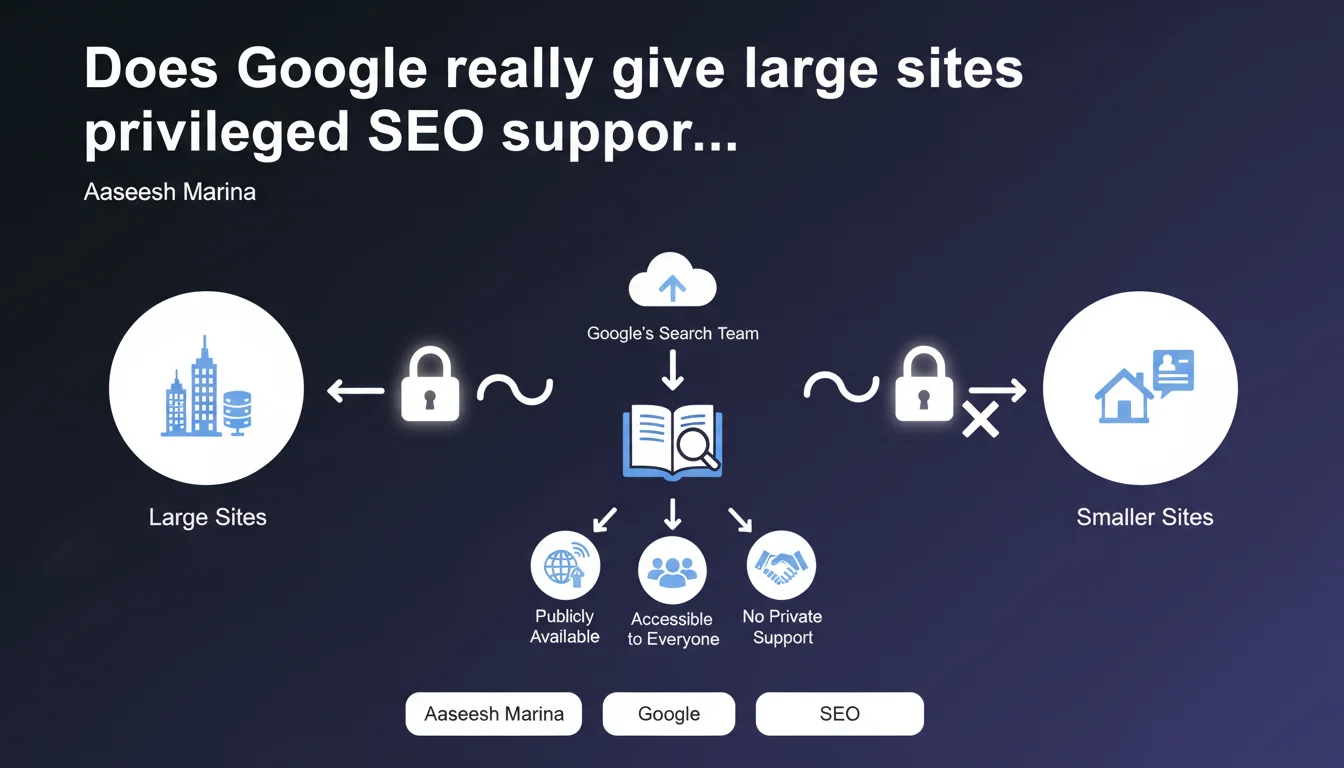
Google claims that all of its SEO resources are public and accessible to everyone, with no special treatment for major websites. No private or privileged support channel exists — whether you run a small blog or a massive e-commerce platform, everyone has access to the same documentation and resources.
What you need to understand
Is this statement addressing a long-standing suspicion in the SEO community?
For years, some SEO professionals have suspected that Google offers private SEO support to major platforms — leading news sites, e-commerce giants, or high-budget Google Ads advertisers. The theory goes: these players would have access to exclusive advice, direct communication channels with the Search team, or even advance notice of algorithm updates.
Aaseesh Marya puts that to rest. All support provided by the Search team is public and accessible to everyone without distinction. Concretely: Search Console Help, official documentation, YouTube videos, Search Central Live events, and blog posts — those are the only channels. No secret hotline, no private Slack with Google engineers.
Why this clarification now?
Because the perception of unequal treatment erodes Google's credibility with smaller players. If an independent e-commerce business believes its competitors have a structural information advantage, it loses faith in the fairness of the ranking system. Google therefore has an incentive to remind everyone that access to SEO information is not a privilege.
Important caveat — this statement doesn't claim that all sites are treated the same way in search results. It simply affirms that documentary support access is identical for everyone.
What official resources are accessible to everyone?
- Search Console Help: technical documentation, getting-started guides, diagnostic tools
- Google Search Central Blog: official announcements, case studies, practical advice
- YouTube videos (Google Search Central channel): live sessions, Q&A, algorithm explanations
- Search Central Live events: public conferences, streamed online
- Google Search Status Dashboard: tracking technical incidents
- Community forums: Google Search Central Community, where recognized Product Experts contribute
SEO Expert opinion
Does this statement align with what we observe in practice?
Yes and no. Yes, because there genuinely isn't secret SEO documentation reserved for major accounts — I've never seen credible evidence of such a channel existing. No, because certain players definitely do have access to informal exchanges that others don't.
Let's be honest: large platforms do have relationships with Google Ads Account Managers or technical partners. Even if these contacts don't provide official SEO advice, they can point toward the right resources, clarify ambiguous points, or escalate technical bugs faster. It's not structured SEO support, but it is facilitated access to the Google ecosystem.
In what cases does this rule not fully apply?
There are two gray areas. First: news sites participating in the Google News Initiative or the Journalism Emergency Relief Fund. These programs sometimes include training sessions, technical audits, or even Core Web Vitals workshops — still public support, but targeted and easier to access.
Second: major publishers sometimes meet with Google engineers at private conferences (like Pubcon VIP dinners or closed-door industry meetings). Again, no exclusive documentation — but informal access to people who can confirm or debunk SEO hypotheses. [To verify] whether this truly constitutes a decisive advantage.
Should we take this statement at face value?
Yes, in the sense that no secret SEO document exists. No, if you think all sites get the same level of operational attention. A site generating 10 million page views daily will more easily get an engineer's ear during an indexing bug than a niche blog with 500 monthly visits.
Marina's statement is fundamentally true — but it doesn't change the fact that actual access to technical support varies depending on site size and influence. That's the nuance Google doesn't mention.
Practical impact and recommendations
What should you do concretely to maximize access to Google support?
Since everyone has access to the same resources, the difference comes down to your ability to leverage those resources. Large sites often have dedicated teams monitoring, testing, and analyzing each Google announcement. Small sites must compensate through targeted monitoring and critical reading of official sources.
Specifically: subscribe to the Search Central Blog RSS feed, turn on YouTube notifications for the Google Search Central channel, and regularly check the Search Status Dashboard if you notice suspicious traffic drops. Don't rely solely on press summaries — read the full announcements.
What mistakes should you avoid when seeking SEO support?
First mistake: assuming a Google Ads Account Manager can resolve an SEO problem. These teams are siloed. If your AM gives you SEO advice, they're drawing from the same public docs as you — or less, since it's not their domain.
Second mistake: expecting a Google engineer to answer you on Twitter/X. John Mueller, Gary Illyes, and Danny Sullivan sometimes chime in, but their answers aren't official support. They reflect their personal understanding, not a documented Google position. If you're making a strategic decision based on a tweet, make sure it's also supported by official sources.
How can you verify you're fully leveraging all available resources?
- Check Search Console at least weekly — Messages, Coverage, Core Web Vitals, Page Experience
- Read every post on the Search Central Blog the day it's published, especially those marked "Algorithm update" or "Policy change"
- Watch Search Central Live in full, not just clips — the Q&A sections often contain crucial clarifications
- Participate in the Google Search Central Community forums: even if you don't ask questions, reading others' questions helps you spot recurring bugs or issues
- Archive the Google Search Off the Record podcasts — some technical details only appear there, never in written docs
- Compare your real-world observations with official statements: if a pattern contradicts what Google says, document it rigorously
❓ Frequently Asked Questions
Les sites Google Ads Premium ont-ils accès à un support SEO différent ?
Si je contacte Google via la Search Console, vais-je obtenir une réponse personnalisée ?
Les Product Experts du forum Google Search Central sont-ils des employés Google ?
Peut-on obtenir un audit SEO gratuit de la part de Google ?
Les sites participant au Google News Initiative ont-ils un avantage SEO ?
🎥 From the same video 7
Other SEO insights extracted from this same Google Search Central video · published on 21/02/2024
🎥 Watch the full video on YouTube →
💬 Comments (0)
Be the first to comment.