
Official statement
What you need to understand
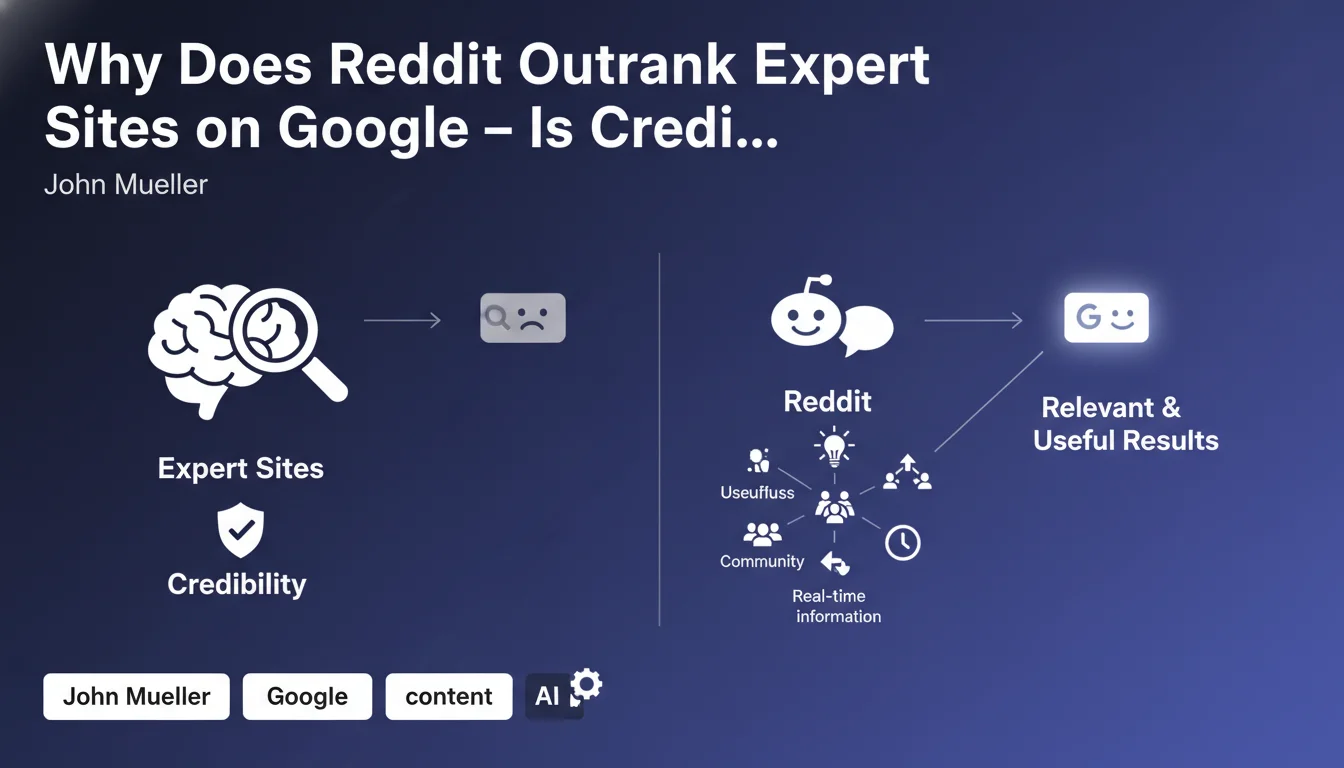
Google clearly states that ranking in search results is not based solely on the credibility of the site or author. This statement comes at a time when many SEO professionals are observing that content from community platforms like Reddit is surpassing specialized sites in SERPs.
Google's algorithm now favors a multidimensional approach to relevance. Credibility remains a factor, but it fits within a broader set of criteria that evaluate the actual usefulness of content for the user. This means that less "official" but more useful content can legitimately achieve better rankings.
This evolution reflects a fundamental shift in Google's philosophy: user experience and practical usefulness take precedence over traditional authority markers. A user testimonial, an authentic discussion, or an experience report can provide more value than a technical article written by a recognized expert.
- Credibility alone no longer guarantees good ranking
- Google evaluates relevance according to multiple combined criteria
- Usefulness for the user becomes the determining factor
- Authentic community content is gaining visibility
- Query context strongly influences the ranking criteria applied
SEO Expert opinion
This statement is perfectly consistent with field observations since 2023. We are indeed seeing forums, Reddit, Quora, and other community platforms massively gaining visibility, particularly for informational queries with the search intent of finding authentic opinions.
However, important nuances need to be added. Credibility remains crucial for YMYL queries (health, finance, legal matters) where information accuracy can have serious consequences. Similarly, for transactional content or commercial searches, domain authority retains significant weight.
The algorithm now seems capable of distinguishing different types of search intent and adapting its ranking criteria accordingly. For certain queries, authenticity and lived experience (the first "E" in E-E-A-T) matter more than formal expertise.
Practical impact and recommendations
- Analyze search intent behind each targeted keyword and adapt content format accordingly (formal expertise vs. authentic experience feedback)
- Incorporate lived experience elements: testimonials, practical cases, real user feedback rather than purely theoretical content
- Optimize for practical usefulness: add actionable elements, concrete examples, direct answers to frequently asked questions
- Evaluate your existing content from the angle of real added value for the user, not just perceived credibility
- Develop different formats: FAQs, practical guides, experience-based comparisons, active comment sections
- Don't neglect E-E-A-T but combine it with evidence of concrete usefulness and authenticity
- Monitor SERPs for your priority keywords: identify which types of content Google favors (forums, expert sites, videos, etc.)
- Avoid generic content even if well-written: differentiation and specificity become crucial
- Test adding community sections to your site (comments, reviews, testimonials) to create authenticity
Implementing this multi-criteria strategy requires in-depth analysis of your competitive ecosystem and a potentially significant overhaul of your editorial approach. These optimizations affect content strategy, site architecture, and overall user experience. For businesses looking to maximize their visibility in this complex algorithmic context, support from an experienced SEO agency can prove valuable in developing a personalized strategy that balances credibility, usefulness, and authenticity according to your industry sector.
💬 Comments (0)
Be the first to comment.