
Official statement
What you need to understand
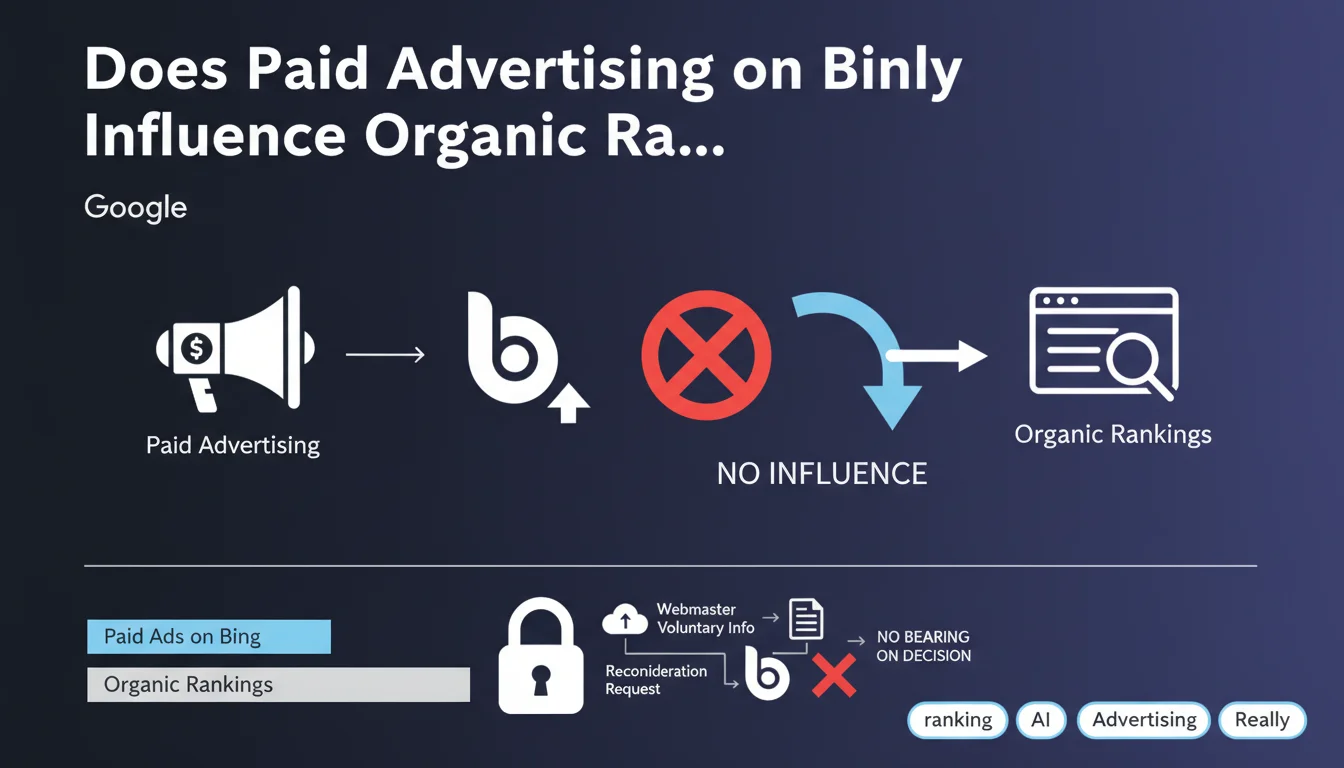
This statement from Frédéric Dubut, a leader at Bing, clarifies a persistent myth in the SEO industry: the idea that investing in paid Microsoft Ads advertising could positively influence organic results.
This belief is deeply ingrained among certain SEO practitioners, probably by analogy with other systems where financial investment can create overall advantages. However, Bing's position is formal and unequivocal.
The statement goes even further by revealing an interesting behavior: some webmasters, when requesting a reconsideration after a penalty, spontaneously mention their advertising expenditures as an argument, hoping this will positively influence the decision. Bing's team must then systematically clarify that this factor does not come into play.
- Strict separation between paid advertising and organic results at Bing
- Microsoft Ads spending has no impact on natural ranking
- This information applies to both reconsideration requests and daily operations
- The myth persists despite repeated official denials
SEO Expert opinion
This clarification from Bing is perfectly consistent with what is observed in the field and with similar statements from Google over the years. The separation between advertising teams and organic algorithm teams is an operational and legal necessity for search engines.
In my 15 years of practice, I have never observed a direct correlation between a client's advertising expenditures and their organic performance. Cases where both seem to progress simultaneously are generally explained by third-party factors: overall site improvement, increased brand awareness, increased direct traffic and brand searches.
It is interesting to note that this myth persists at both Google and Bing, suggesting that it is a structural misunderstanding of how search engines work rather than a problem specific to one player.
Practical impact and recommendations
- Never rely on your advertising investments to improve your natural referencing, whether on Bing or Google
- Clearly separate your SEO/SEA budgets and strategies in your marketing planning
- Avoid mentioning your advertising expenditures when requesting penalty reconsiderations, as it adds no credibility to your case
- Invest instead in the technical improvement of your site, content quality, and natural link acquisition
- Use paid advertising to test keywords and identify those that convert before targeting them in SEO
- Leverage indirect synergies: increased brand awareness, direct searches, qualified traffic that improves user signals
- Document separately SEO and SEA performance to avoid confusing correlation with causation
The key takeaway: your advertising investments in Microsoft Ads (or Google Ads) should be considered as distinct and complementary strategies, never as a direct lever for improving natural referencing.
Building a balanced digital strategy that takes advantage of the indirect synergies between SEO and SEA while respecting their fundamental independence requires deep expertise and a comprehensive vision. Given the increasing complexity of algorithms and the multiplicity of acquisition channels, working with an experienced SEO agency can prove decisive in effectively orchestrating these different levers and maximizing your overall return on investment.
💬 Comments (0)
Be the first to comment.