
Official statement
Other statements from this video 5 ▾
- 1:04 How do search engines really catalog web content?
- 1:36 How does Google really explore your pages to index them?
- 2:51 Do you really need to optimize for Google’s 200+ ranking factors?
- 3:43 Is it really enough to have 'quality' content to rank on Google?
- 6:21 Is web performance really a crucial SEO lever or just a comforting myth?
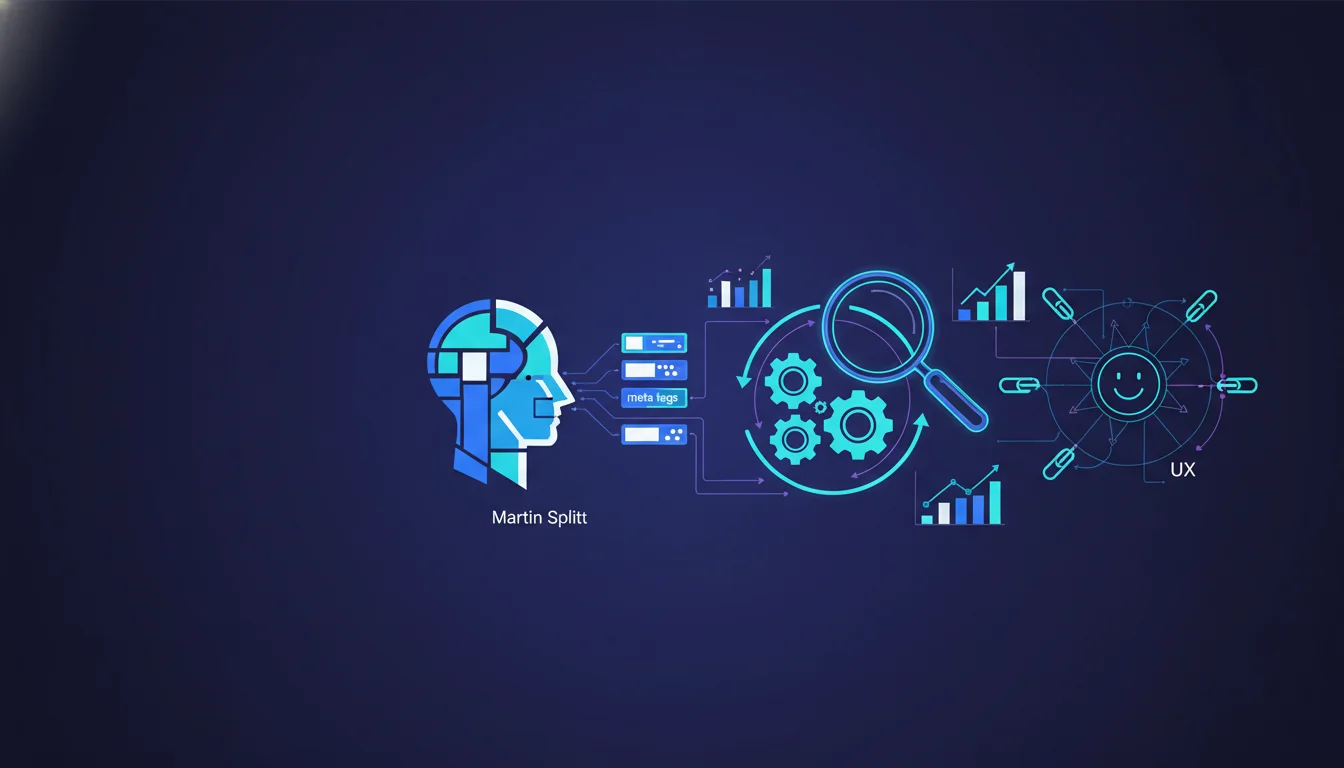
Martin Splitt asserts that meta tags and page titles are crucial for SEO because they generate attractive snippets in search results. Specifically, these elements directly influence click-through rates (CTR) from SERPs, even if your position remains stable. The nuance: Google can rewrite your titles and descriptions if it deems them irrelevant, making optimization more subtle than mere keyword stuffing.
What you need to understand
Why does Google emphasize these elements over other signals?
Splitt's statement points to an often underestimated aspect: visual appeal in SERPs. Google doesn't just rank pages — it wants users to actually click on the results. A poorly crafted title or a generic meta description can kill your CTR, even if you're ranked in position 3.
What's interesting is the vocabulary used: "attention-grabbing snippets". Google implicitly recognizes that SEO doesn't stop at ranking. A well-positioned result that gets few clicks sends a negative signal. Conversely, a CTR above the average for your position can give you an algorithmic boost.
What does "crucial" really mean in this context?
The term "crucial" deserves to be unpacked. Splitt does not say that these elements are a top-tier direct ranking factor — that would be misleading. He claims they are essential for the overall performance of your organic presence. An important nuance.
Titles influence ranking through their semantic content and the presence of keywords, certainly. But their major impact remains behavioral: a good title generates clicks, these clicks generate engagement, and that engagement reinforces positive signals. It's an indirect virtuous cycle rather than a pure ranking lever.
Does Google systematically rewrite these elements or respect our choices?
Here's the sensitive point. Google rewrites title tags about 60-70% of the time according to several field studies. For meta descriptions, it's even more frequent — sometimes over 80% rewriting. Splitt does not mention this reality, which makes his statement incomplete.
Rewriting happens when Google finds your title too long, too short, stuffed with keywords, or irrelevant to the query. It then pulls from your H1, your opening paragraphs, or even from your backlink anchor texts. You maintain partial, not total, control.
- Page titles should include the main keyword, ideally at the beginning of the tag, while remaining natural and click-inviting
- Meta descriptions are not a direct ranking factor, but they massively influence CTR — optimize them for humans, not for bots
- Length matters: 50-60 characters for titles, 150-160 for descriptions — beyond that, Google truncates or rewrites
- Uniqueness is critical: two pages with the same title cannibalize their potential and confuse Google about your semantic hierarchy
- Emojis and special characters can boost CTR, but Google sometimes removes them — test with caution
SEO Expert opinion
Is this statement consistent with observed practices in the field?
Yes and no. The part about importance for snippets is indisputable — any seasoned SEO sees this daily. An optimized title can double your CTR on certain queries. But Splitt remains deliberately vague about the actual weight of these elements in the ranking algorithm.
Large-scale A/B tests show that changing just a title tag usually doesn't change your position — unless the new title drastically improves semantic relevance for the target query. The direct impact on ranking is low. The indirect impact through CTR and engagement is very real. [To verify]: Google has never published numerical data on the CTR/ranking correlation.
What nuances should we add to this assertion?
The first nuance: meta keywords are dead. Splitt talks about "meta tags" in plural, but we must be precise — only meta descriptions still hold relevance (for CTR), and even then, Google massively rewrites them. Other meta tags (keywords, author, etc.) have been largely ignored by Google for years.
The second nuance: title optimization is a delicate balance between SEO and conversion. A keyword-stuffed title may rank well but generate a catastrophic CTR. Conversely, an overly "marketing" title may appeal to humans but lack semantic clarity for the algorithm. The best titles blend both requirements.
In what cases does this rule not fully apply?
For navigational queries (brand searches), your titles matter little — users will click on your site regardless. Google often displays your brand name even if it's not in your title tag. The optimization effort is less critical here.
On ultra-competitive queries, a perfect title won’t save a weak page in backlinks and content. Splitt emphasizes meta tags, but in these contexts, they may represent only 5% of the match. The rest hinges on authority, content depth, and E-E-A-T signals. Don’t fall into the trap of over-optimizing titles while neglecting the fundamentals.
Practical impact and recommendations
What concrete actions should be taken to optimize these elements?
Start with a complete audit of your title tags and meta descriptions. Export them using Screaming Frog or your favorite crawler. Identify duplicates, titles that are too long (>60 characters), missing or too short descriptions (
❓ Frequently Asked Questions
Les meta descriptions influencent-elles directement le ranking Google ?
Pourquoi Google réécrit-il mes title tags même quand ils sont bien optimisés ?
Quelle est la longueur idéale pour un title tag en 2025 ?
Faut-il optimiser les meta descriptions pour toutes les pages du site ?
Les émojis dans les titres boostent-ils vraiment le CTR ?
🎥 From the same video 5
Other SEO insights extracted from this same Google Search Central video · duration 9 min · published on 15/05/2019
🎥 Watch the full video on YouTube →
💬 Comments (0)
Be the first to comment.