
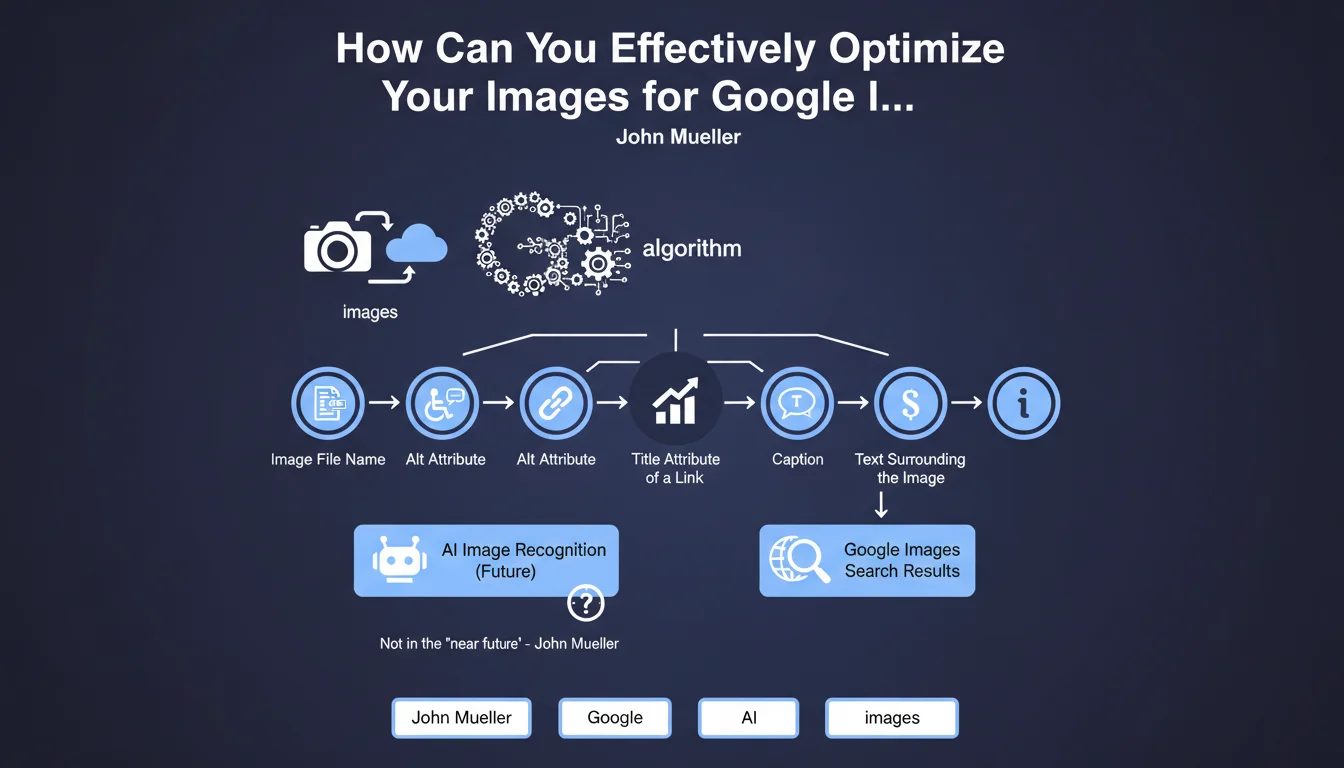
Official statement
What you need to understand
Image optimization represents an often underestimated SEO lever that can considerably improve your visibility. Google places growing importance on the quality and relevance of visual content.
This official statement reminds us that image optimization is not limited to simple resizing. It encompasses several technical and editorial dimensions that must work together to maximize SEO impact.
Search engines don't "see" images the way we do. They rely on textual and contextual signals to understand visual content and decide on its positioning in search results.
- Smart naming: file names must precisely describe the content
- Complete ALT attribute: textual description essential for accessibility and SEO
- Technical performance: optimal compression and fast hosting
- Editorial context: consistent positioning and relevant caption
- Strategic intent: each image must serve a specific purpose
SEO Expert opinion
These recommendations are perfectly aligned with the field observations I've been seeing for years. Sites that rigorously apply these principles generally see a significant increase in traffic from Google Images, as well as an improvement in the overall ranking of their pages.
An important nuance: the perceived quality of the image matters as much as its technical relevance. Google uses computer vision algorithms capable of evaluating sharpness, composition and even the originality of visuals. A blurry or poor-quality image, even if perfectly optimized technically, won't achieve the same results.
The advice on the specific objective of each image is particularly relevant. Too many sites add decorative visuals without SEO value. Each image should either illustrate a key concept or provide complementary information to the text.
Practical impact and recommendations
- Establish a naming convention: create a consistent system for naming your files (e.g., category-product-feature.jpg rather than IMG_1234.jpg)
- Write descriptive and unique ALT text: describe the content precisely without keyword stuffing, in 10-15 words maximum
- Add contextual captions: place visible text below your important images to reinforce semantic relevance
- Optimize weight without sacrificing quality: aim for 100-200 KB for standard images, use WebP or AVIF when possible
- Implement a high-performance CDN: ensure fast image delivery, particularly on mobile
- Position strategically: place important images at the top of the page, near relevant content
- Use original images: favor your own visuals rather than generic stock photos
- Structure with rich data: add Schema.org ImageObject for key images
- Audit regularly: check for broken images, missing ALT text and excessive loading times
The complete implementation of these optimizations represents a significant technical and editorial investment, particularly for sites with hundreds or thousands of images. The initial audit, defining a coherent strategy and operational deployment require specialized expertise.
To maximize the impact of your image optimization strategy and ensure that every technical and editorial aspect is perfectly mastered, support from a specialized SEO agency can prove valuable. Expert insight helps identify priorities specific to your sector and avoid costly mistakes during implementation.
💬 Comments (0)
Be the first to comment.