
Official statement
What you need to understand
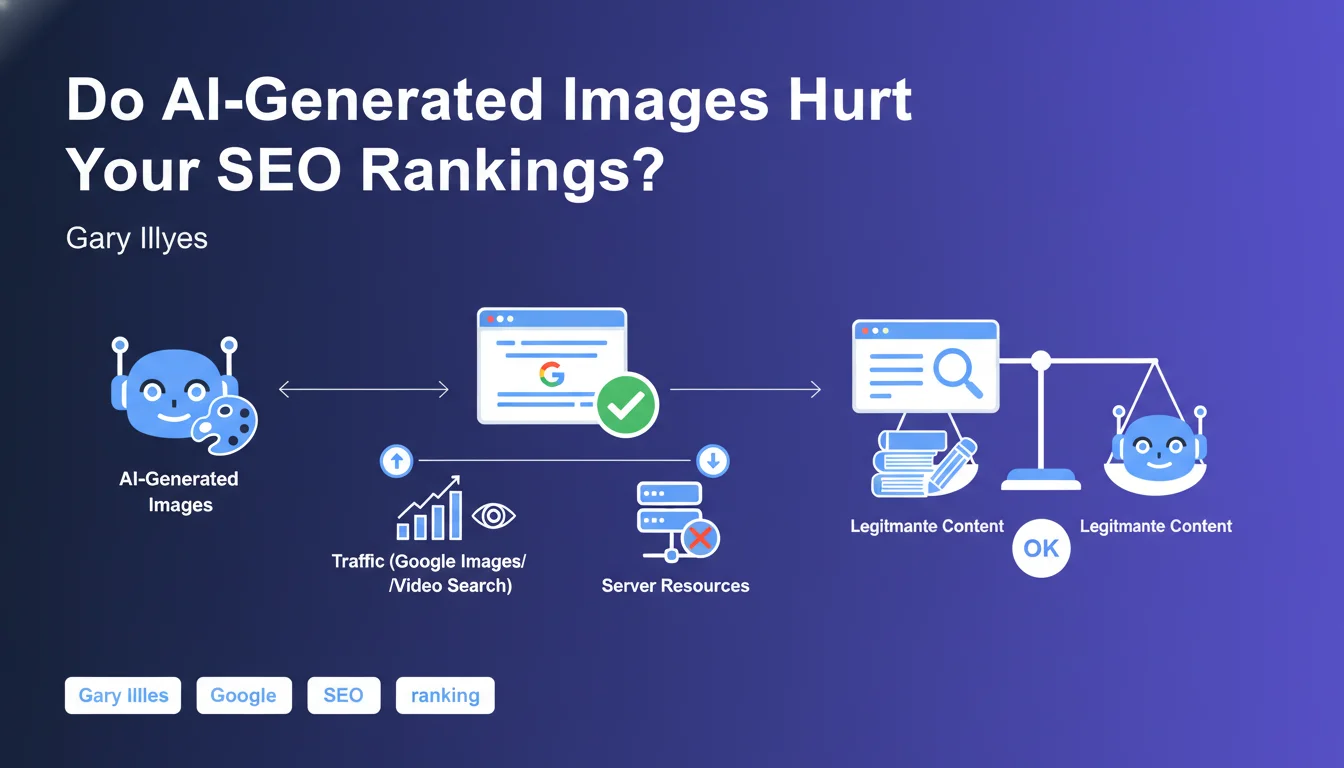
Google has officially clarified its position regarding the use of artificial intelligence-generated images in web content. The answer is unequivocal: these images do not result in any penalty or negative impact on ranking in search results.
This statement puts an end to the uncertainty that has been hovering over the SEO community since the explosion of AI image generation tools. The use of images created by tools like Midjourney, DALL-E, or Stable Diffusion is therefore completely acceptable in Google's eyes.
However, several important nuances accompany this statement. Google reminds us that the rest of the content must remain legitimate and high-quality, and that user experience remains the absolute priority.
- No penalty for using AI-generated images
- The overall page content must remain relevant and high-quality
- Images can generate additional traffic via Google Images
- Be mindful of the impact on server resources when adding images
- User experience and relevance for users remain central
SEO Expert opinion
This position from Google is consistent with their approach centered on helpful content rather than on the origin of creation. Just as Google has clarified that AI-generated content is not penalized per se, images follow the same pragmatic logic.
Several field observations confirm this statement. Sites using quality AI-generated images extensively do not show any degradation in rankings. On the contrary, some benefit from better performance thanks to more relevant and optimized visuals.
Caution however: The question of authenticity mentioned without being developed deserves reflection. In certain niches such as health, legal, or news, the use of artificial images could harm the credibility perceived by users, indirectly impacting behavioral signals (bounce rate, time spent).
The technical aspect mentioned regarding server resources is relevant. Poorly optimized AI images can be bulky and slow down loading, which impacts Core Web Vitals and therefore SEO. The problem is not the origin of the image but its technical optimization.
Practical impact and recommendations
Following this official clarification, here are the concrete actions to implement in your visual content strategy:
- Free yourself from constraints: use AI-generated images without fear of algorithmic penalty
- Systematically optimize: compress AI images, use modern formats (WebP, AVIF) and lazy loading
- Prioritize relevance: choose visuals that genuinely improve content understanding
- Add descriptive ALT attributes: AI images can rank in Google Images if properly tagged
- Mix sources: combine AI images, real photos, and infographics according to context and user expectations
- Monitor Core Web Vitals: verify that adding images doesn't negatively impact LCP and CLS
- Test the impact on engagement: analyze behavioral metrics to validate that your AI images improve the experience
- Avoid generic AI images: in niches requiring authenticity and trust, prioritize authentic visual content
In summary: AI-generated images are now a legitimate tool in your content creation arsenal. The issue is no longer their origin but their quality, relevance, and technical optimization.
Implementing an optimized visual content strategy, combining AI images and advanced technical optimizations, requires sharp expertise in technical SEO and user experience. For sites with high commercial stakes, support from a specialized SEO agency allows you to orchestrate these different dimensions coherently and avoid technical pitfalls that could compromise your performance, while maximizing traffic potential via Google Images.
💬 Comments (0)
Be the first to comment.