
Official statement
What you need to understand
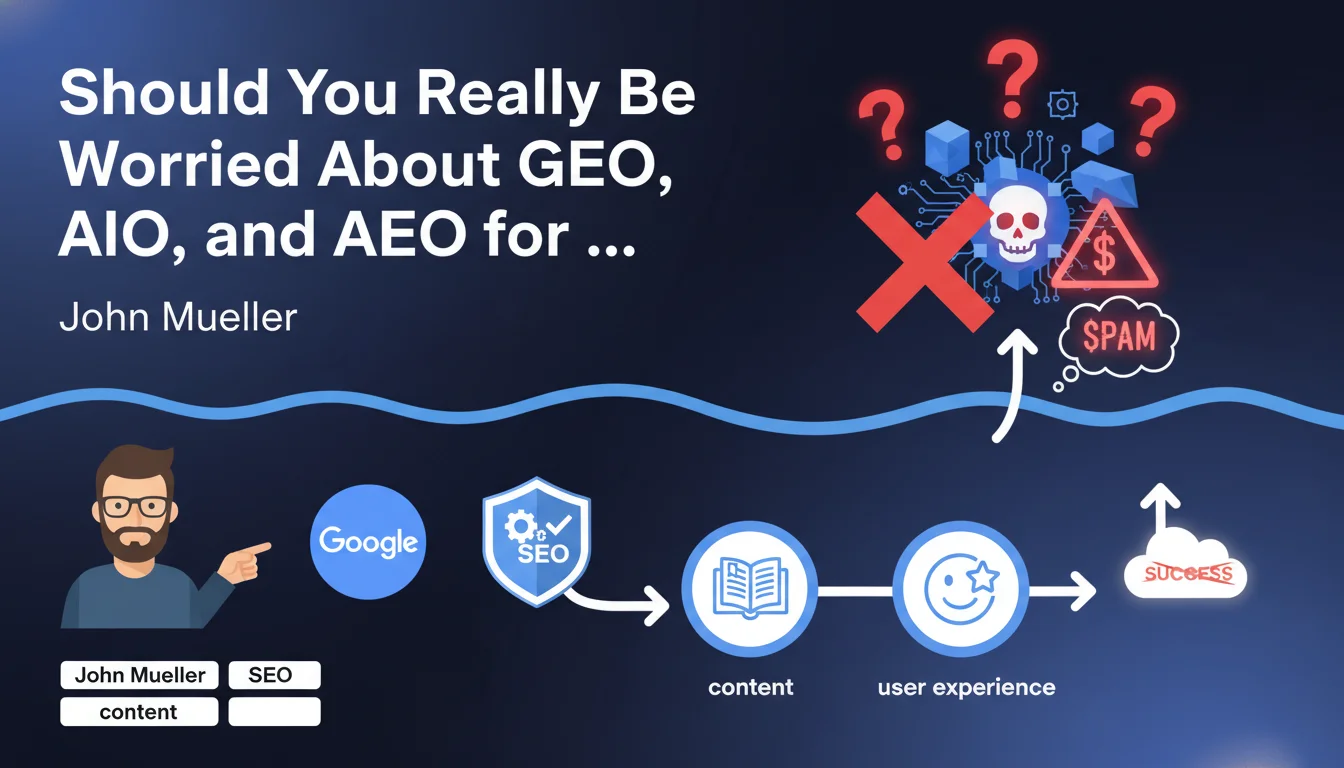
Google warns against the emergence of new AI-related SEO acronyms such as GEO (Generative Engine Optimization), AIO (AI Optimization), or AEO (Answer Engine Optimization). These terms have been flourishing since the arrival of generative AI tools and new search interfaces.
According to Google, the more these concepts are promoted with insistence and urgency, the higher the risk that they conceal questionable practices or aggressive marketing. The goal would be more about creating artificial urgency rather than addressing genuine SEO needs.
The official position is clear: these terminological trends are essentially marketing and do not constitute fundamental evolutions in SEO. They can even create confusion among professionals and steer them away from proven best practices.
- The acronyms GEO, AIO, AEO are more about marketing buzz than genuine SEO innovations
- Aggressive promotion of these concepts should raise suspicion about the real intentions
- Google encourages focusing on fundamentals: content quality and user experience
- Solid and proven SEO strategies remain more effective than these new terminologies
SEO Expert opinion
This warning from Google is consistent with SEO market observations over the past several months. Indeed, we see a proliferation of agencies and consultants capitalizing on AI-generated anxiety to sell services with vague terminology and excessive promises.
However, an important nuance must be made: while the acronyms are marketing-driven, the underlying issues are very real. Optimization for Google's generative responses (SGE), visibility in ChatGPT or Perplexity, and data structuring for voice assistants constitute genuine challenges. The problem isn't the subject matter, but the misleading marketing packaging.
The real question isn't whether you should do "GEO," but rather to ensure your content meets quality criteria that work equally well for traditional search and AI interfaces. EEAT principles, semantic structuring, and high-value content creation remain universal.
Practical impact and recommendations
- Ignore commercial offers that promote these acronyms as revolutionary or urgent services to adopt
- Be wary of promises of AI-specific optimization that don't rely on verifiable SEO fundamentals
- Focus your efforts on creating high-quality content that genuinely addresses search intent
- Strengthen your EEAT strategy (Expertise, Experience, Authoritativeness, Trustworthiness) which works for all channels
- Structure your content with rich data (schema.org) and clear hierarchy to facilitate understanding by all systems
- Optimize the overall user experience rather than specifically targeting one type of engine or interface
- Continue monitoring the evolution of AI search interfaces, but without haste or excessive investments
- Favor proven approaches: keyword research, technical optimization, quality link building, and expert content
In summary, no strategic revolution is necessary in response to AI search interfaces. Traditional SEO best practices remain your best investment.
Focus on what has always worked: exceptionally high-quality content, recognized expertise in your field, impeccable user experience, and consistent presence in your subject area. These elements will position you favorably regardless of how search technologies evolve.
Implementing a sustainable SEO strategy that intelligently anticipates changes without giving in to trends nevertheless requires deep expertise and constant monitoring. For businesses looking to build a lasting presence without getting distracted by opportunistic approaches, guidance from a specialized SEO agency can prove valuable for navigating serenely through a constantly evolving ecosystem.
💬 Comments (0)
Be the first to comment.