
Official statement
What you need to understand
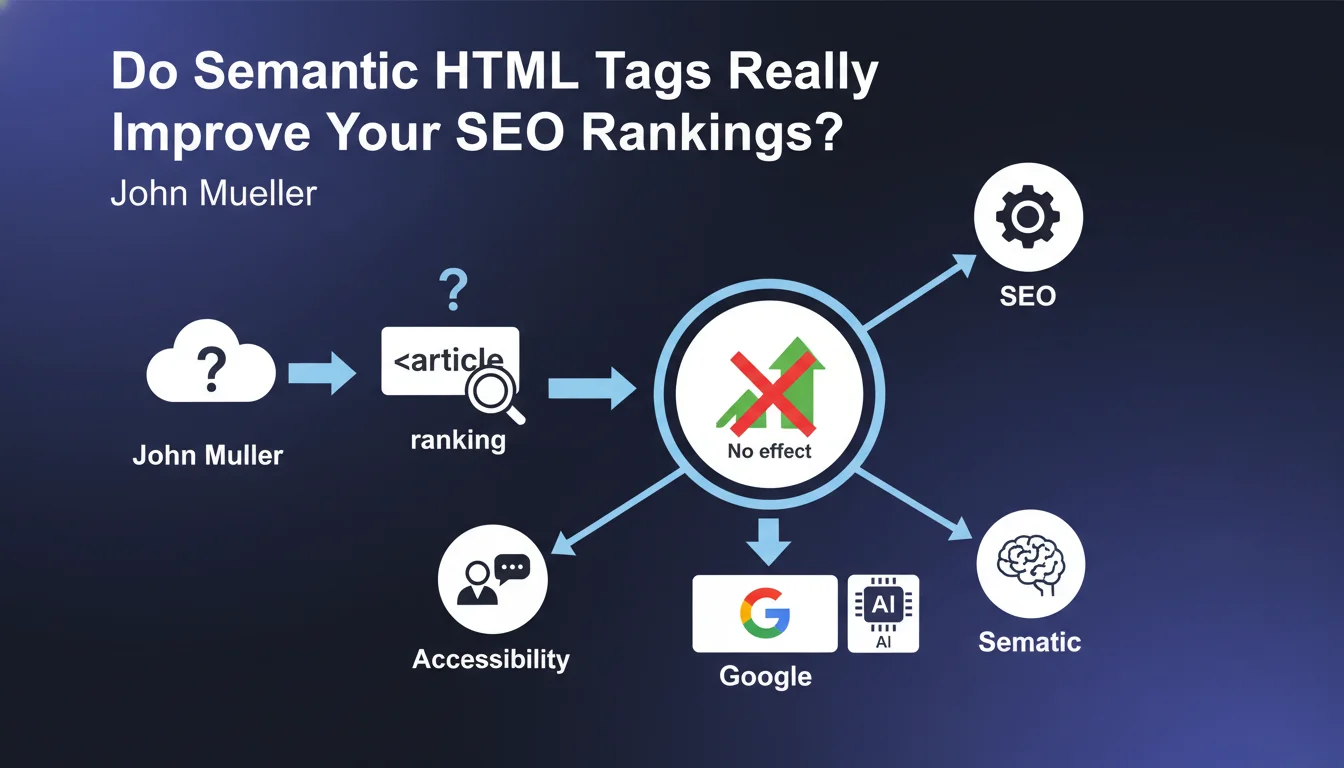
John Mueller's statement clarifies a common misconception within the SEO community. Many practitioners believe that using HTML5 semantic tags like <article>, <section>, or <aside> directly influences search result rankings.
The reality is that Google primarily focuses on the textual content itself rather than the semantic HTML structure surrounding it. The search engine is capable of understanding content context and relevance independently of the tags that contain it.
However, this doesn't mean these tags are useless. They play an important role in web accessibility, code maintenance, and can indirectly improve user experience, which remains a ranking factor.
- No direct impact of the
<article>tag on ranking - Google analyzes textual content above all else
- Semantic tags remain important for accessibility and code structure
- Good HTML structure can indirectly improve user experience
- Don't sacrifice code quality for illusory SEO optimization
SEO Expert opinion
This statement is perfectly consistent with what we've been observing in the field for several years. The A/B tests we've conducted indeed show that adding or removing HTML5 semantic tags causes no measurable fluctuation in rankings.
However, an important nuance must be added: while semantic HTML doesn't directly impact ranking, a well-designed page structure facilitates crawling and indexing. Clean, logical code helps bots identify important content areas more quickly.
Furthermore, semantic tags can indirectly contribute to SEO by improving page load speed (better organized code), accessibility (better experience for all users), and maintenance (reducing technical error risks).
Practical impact and recommendations
Following this official clarification, here are the concrete actions to implement in your SEO strategy:
- Don't waste time restructuring all your HTML solely to add
<article>or<section>tags - Focus your efforts on textual content quality and relevance rather than on HTML semantics
- Still maintain clean and logical HTML structure to facilitate maintenance and accessibility
- Prioritize the implementation of Schema.org structured data that have a real impact on SERPs
- Use semantic tags in your new developments as best practice, but without expecting direct SEO benefits
- Invest instead in optimizing Core Web Vitals, content depth, and internal linking
- Train your developers to distinguish between impactful technical SEO and web development best practices
In summary: Semantic HTML is a good web development practice, but is not a direct SEO lever. Focus your energy on what has a measurable impact: quality content, structured data, technical performance, and user experience.
Distinguishing between high-impact technical optimizations and cosmetic actions requires in-depth expertise and constant monitoring. For businesses looking to maximize their SEO return on investment, support from a specialized agency helps identify and prioritize technical projects that generate real measurable results, avoiding resource dispersion on optimizations without impact.
💬 Comments (0)
Be the first to comment.