
Official statement
What you need to understand
Sitelinks are those additional links displayed beneath certain search results to facilitate navigation to specific sections of a website. Google generates them automatically based on site structure and the perceived relevance of pages.
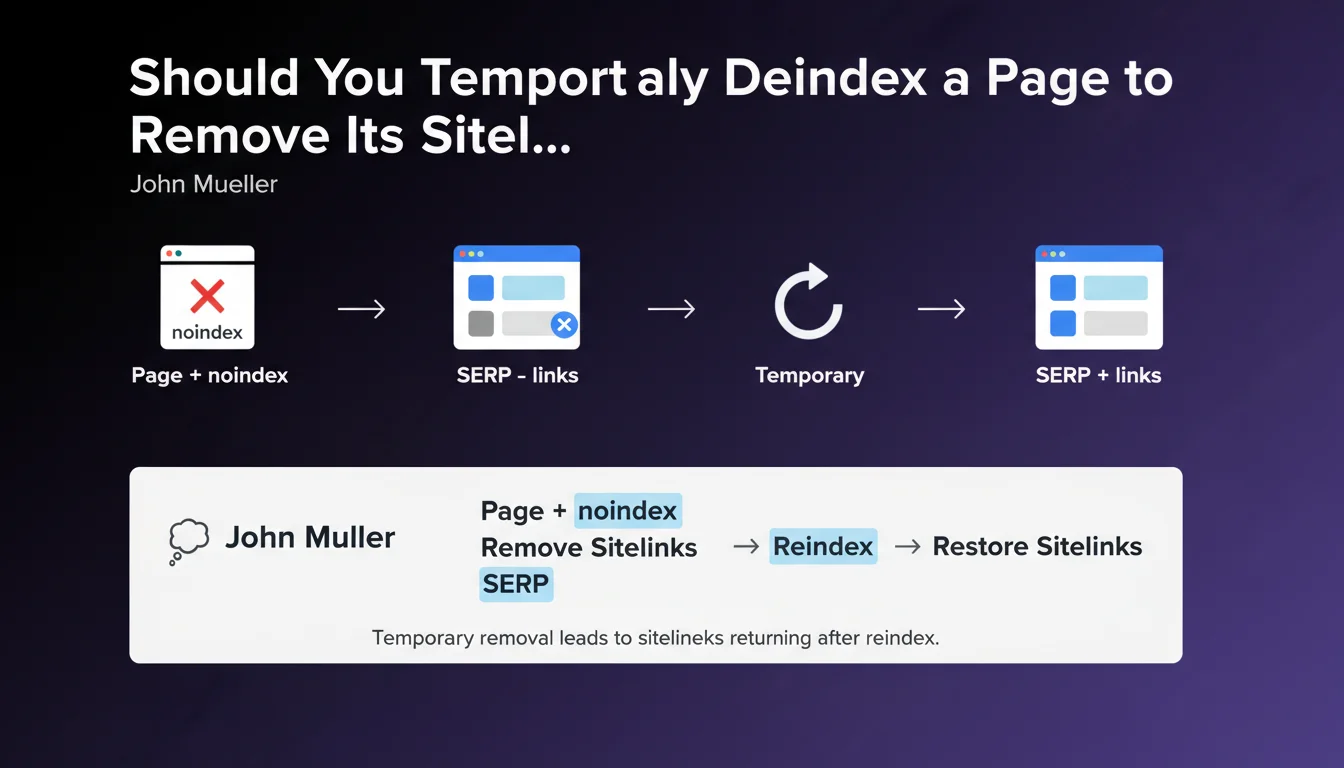
Some SEO practitioners are tempted to use temporary noindex to remove a page from sitelinks, hoping to control which pages appear in this privileged section of search results. The logic would be: deindex, wait for Google to remove the link, then reindex.
According to this official statement, this strategy is ineffective. Google does remove the link during the noindex period, but automatically reinstates it once the page is reindexed, as if nothing had happened.
- Temporary noindex doesn't permanently modify sitelinks
- Google maintains its sitelink selection logic even after reindexing
- Temporary deindexing represents wasted effort with no SEO benefit
- For permanent change, structural actions are necessary
SEO Expert opinion
This position from Google is perfectly consistent with the algorithmic functioning of sitelinks. These are generated by deep structural signals: site architecture, internal linking, link anchors, user behavior, and information hierarchy.
A simple temporary deindexing doesn't modify any of these fundamental signals. As soon as the page reappears in the index, Google finds exactly the same indicators that initially led it to select this page as a sitelink. It's like repainting a car without changing the engine: the appearance changes momentarily, but the mechanics remain identical.
The only nuance concerns cases where prolonged deindexing is simultaneously accompanied by major structural modifications: internal linking overhaul, changes to main menu hierarchy, modification of important URLs. In these rare situations, reindexing may indeed yield different results, but it's thanks to the structural changes, not the deindexing itself.
Practical impact and recommendations
- Don't use temporary noindex hoping to modify displayed sitelinks
- Analyze why an undesired page appears as a sitelink: menu position, volume of internal links, anchors used
- Modify internal linking to reduce the prominence of pages you don't want appearing
- Strengthen internal links to pages you prefer seeing as sitelinks, with relevant descriptive anchors
- Review site architecture if sitelinks reflect a problematic hierarchy
- Use permanent noindex only if the page truly has no SEO value (or delete it completely)
- Accept that Google decides ultimately: sitelinks are generated algorithmically and cannot be 100% controlled
- Prioritize user experience: pages Google chooses as sitelinks are often those your visitors actually seek
These structural optimizations require thorough analysis of your site architecture, internal linking, and signals sent to Google. The complexity of these adjustments and their potential impact on your overall organic visibility often justify working with a specialized SEO agency, which can precisely audit your situation and implement a personalized strategy without risking penalty to your existing rankings.
💬 Comments (0)
Be the first to comment.