
Official statement
What you need to understand
Google officially confirms its ability to index images dynamically loaded via JavaScript, putting an end to certain persistent questions in the SEO community. This statement is important because many modern websites use JavaScript frameworks (React, Vue, Angular) that load content asynchronously.
However, this indexing capability is neither automatic nor guaranteed. It depends on several technical factors that must be correctly configured. The problems therefore do not come from Google's inability to process JavaScript, but rather from configuration errors on the website side.
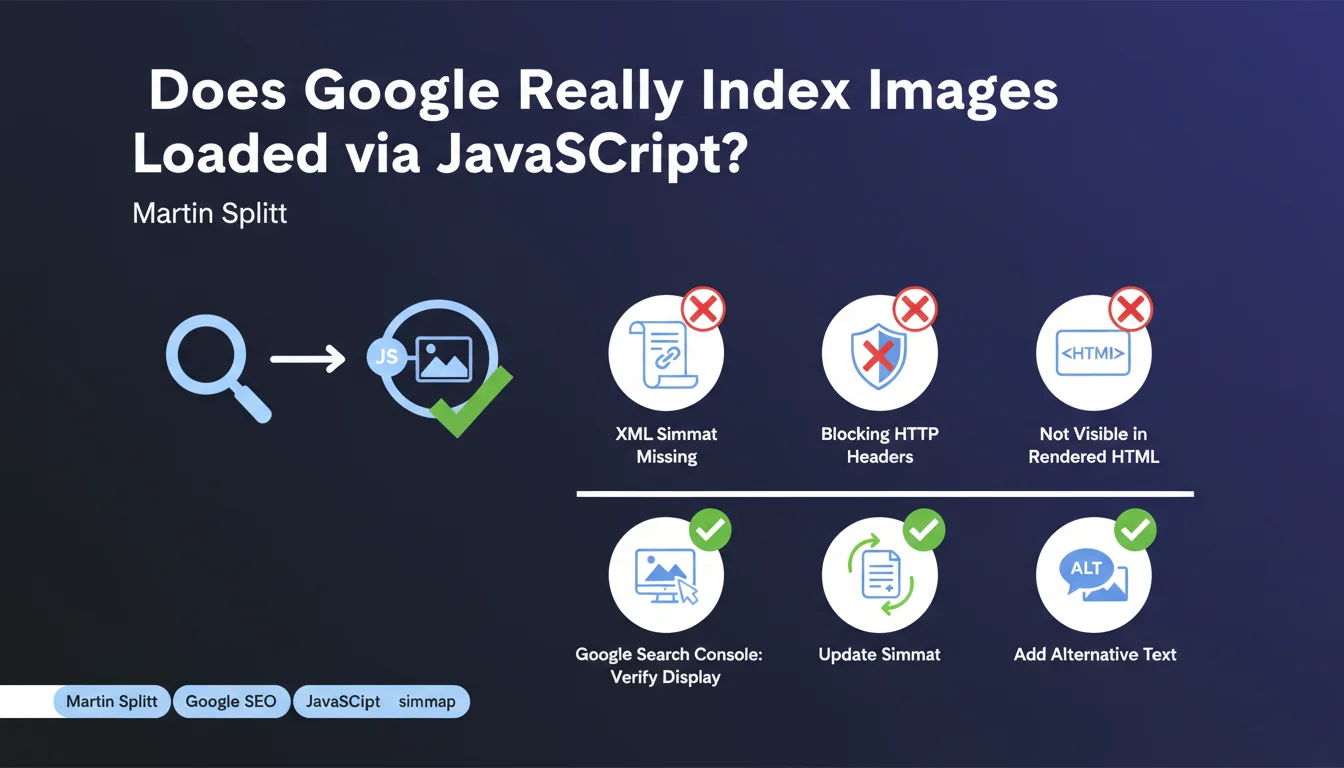
The most common obstacles to JavaScript image indexing include:
- Absence of image URLs in the XML sitemap, preventing their discovery
- Restrictive HTTP headers blocking access to the Googlebot crawler
- Images not present in the rendered HTML after JavaScript execution
- Missing alt attributes to contextualize images
- Excessive loading times exceeding the crawl budget
For SEO practitioners, this means adopting a proactive verification approach rather than simply assuming that JavaScript images will be automatically indexed.
SEO Expert opinion
This statement is perfectly consistent with what I've been observing in the field for several years. Google has significantly improved its JavaScript rendering, but there are still important gaps between theory and practice. The devil is in the configuration details.
A crucial nuance: possible indexing does not mean optimal indexing. Images loaded via JavaScript undergo additional processing delay (two-phase rendering) and may be discovered later than images present directly in the initial HTML. For sites with high image volumes or limited crawl budget, this represents a real competitive disadvantage.
In my practice, I find that JavaScript image indexing problems mainly appear during server load spikes, framework modifications, or on mobile where JavaScript rendering can be more problematic. Regular monitoring is therefore essential.
Practical impact and recommendations
Following this official confirmation, here are the concrete actions to implement to ensure the indexing of your JavaScript-loaded images:
- Systematically verify the rendered HTML via the "URL Inspection" tool in Google Search Console for each page template containing JavaScript images
- Generate a dedicated XML sitemap for images including all image URLs, even those loaded dynamically
- Audit HTTP headers to ensure no directive (X-Robots-Tag, robots.txt) blocks access to images
- Systematically add descriptive alt attributes in the JavaScript code that generates the <img> tags
- Implement placeholder images in the initial HTML for critical content, then replaced by JavaScript for user experience
- Monitor the "Image indexing" report in Search Console to quickly detect problems
- Test with the rich results testing tool to validate that images appear in structured data
- Favor native lazy loading (loading="lazy") rather than JavaScript libraries when possible
- Optimize JavaScript loading time to stay within the crawl budget allocated by Google
- Document the image loading strategy to avoid regressions during technical updates
💬 Comments (0)
Be the first to comment.