
Official statement
What you need to understand
Does Google Modify Its Algorithm for Every News Event?
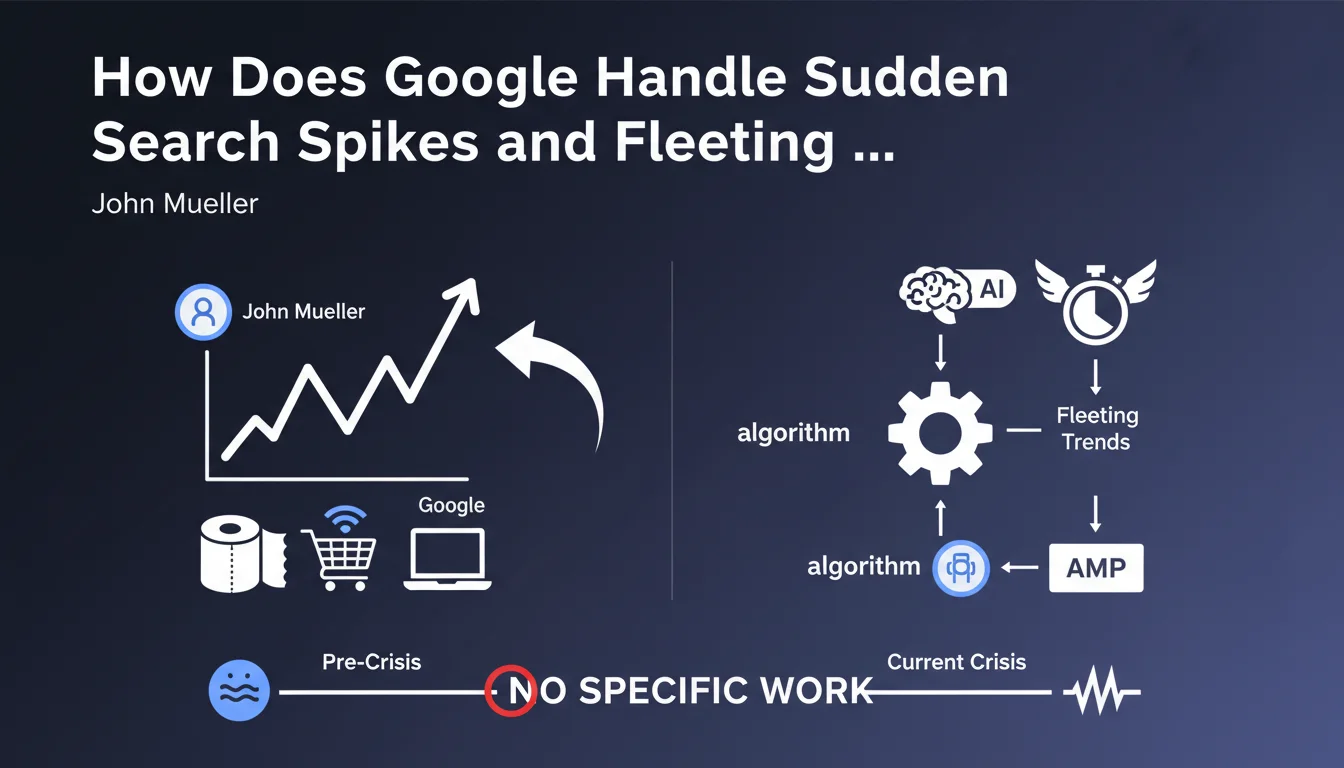
The short answer is no. John Mueller clarified that Google does not make specific algorithmic adjustments during exceptional events like the coronavirus crisis.
The search engine already has built-in mechanisms to handle temporary search spikes and sudden changes in user behavior. These systems operate continuously, without requiring manual intervention.
What's the Difference Between the Ranking Algorithm and the Answer Engine?
Mueller distinguishes two levels of action at Google. The ranking algorithm remains unchanged and continues to apply its usual rules of relevance and quality.
On the other hand, the answer engine (featured snippets, knowledge panels) can be manually enriched to provide verified information on critical topics. This is where Google intervenes occasionally.
What Is the QDF System and How Does It Work?
QDF stands for Query Deserves Freshness, an algorithm that automatically detects queries deserving recent content. This system identifies search spikes and temporarily adjusts the importance of content freshness.
When a query suddenly becomes popular, Google prioritizes recently published or updated content on that topic, without manual modification of the global algorithm.
- Google's algorithms naturally handle variations in user behavior
- No specific adjustments are necessary for events like a pandemic
- The QDF system automatically detects queries requiring fresh content
- The distinction between ranking algorithm and answer engine is crucial
SEO Expert opinion
Is This Automated Approach Really Sufficient for All Industries?
Mueller's statement is technically correct but deserves important nuances. Automatic algorithms work well for generic informational queries, but certain sectors require heightened vigilance.
E-commerce sites and news media must be particularly responsive. If your content is not optimized and published quickly during a search spike, you leave the field open to your competitors, even if the algorithm is "neutral".
What Signals Does the Algorithm Use to Detect These Changes?
Google analyzes several behavioral signals in real-time: search volume, geographic diversity of queries, click-through rate, reading time, and engagement on displayed results.
These metrics allow the search engine to identify emerging trends and adjust the weighting of certain factors like freshness, without modifying the overall architecture of the algorithm. It's fine-tuning, not a revolution.
Does This Statement Invalidate Newsjacking Strategies?
Absolutely not. The fact that Google doesn't manually intervene on the algorithm reinforces the importance of newsjacking and editorial responsiveness.
Since the algorithm automatically detects trending topics via QDF, publishing fresh, quality content at the right time becomes even more strategic. You're riding an algorithmic wave that's already in place.
Practical impact and recommendations
How Can You Optimize Your Site to Benefit from These Behavioral Variations?
The first action is to implement active monitoring of search trends in your sector. Use Google Trends, search suggestions, and query volume tracking tools.
Develop a rapid editorial response capability. When a topic emerges in your thematic area, you must be able to publish relevant content in a few hours, not a few days.
Ensure your technical infrastructure allows for frequent updates. A site with a cumbersome publishing process will systematically miss opportunities related to search spikes.
What Mistakes Should You Avoid When Facing Fleeting Trends?
Don't create superficial content just to "be present". Google still values quality and relevance, even on trending topics. Sloppy content won't benefit from the QDF boost.
Avoid neglecting your evergreen content in favor exclusively of trends. The balance between evergreen content and hot news is crucial for a sustainable SEO strategy.
Don't bet everything on a single search spike. Fleeting trends should integrate into a coherent global strategy, not replace it.
- Set up Google Trends alerts on your strategic keywords
- Identify recurring topics in your sector that generate seasonal spikes
- Prepare content templates to react quickly to trends
- Regularly update your existing content with fresh data
- Analyze the performance of your content during and after search spikes
- Develop a hybrid strategy mixing evergreen content and news
- Train your teams on rapid publishing without sacrificing quality
- Monitor behavioral signals (CTR, reading time) on your strategic pages
💬 Comments (0)
Be the first to comment.