
Official statement
What you need to understand
What's the relationship between Bing Chat AI and Bing Search?
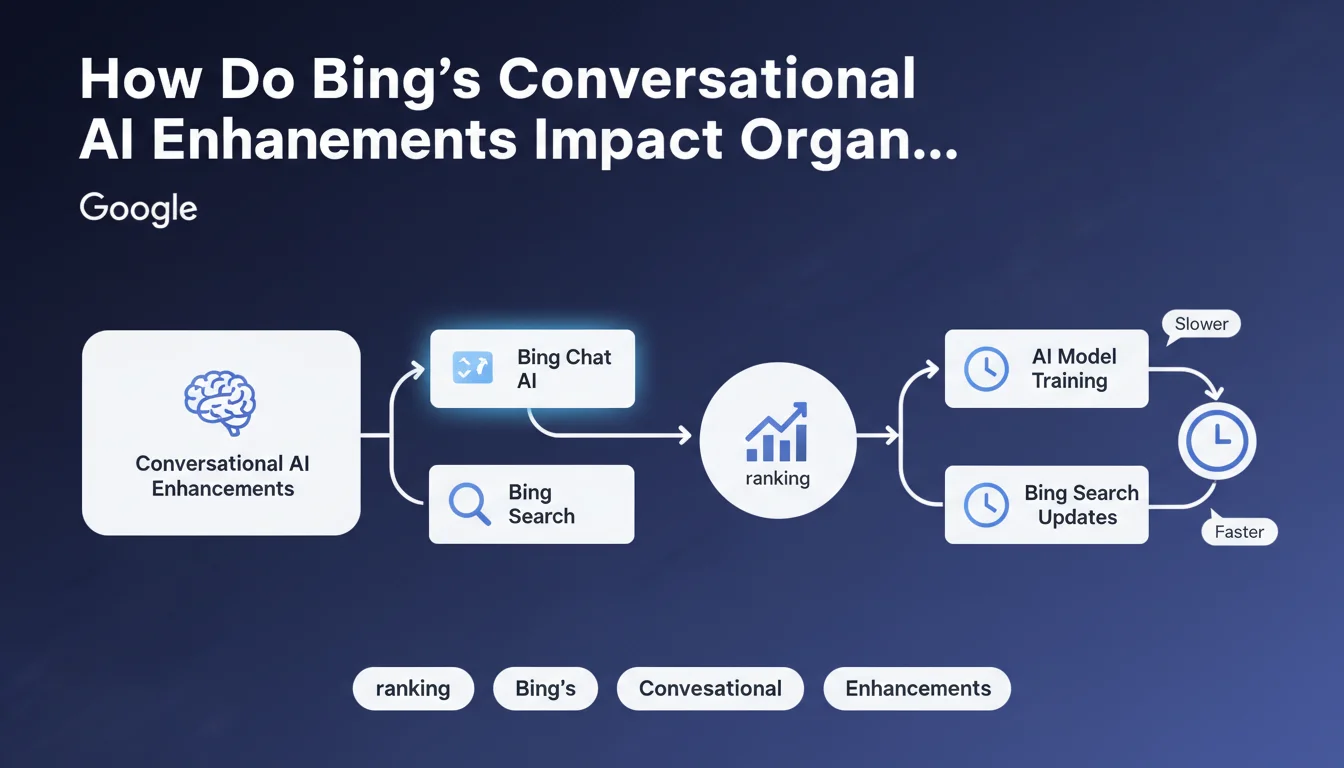
According to Mikhail Parakhin, CEO of Bing, the AI model improvements developed for Bing Chat AI also benefit the traditional Bing Search engine. This technological synergy enables Bing to optimize its semantic understanding capabilities across its entire ecosystem.
However, there is significant temporal desynchronization between the two services. Bing Search updates remain more frequent because they don't depend on the lengthy training cycles required for conversational AI models.
Why aren't the updates synchronized?
Training AI models requires several weeks or even months of intensive computation. Bing cannot afford to wait for these delays to deploy Core Updates on its main search engine.
This dual-speed strategy allows Bing to maintain algorithmic competitiveness in traditional search while progressively developing its advanced conversational capabilities.
What are the key takeaways?
- Bing Chat AI innovations gradually spread to Bing Search
- Search engine updates remain more frequent than conversational AI updates
- Model training time constitutes a limiting factor for synchronization
- Bing adopts a dual-speed strategy to optimize its presence on both fronts
- Semantic understanding improves globally across the entire Bing ecosystem
SEO Expert opinion
Does this reveal a different strategy from Google?
This communication from Microsoft illustrates an unusual strategic transparency in the search engine industry. Unlike Google, which rarely communicates about the technical architecture of its systems, Bing reveals an interesting modular approach here.
We observe that Bing maintains an operational separation between its conversational AI and its traditional engine, whereas Google seems to favor deeper integration through its Search Generative Experience. This architectural difference could explain certain variations in results quality between the two engines.
What are the implications for SEO practitioners?
For search professionals, this statement confirms that conversational AI optimizations also benefit traditional SEO on Bing. Working on semantic content quality becomes doubly profitable.
However, it should be noted that Bing still represents a limited market share in most French-speaking markets. Specific optimization efforts for Bing should be proportionate to the traffic actually generated by this engine.
Does this technical architecture foreshadow the future of SEO?
Bing's approach suggests that search engines of the future will likely maintain two distinct layers: a traditional search layer that's quick to update, and a more sophisticated but slower-evolving conversational AI layer.
For SEO practitioners, this means developing dual skills: traditional technical optimization on one hand, and optimization for LLM understanding on the other. These two areas of expertise will likely remain complementary rather than substitutable.
Practical impact and recommendations
Should you adapt your SEO strategy differently for Bing?
If Bing represents a significant portion of your traffic (particularly in B2B markets or certain geographic areas), adopting a specific approach becomes relevant. Focus on structured and semantically rich content that will benefit both layers of the Bing ecosystem.
For most websites, a quality traditional SEO strategy will suffice. The fundamentals remain the same: relevant content, solid technical architecture, topical authority.
How can you optimize for both ecosystems simultaneously?
Prioritize rigorous semantic markup with schema.org, structured FAQs, and content that explicitly answers user questions. These optimizations benefit both the traditional engine and the conversational AI.
Focus on topical depth rather than multiplying superficial content. Bing's AI models value demonstrable expertise and semantic coherence at the site level.
What concrete actions should you implement right now?
- Audit your semantic markup and implement schema.org comprehensively
- Structure your content with explicit questions followed by clear and concise answers
- Develop in-depth topical clusters rather than isolated articles
- Monitor your Bing rankings separately from Google to identify specific opportunities
- Test your content visibility in Bing Chat to assess your presence in the conversational layer
- Optimize your rich snippets to facilitate information extraction by AIs
- Strengthen your topical authority signals through internal linking and editorial consistency
Bing's conversational AI improvements gradually impact its traditional search engine, creating a synergistic optimization opportunity. SEO practitioners must adapt their approach by prioritizing semantic richness and content structuring.
Although update cycles remain desynchronized, investing in quality content optimized for machine understanding generates lasting benefits across the entire Bing ecosystem. This dual optimization requires sharp technical expertise and constant monitoring of algorithmic evolutions.
Given the growing complexity of these multi-engine challenges and the emergence of conversational interfaces, many companies choose to rely on a specialized SEO agency capable of orchestrating these optimizations coherently and maintaining a strategy adapted to the sector's rapid developments.
💬 Comments (0)
Be the first to comment.