
Official statement
What you need to understand
Why is Google reinforcing this ban now?
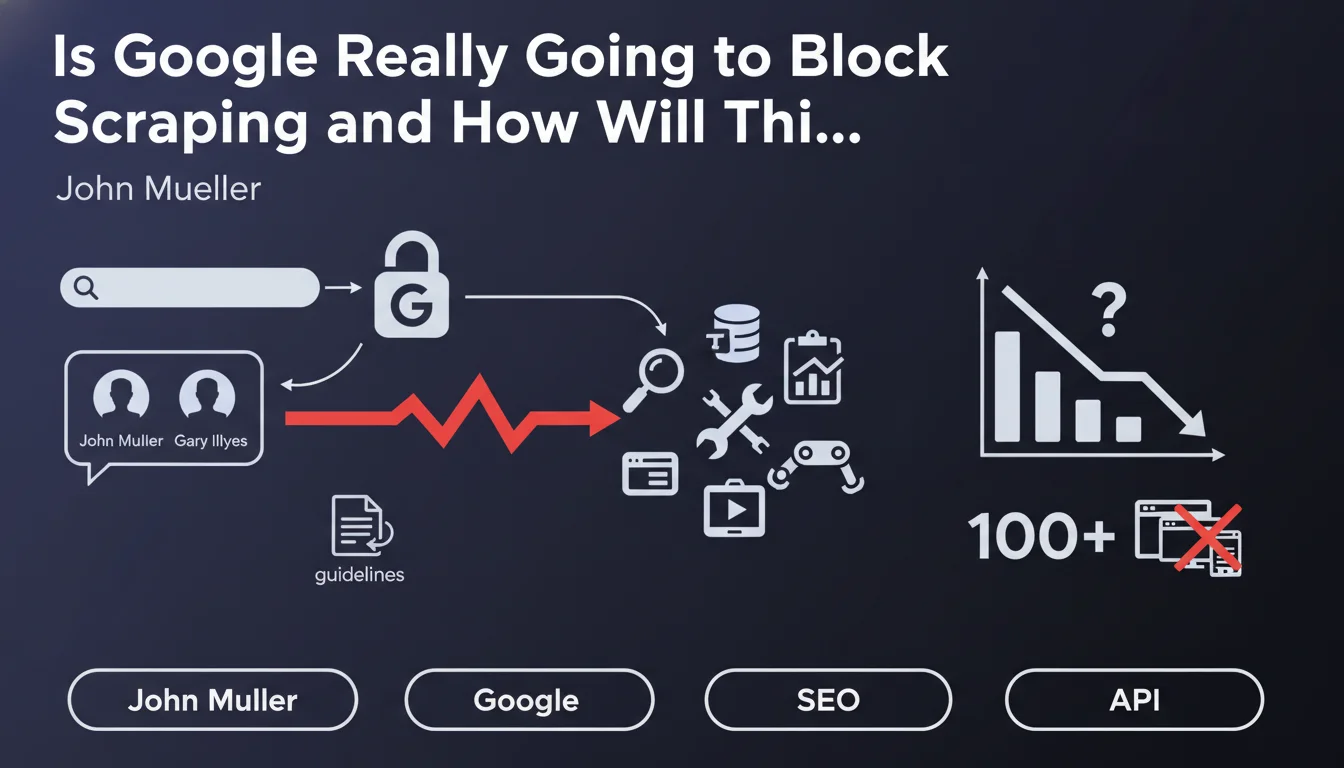
Google has always prohibited the automated scraping of its search engine results pages (SERP) in its terms of service. This public reminder from John Mueller and Gary Illyes is not trivial: it suggests that a crackdown could be imminent.
Scraping involves using automated tools to massively query the search engine and extract data from the results. This practice overloads Google's servers and can skew certain search metrics.
Which SEO tools are affected by this restriction?
Potentially, hundreds of tools use this technique to function. This includes rank tracking software, competitive analysis tools, keyword research platforms, and even certain SEO audit features.
All services that display your SERP positions in real-time or that analyze Google results for a given query depend on this practice. The impact could therefore be massive on the SEO ecosystem.
What's the difference between prohibited scraping and legitimate use?
Google distinguishes between normal use by a human user and massive automated queries. Official APIs such as Google Search Console or Google Custom Search remain legitimate channels.
- Prohibited: Sending thousands of automated queries to extract search results
- Prohibited: Using bots to simulate human searches at scale
- Tolerated: Using official APIs provided by Google with their limitations
- Acceptable: Manually consulting results like a normal user
- Recommended: Relying on Google Search Console for ranking data
SEO Expert opinion
Is this blocking threat really credible and enforceable?
After 15 years in SEO, I've seen Google make numerous similar reminders without always taking action. However, the current context is different: Google has the technical means to effectively detect and block scraping thanks to its advances in machine learning.
The timing is revealing. With the rise of AI models that massively consume data, Google is seeking to protect its ecosystem. This is probably not just a simple warning this time.
What are Google's real motivations behind this warning?
Beyond the official argument about server load, Google is seeking to control access to its data. Scraping tools allow SEOs to analyze SERPs without generating advertising revenue for Google.
There's also a competitive dimension: Google wants SEO professionals to depend more on its proprietary tools like Search Console, where it controls what data is shared and to what extent.
Are there gray areas where scraping remains tolerated?
In practice, Google cannot instantly block all tools. Services that use scraping in a moderate and distributed manner, simulating credible human behavior, will probably continue to work for some time.
Major SEO players like SEMrush, Ahrefs or Moz probably have informal arrangements or sufficient technical resources to adapt quickly. It's the small tools and homemade scripts that are most at risk.
Practical impact and recommendations
Which tools should you audit as a priority in your SEO stack?
Start by identifying all the tools you use for rank tracking and competitive analysis. Check their documentation to understand how they collect their data.
Contact the publishers of your main tools directly to ask them what their adaptation strategy is. Sustainable solutions will use official APIs or compliant methodologies.
- List all rank tracking tools used in your organization
- Check if your tools offer alternatives via Google Search Console API
- Identify custom scripts or in-house tools that scrape Google
- Test compliant alternatives like direct GSC data
- Evaluate solutions that use real user panels rather than scraping
- Diversify your data sources to avoid depending on a single method
- Document your reporting processes to facilitate a transition if necessary
How can you adapt your rank tracking methodology?
Now prioritize Google Search Console as the primary source for your ranking data. Even if it doesn't provide all keywords, it remains the most reliable and perfectly compliant source.
Explore tools that use declarative data (real user panels) rather than scraping. These methodologies, while different, can provide complementary insights without violating the guidelines.
What should you do if your current tools stop working?
Anticipate by preparing a continuity plan now. Identify at least two alternatives for each critical tool in your workflow. Don't put yourself in a position of total dependency.
Strengthen your use of Google Search Console and Google Analytics 4. Create custom dashboards that combine multiple compliant data sources to compensate for individual limitations.
💬 Comments (0)
Be the first to comment.