
Official statement
What you need to understand
What exactly is the problem with age verification pop-ups?
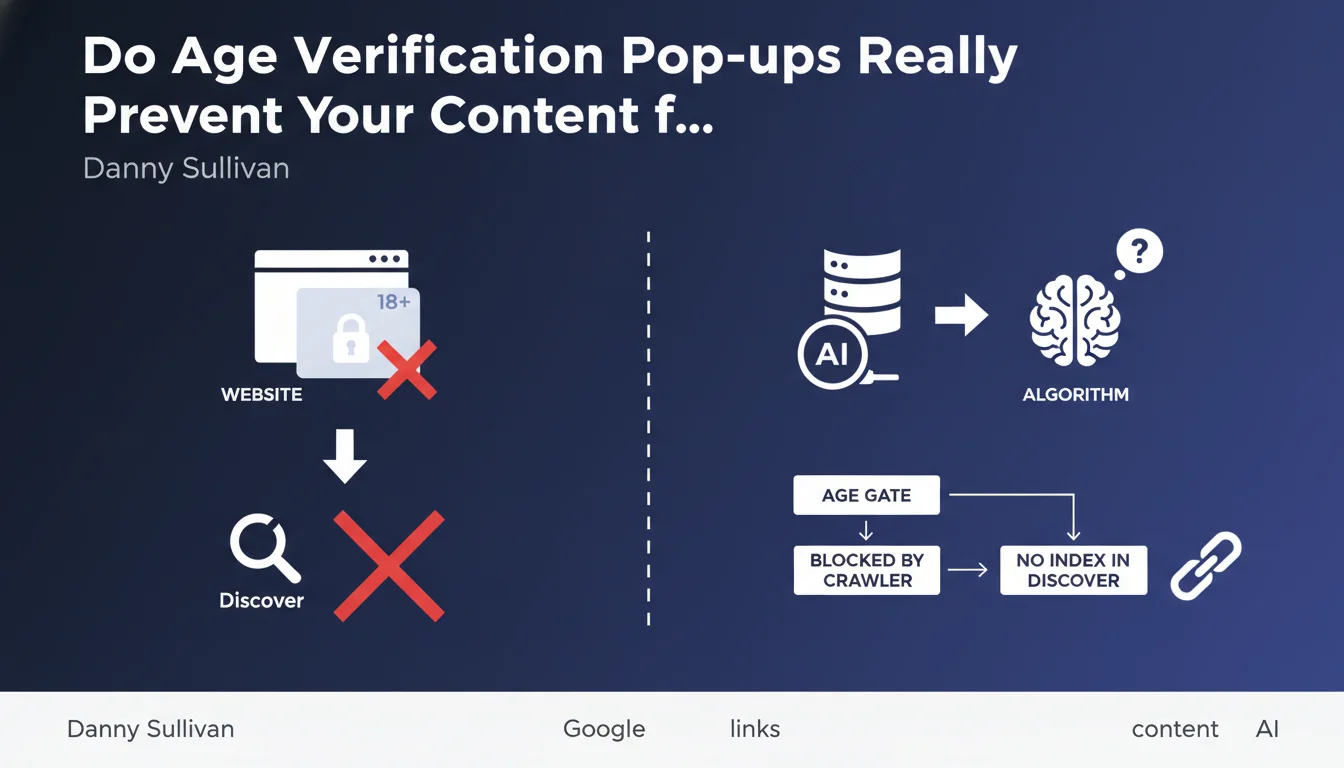
Google has clarified that age verification pop-ups represent a major obstacle for indexing in Discover. When a site imposes an entry barrier before accessing content, Google's robot cannot analyze the quality and relevance of the pages.
This technical limitation prevents Googlebot from evaluating whether the content deserves to be recommended to users in the Discover feed. Without direct access to the content, it's impossible for the algorithm to determine its added value.
Why is Discover particularly affected by these restrictions?
The functioning of Google Discover relies on in-depth content analysis to recommend it in a personalized way. Unlike classic search, Discover requires a fine understanding of articles to suggest them to the right users at the right time.
Verification pop-ups create a technical friction that the algorithm cannot bypass. Discover favors immediately accessible content to guarantee a smooth user experience.
What types of sites are affected by this restriction?
This issue primarily affects adult-only sites, gambling platforms, and certain specialized commerce sites. Any site imposing mandatory age verification before content access is potentially excluded from Discover.
- Age verification pop-ups block Googlebot's access to the actual content
- Without content analysis, Google cannot evaluate its relevance for Discover
- This restriction strongly impacts the traffic potential of affected sites
- Discover represents a significant traffic source for eligible sites
- The rule applies only to blocking verifications, not to simple warnings
SEO Expert opinion
Is this statement consistent with practices observed in the field?
Absolutely. Field observations confirm that sites with mandatory age verifications are systematically absent from Discover. This consistency demonstrates a clear Google policy aimed at protecting the user experience.
Tests show that even exceptionally high-quality content fails to break through in Discover if preceded by a verification gate. This barrier is considered absolute by the algorithm.
What important nuances should be added to this rule?
There's a crucial distinction between blocking pop-ups and simple informational warnings. A disclaimer that doesn't prevent content access doesn't necessarily penalize the site in Discover.
The position of the verification system also matters. Verification at the user account level rather than at each page level can offer technical alternatives. Some sites use cookies to remember verification and avoid repetition.
In what cases can this restriction be legitimately circumvented?
For some sites, it's possible to create an unrestricted public section with educational or informational content. This approach allows presence in Discover through this accessible content, while maintaining secured restricted areas.
E-commerce sites can also present category pages or guides without restriction, redirecting to products after verification. This dual content strategy allows partial benefit from Discover.
Practical impact and recommendations
What should you do concretely if your site uses age verification?
The first step consists of auditing your current verification system. Determine whether your pop-up actually blocks content access or if it's a simple bypassable warning.
Then analyze your content strategy. If Discover represents a major stake for your traffic, consider restructuring your site with accessible public zones and protected restricted zones.
Consider technical alternatives such as verification at the user account level, cookie memorization for verified visitors, or creating separate subdomains for publicly accessible content.
How can you measure the real impact on your visibility?
Use Google Search Console to analyze your current presence in Discover. If you have blocking age verification and no Discover impressions, the causal link is established.
Compare your performance with competitors in the same sector who don't use age verification. This comparative analysis reveals the potential shortfall in terms of traffic.
What critical mistakes must you absolutely avoid?
Never attempt to hide age verification only for Googlebot via cloaking. This practice constitutes a blatant violation of guidelines and results in severe manual penalties.
Also avoid removing age verifications if they are legally mandatory in your jurisdiction. Regulatory compliance must always take priority over SEO objectives, under penalty of serious legal consequences.
- Audit your current age verification system and its impact on content accessibility
- Analyze your Search Console data to verify your presence (or absence) in Discover
- Evaluate lost traffic potential by comparing with similar sites without restrictions
- Consider a dual site architecture with public and restricted zones
- Test verification memorization solutions (cookies, user accounts)
- Create publicly accessible informational content to partially benefit from Discover
- Document all modifications to ensure legal compliance
- Never attempt artificial bypass via cloaking or black-hat techniques
💬 Comments (0)
Be the first to comment.