
Official statement
What you need to understand
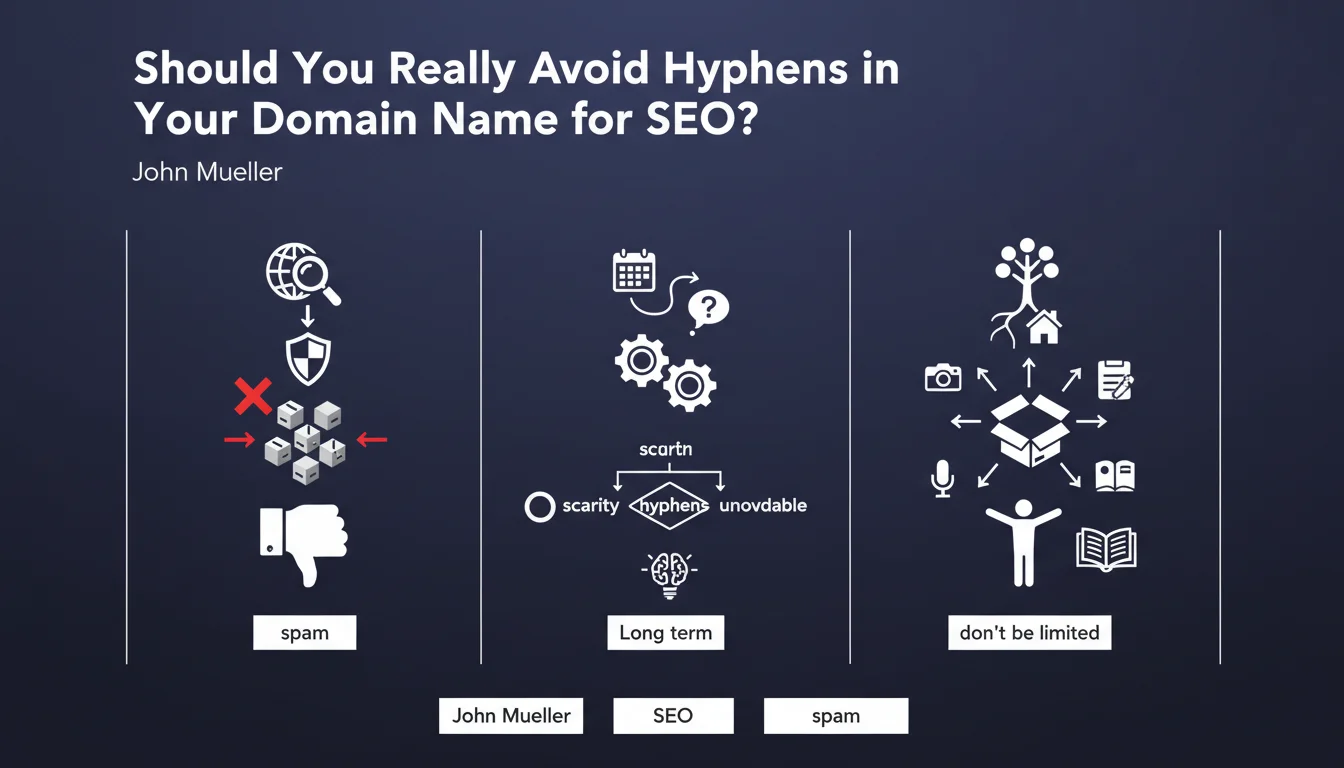
Hyphenated domains have long been associated with spam practices and SEO over-optimization. Historically, domains like "best-online-casino-france.com" were typical of black hat strategies aimed at stuffing the domain name with keywords to manipulate search results.
Google's position is evolving in the face of a simple reality: the scarcity of available domain names. With millions of domains already registered, it's becoming increasingly difficult to find a relevant name without using hyphens. Google therefore recognizes that moderate use of hyphens is no longer automatically a negative signal.
The key message is to think long-term strategy rather than short-term tactics. A domain name stuffed with keywords may seem advantageous initially, but it limits your brand evolution and can lock you into too narrow a niche.
- Hyphens are not a penalization factor in themselves
- Abuse of hyphens combined with other questionable practices remains problematic
- The priority should be building a memorable brand
- A domain should not limit your future development
- Moderate use (1-2 hyphens) for a legitimate reason is acceptable
SEO Expert opinion
This statement is perfectly consistent with the evolutions observed in the SERPs. We can indeed see that sites with hyphens in their domain can rank very well, provided their overall profile is solid. The important nuance lies in the intention: using a hyphen to separate two words of a legitimate brand (like "certified-accountant.com") has nothing to do with "buy-bitcoin-cheap-2024.com".
Analysis of Google's algorithms shows that they are now sophisticated enough to contextualize the use of hyphens. What really matters: user behavior, content quality, link profile and brand signals. A hyphenated domain with strong brand equity, direct traffic and branded searches will always outperform a "clean" domain without real substance.
Practical impact and recommendations
- ✓ DO: Favor a memorable and pronounceable brand name, even with a hyphen if necessary (e.g., my-store.com for "My Store")
- ✓ DO: Use 1 to 2 hyphens maximum if it genuinely improves domain readability
- ✓ DO: Think about your business evolution: will your domain allow for future diversification?
- ✓ DO: Invest in building brand signals (branded searches, direct traffic, mentions) regardless of your domain
- ✗ AVOID: Choosing a domain solely for its keyword potential (like "seo-expert-paris-cheap.com")
- ✗ AVOID: Using 3 or more hyphens in your domain name
- ✗ AVOID: Combining hyphens + geographic extension + generic keywords (potential spam signal)
- ✗ AVOID: Buying a hyphenated domain with a questionable history without checking its past
- ⚡ ACTION: If you're hesitating between several domains, test them with your target audience: which one do they remember and type correctly?
- ⚡ ACTION: If you already have a hyphenated domain, focus your efforts on branding rather than changing domains (costly in SEO terms)
💬 Comments (0)
Be the first to comment.