
Official statement
What you need to understand
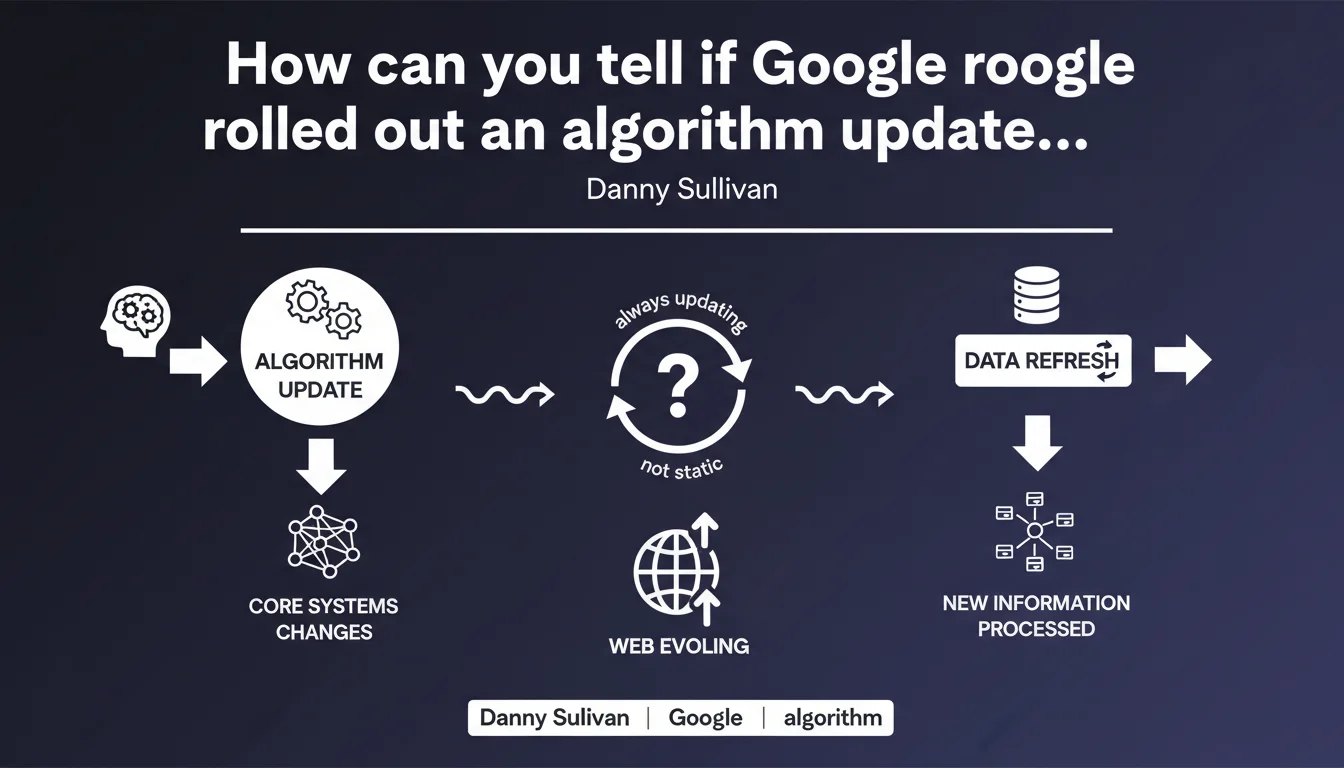
Google has clarified the fundamental distinction between two types of search engine evolutions: algorithm updates and data refreshes. This clarification is essential for understanding the ranking fluctuations you observe.
Algorithm updates modify how Google's core systems evaluate and rank content. These are structural changes that impact the ranking criteria themselves.
Data refreshes simply involve processing new information through these same systems, without modifying the evaluation rules. The web constantly evolves, and Google permanently processes new content and signals.
- Algorithm updates change the rules of the game and evaluation criteria
- Data refreshes update the information processed by unchanged algorithms
- Google Search is in perpetual evolution; it's not a static environment
- Daily fluctuations don't necessarily mean an algorithm update is underway
SEO Expert opinion
This clarification from Google is consistent with what we observe in the field. Many SEO practitioners indeed confuse ranking variations with major update rollouts. Each crawl, each index refresh generates normal micro-movements.
However, this distinction requires nuance: in practice, it's often difficult to distinguish a large-scale data refresh from a genuine algorithm update. When Google massively processes new signals (backlinks, user behaviors, fresh content), the impact can resemble an algorithmic modification.
The reality of modern SEO is that Google makes quasi-continuous adjustments. The major announced updates (Core Updates) are only the visible part of a permanent optimization machine.
Practical impact and recommendations
- Establish a monitoring system that distinguishes normal variations from significant changes (thresholds of +/- 15-20% over one week)
- Don't hastily modify your SEO strategy with every few-position fluctuation
- Systematically document correlations between your SEO actions and observed variations
- Focus your efforts on consistent content quality and user experience, which remain valued regardless of refreshes
- Follow official major update announcements to identify real algorithmic changes
- Analyze your data over 30 to 90-day periods to identify true trends
- Maintain permanent technical monitoring: crawlability, performance, structure, internal linking
- Regularly strengthen your link profile and topical authority progressively
Implementing a sophisticated monitoring strategy and correctly interpreting data require deep expertise and appropriate tools. Given the growing complexity of Google's systems and the multiplicity of signals to analyze, calling upon a specialized SEO agency can prove judicious to benefit from personalized support, objective analysis of your performance, and a strategy adapted to your specific context.
💬 Comments (0)
Be the first to comment.