
Official statement
What you need to understand
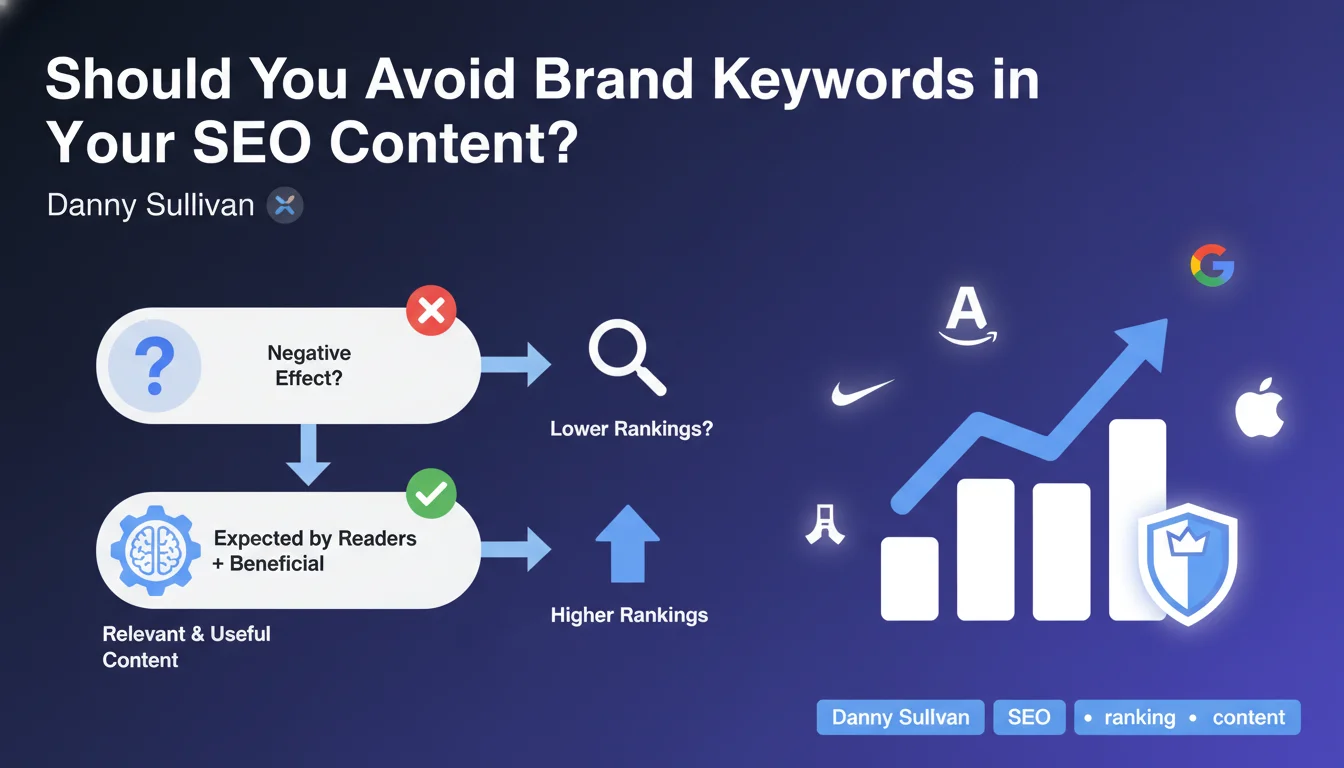
This statement from Google clarifies a widespread belief in the SEO community: some practitioners think that mentioning competing or third-party brand names in their content could harm their rankings. Google explicitly states the opposite: using brand keywords has no negative impact on positioning.
According to Google, mentioning brands in content is not only natural and expected by users, but can even contribute positively to rankings. When a user searches for information about a product, service, or comparison, they logically expect to find the names of the relevant brands in the results. Omitting these mentions would make the content less relevant and less useful.
This position aligns with Google's overall philosophy of favoring content written for users rather than for the algorithm. The essential condition remains that the content be relevant and provide real added value.
- Mentioning brand names does not negatively affect rankings
- These mentions are expected by readers and considered natural
- They can even contribute positively to SEO
- Content relevance and usefulness remain the priority criteria
- This is not a free pass for brand keyword stuffing
SEO Expert opinion
This statement is consistent with what I have been observing for several years. Comparative content, buying guides, or "alternatives to [brand]" type articles generally perform very well in SERPs, precisely because they explicitly mention the brands concerned. Google needs these semantic signals to understand the context and relevance of the content.
However, this statement needs to be nuanced in practice. While mentioning brands is not penalizing in itself, certain patterns can be problematic: abuse of popular brand mentions solely to capture traffic (parasite SEO), superficial content that merely lists brands without providing value, or misleading use of brand names. In these cases, it is not the brand mention that is problematic, but the low quality or misleading nature of the overall content.
Practical impact and recommendations
This official statement should free you from certain counterproductive self-censorship and encourage you to create more comprehensive and useful content for your users.
- Don't hesitate to mention brands when it's relevant for your content (comparisons, guides, tutorials, reviews)
- Create comparative content putting several competing brands in perspective if it brings value to your readers
- Use brand names in your internal link anchors when it improves context understanding
- Enrich your existing content by adding references to relevant brands if they were avoided for fear of a penalty
- Don't do brand keyword stuffing: the mention must remain natural and contextual
- Avoid SEO parasitism which consists of creating superficial content solely to capture traffic from a popular brand
- Check legal aspects before creating landing pages or advertising campaigns heavily using third-party brands
- Always prioritize quality and usefulness: mentioning brands does not replace substantial content
💬 Comments (0)
Be the first to comment.