
Official statement
What you need to understand
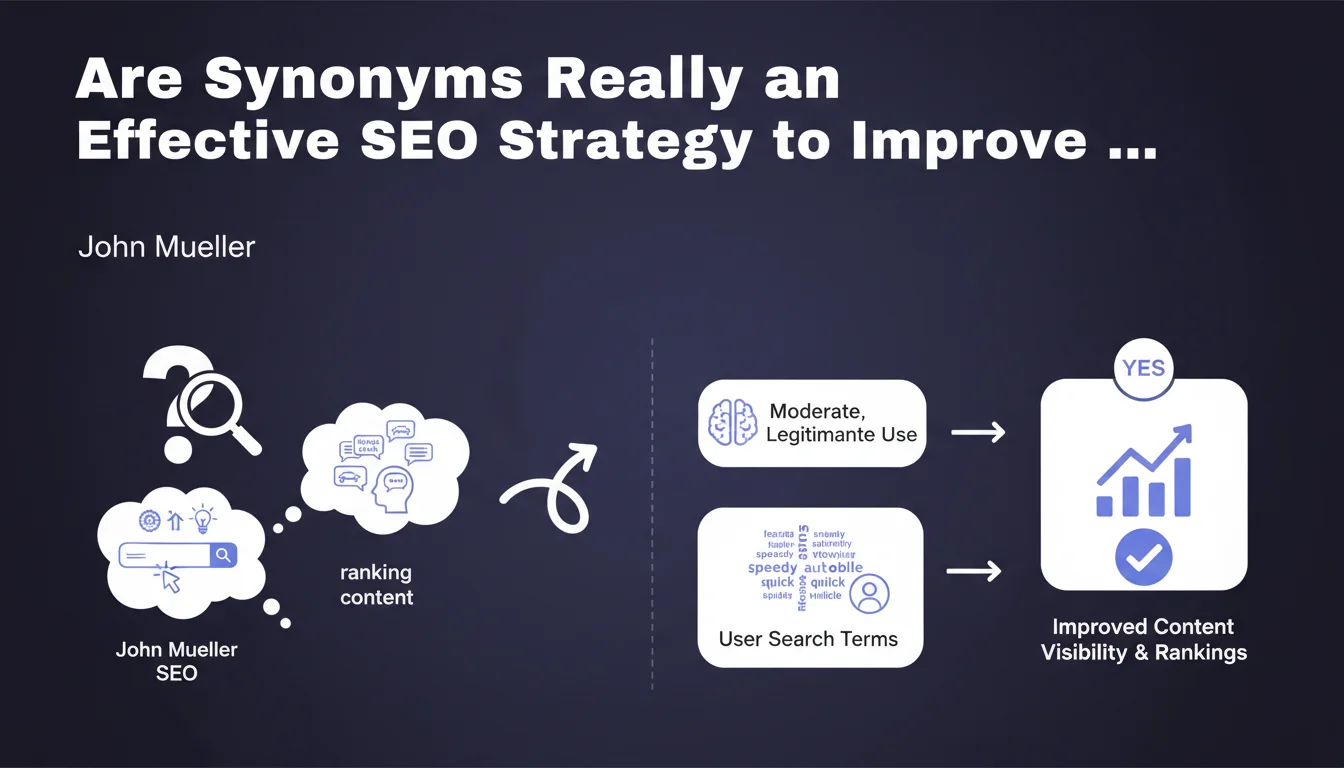
Google officially confirms that using synonyms in your content is a relevant optimization strategy. This approach allows your pages to rank for a variety of semantically related queries, corresponding to the different formulations used by users.
Google's algorithm is now mature enough to understand semantic relationships between words. It no longer simply matches exact keywords, but analyzes the overall lexical field of a page to assess its thematic relevance.
This directive highlights the importance of a natural approach to SEO writing. The goal is not to stuff your texts with variants, but to naturally enrich your vocabulary to cover the spectrum of user searches.
- Lexical diversification: using multiple terms to designate the same concept
- Expanded semantic coverage: capturing varied queries with a single piece of content
- Content naturalness: avoiding heavy repetitions that harm user experience
- Alignment with search intent: matching the different formulations of users
SEO Expert opinion
This position from Google is perfectly consistent with what we've been observing in the field for several years. The sites that achieve lasting rankings are those that develop a rich and varied vocabulary around their topic, without falling into excessive optimization.
Be careful, however, not to turn this recommendation into an artificial synonym race. The trap would be to use unnatural variants or ones unsuited to the context, simply to multiply occurrences. Google perfectly detects over-optimized content where synonyms seem forced.
The key lies in balance and prior semantic analysis. It's recommended to study the terms actually used in searches within your topic (via Search Console in particular) before building your synonym strategy.
Practical impact and recommendations
- Analyze your audience's vocabulary: identify in Search Console all the query variants that generate impressions on your content
- Create a semantic glossary for each major topic on your site, listing relevant synonyms and related terms
- Review your existing content to replace certain repetitions with natural and appropriate synonyms
- Integrate variants into your titles and subheadings (H2, H3) to maximize semantic coverage without forcing it
- Avoid systematic use of all possible synonyms in the same text: prioritize reading fluidity
- Use semantic analysis tools to identify co-occurrences and associated terms in your topic
- Test and measure impact: monitor the evolution of the number of ranked keywords after optimization
- Maintain terminological consistency in technical contexts where precision takes precedence over variety
In summary: The judicious use of synonyms enriches your content and improves your visibility on varied queries. This strategy, however, requires in-depth semantic analysis and a fine understanding of your audience.
Implementing an effective semantic strategy requires specific skills in data analysis, keyword research, and SEO writing. Faced with the complexity of these optimizations and the time they require, many companies choose to partner with a specialized SEO agency capable of developing a customized content strategy, based on advanced semantic analyses and adapted to the specificities of their sector.
💬 Comments (0)
Be the first to comment.