
Official statement
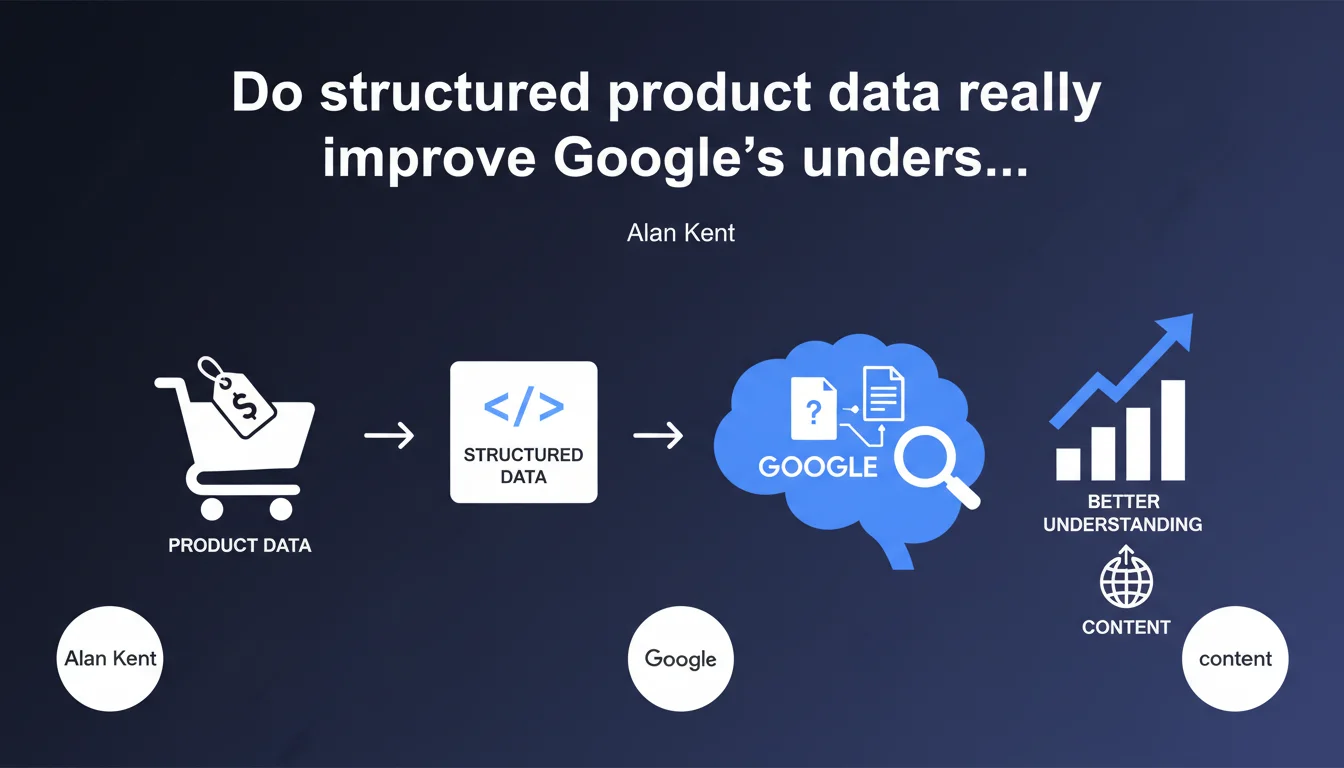
Google confirms that structured product data helps its search engine better understand page content. This official statement validates the importance of Schema.org markup for e-commerce, although it doesn't specify the actual extent of its impact on rankings.
What you need to understand
Why does Google emphasize structured product data?
Google's crawler analyzes billions of pages every day. To automatically extract key information from a product page — price, availability, reviews, brand — it can rely on extraction heuristics or explicit markup.
Schema.org structured data provides a standardized method to mark up this information. Instead of guessing where the price or average rating is located, Google directly reads the offers, aggregateRating, or brand properties in JSON-LD or microdata.
What does this actually change for indexing?
Better content understanding allows Google to display rich results in the SERPs: rating stars, price range, stock availability. These rich snippets increase visibility and click-through rate.
But beware — Alan Kent talks about "better understanding", not "better ranking". This distinction is essential. Structured data facilitates eligibility for enhancements, but doesn't guarantee their display or direct ranking boost.
What types of structured product data are involved?
The Schema.org Product schema covers a wide range of properties: name, description, image, SKU, GTIN, brand, price, currency, availability, condition (new/used), customer reviews, aggregate ratings.
Google can also leverage complementary schemas like Offer, Review, AggregateRating, or Breadcrumb to contextualize the product's position in your site's structure.
- Structured product data helps Google automatically extract key information from a product page
- They make pages eligible for rich results (stars, price, stock) in the SERPs
- They don't guarantee better organic ranking, but they improve visibility and CTR
- The recommended format is JSON-LD, easier to implement and maintain than microdata
- Google expects consistent information between the structured markup and the visible page content
SEO Expert opinion
Is this statement consistent with real-world observations?
Yes, largely. E-commerce sites that properly implement Schema.org Product markup generally notice better presence in rich results. Rating stars, price ranges, and stock information appear more frequently in the SERPs.
But the wording remains deliberately vague. "Better understanding" doesn't mean "better ranking". [To verify]: no official data quantifies the actual impact of this markup on organic positioning. Google can perfectly well understand a page without necessarily favoring it in its ranking algorithms.
What nuances should be added to this claim?
First nuance: Google has never officially confirmed that structured data is a direct ranking factor. They influence SERP display, not necessarily position. A site with perfect markup can easily rank behind a competitor without any.
Second nuance: Google doesn't guarantee rich snippet display, even if the markup is valid. The algorithm sovereignly decides whether or not to show stars, price, stock — based on criteria it doesn't disclose. I've seen technically flawless sites ignored for months.
In which cases does this markup provide the least value?
On category or listing pages, Product markup makes no sense. Google expects CollectionPage or ItemList schema with references to individual products. Marking up each product on a category page as Product can actually create confusion.
Another case: ultra-generic products with no differentiation. If your product page contains no reviews, no competitive pricing, or no distinctive information, Schema.org markup will add only marginal value. Google will understand a page better, but that won't push it higher in the SERPs.
Practical impact and recommendations
What should you do concretely to benefit from this clarification?
Start with a complete audit of your existing markup. Use Google's rich results test tool to identify errors, missing properties, and inconsistencies between structured code and visible content.
Then implement JSON-LD markup on all your product pages. Fill in at minimum the essential properties: name, image, description, offers (with price, priceCurrency, availability), brand. If you have customer reviews, add aggregateRating and review.
Check semantic consistency: the price in the JSON-LD must exactly match the price displayed in the HTML. A discrepancy can trigger a manual alert or simply cause Google to ignore your markup.
What errors must you avoid at all costs?
Don't mark up products that don't exist or are no longer available. Google considers this an attempt at manipulation and may disable your rich snippets for the entire domain.
Avoid fake reviews or artificially inflated ratings. If your rating stars don't reflect real, verifiable reviews, you risk a manual action. Google increasingly cross-references its data with other sources to detect inconsistencies.
Don't duplicate markup. One JSON-LD block per product. If you use multiple formats (JSON-LD + microdata), ensure they describe exactly the same information, otherwise Google may get confused.
How do you verify your implementation works?
Use three complementary tools: Google's rich results test to validate the code, Search Console to monitor errors flagged by the crawler, and a SERP tracking tool to measure actual rich snippet appearance.
Particularly monitor the "Enhancements" > "Products" report in Search Console. Google lists all detected errors there: missing properties, incorrect formats, inconsistencies. Systematically correct these alerts.
- Audit existing markup with the rich results test tool
- Implement JSON-LD Schema.org Product on all product pages
- Fill in at minimum: name, image, description, offers, brand
- Add aggregateRating and review if you have verifiable customer reviews
- Verify strict consistency between markup and visible content
- Monitor the "Products" report in Search Console
- Measure rich snippet appearance in the SERPs
- Never mark up fake reviews or non-existent products
❓ Frequently Asked Questions
Les données structurées produit sont-elles obligatoires pour le référencement ?
Le balisage Schema.org améliore-t-il directement le positionnement dans Google ?
Quel format de balisage choisir : JSON-LD ou microdonnées ?
Combien de temps faut-il pour que Google affiche les résultats enrichis ?
Peut-on perdre ses résultats enrichis après une mise à jour de Google ?
🎥 From the same video 2
Other SEO insights extracted from this same Google Search Central video · published on 31/10/2022
🎥 Watch the full video on YouTube →
💬 Comments (0)
Be the first to comment.