
Official statement
What you need to understand
Why Does Google Care About the History of Purchased Domain Names?
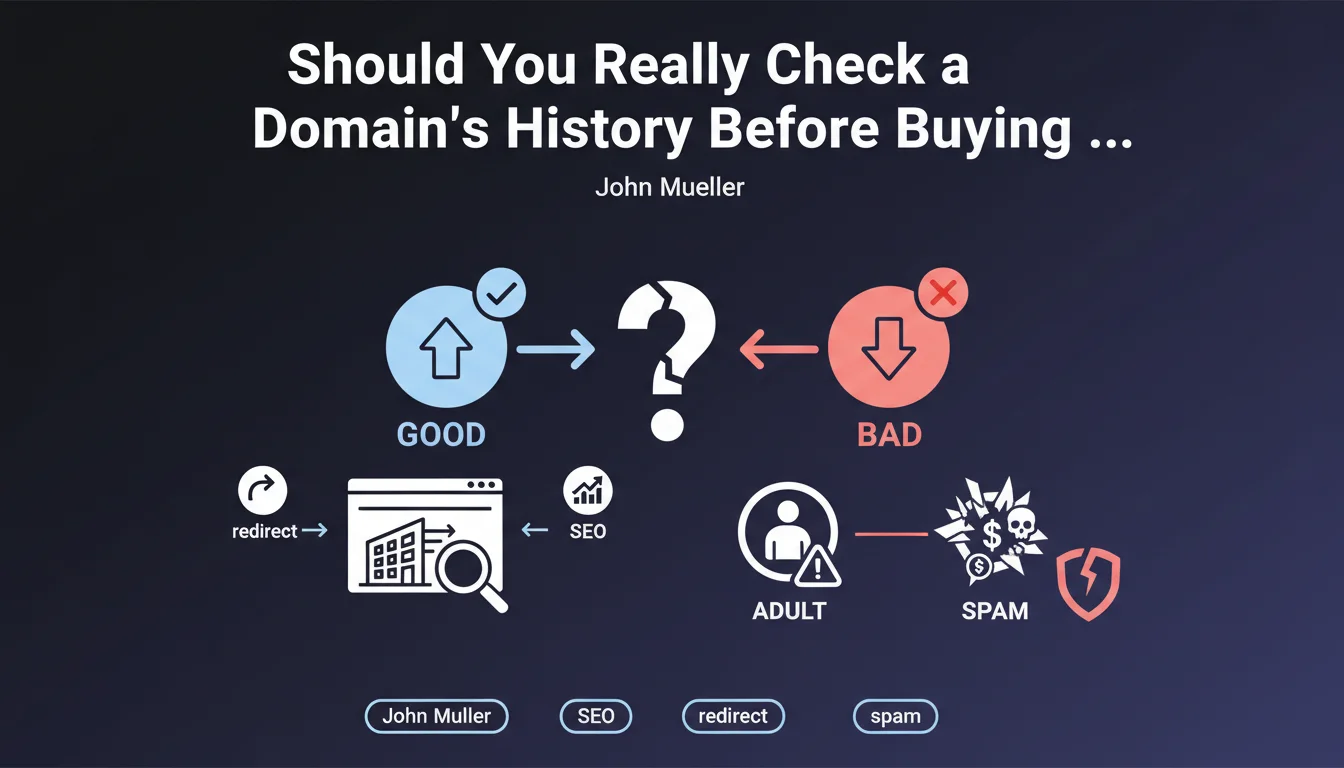
When a domain name expires and changes ownership, Google doesn't consider it a blank slate. The search engine retains the domain's history in memory, particularly past redirections and the type of content that was hosted there.
If a domain was used for massive spam activities or to host adult content, this negative reputation can persist in the algorithm. Google seeks to prevent domains with a bad reputation from being recycled to manipulate rankings.
What Types of Liabilities Can Penalize a Purchased Domain?
John Mueller identifies two main categories of problems: adult sites (pornography) and domains that practiced pure spam. These activities leave a lasting footprint in Google's index.
On the other hand, a domain that was simply inactive for several years, or that hosted a legitimate but now defunct site, generally poses no particular problem. The duration of inactivity itself (17 years in the example) is not a blocking factor.
What Are the Concrete Consequences of a Problematic History?
A domain with a spammy past can suffer several handicaps: difficulty being indexed correctly, systematically poor positioning despite quality content, or distrust from anti-spam filtering algorithms.
- Residual penalties that persist even after change of ownership
- Toxic backlinks from old spam networks still active
- Negative reputation among users who knew the old site
- Algorithmic filters that can remain active for months or even years
- Partial deindexing of certain sections of the site without clear explanation
SEO Expert opinion
Is This Statement Consistent with Practices Observed in the Field?
Absolutely. In 15 years of SEO practice, I've observed numerous cases where purchasing an expired domain proved counterproductive. Clients have bought domains with apparently excellent metrics (high DR, numerous backlinks) only to discover later that they were invisible in Google.
Mueller's statement is actually rather optimistic. In reality, even domains that hosted legitimate content but received manual penalties in the past can remain handicapped for very long periods, sometimes permanently.
What Important Nuances Should Be Added to This Directive?
The line between "spam" and "aggressive SEO" isn't always clear. A domain that practiced massive artificial link building, content spinning, or cloaking 10 years ago may still bear those stigmas, even if these practices weren't considered "pure spam" at the time.
Moreover, Google doesn't instantly detect all changes. A purchased domain can take several months to be properly reevaluated, during which time your SEO efforts will be wasted.
In What Cases Does This Rule Not Fully Apply?
If you purchase an expired domain to create a completely different site in an unrelated niche, and you disavow all the old backlinks, you can sometimes "reset" the domain's reputation. But this is a long and uncertain process.
Large historical domains with genuine brand recognition sometimes benefit from different treatment. Google may be more lenient with a former legitimate news site than with a dubious micro-affiliate site.
Practical impact and recommendations
How Can You Check a Domain Name's History Before Buying It?
The first step is to use Wayback Machine (archive.org) to view past versions of the site. Go back at least 5 to 10 years to identify hosted content and any suspicious redirections.
Then use tools like Ahrefs, Majestic, or SEMrush to analyze the historical backlink profile. Look for suspicious anchor text, links from adult sites, or identified spam networks.
Also check whether the domain appears in public blacklists like those from Spamhaus or Google Safe Browsing. Inclusion in these lists, even if old, can leave lasting traces.
What Should You Do If You've Already Bought a Domain with a Problematic Past?
If you discover too late that your domain has a toxic history, you have several options. The first is to extensively use Google's disavow tool to reject all identified suspicious backlinks.
Submit a reconsideration request via Search Console clearly explaining that you are the new owner and the content has completely changed. Be patient: the process can take several months.
In the most severe cases, it may be more effective to simply abandon the domain and start fresh with a new one. The time and energy lost "cleaning" a problematic domain often exceed the initial expected benefit.
What Are the Best Practices for Securing the Purchase of an Expired Domain?
- Conduct a complete history audit covering at least 10 years via Wayback Machine
- Analyze the backlink profile with multiple tools to cross-reference data
- Verify the domain's absence from anti-spam blacklists
- Search for any manual penalties via Google Search Console if accessible
- Examine link anchors to detect over-optimization patterns
- Consult SEO forums and social networks to see if the domain is known negatively
- Prioritize domains that had recent legitimate activity rather than very old activity
- Plan a testing period of 3-6 months before investing heavily in the project
- Document all changes and be ready to submit a reconsideration request
💬 Comments (0)
Be the first to comment.