
Official statement
What you need to understand
What Are the Main New Features Announced for Search Console?
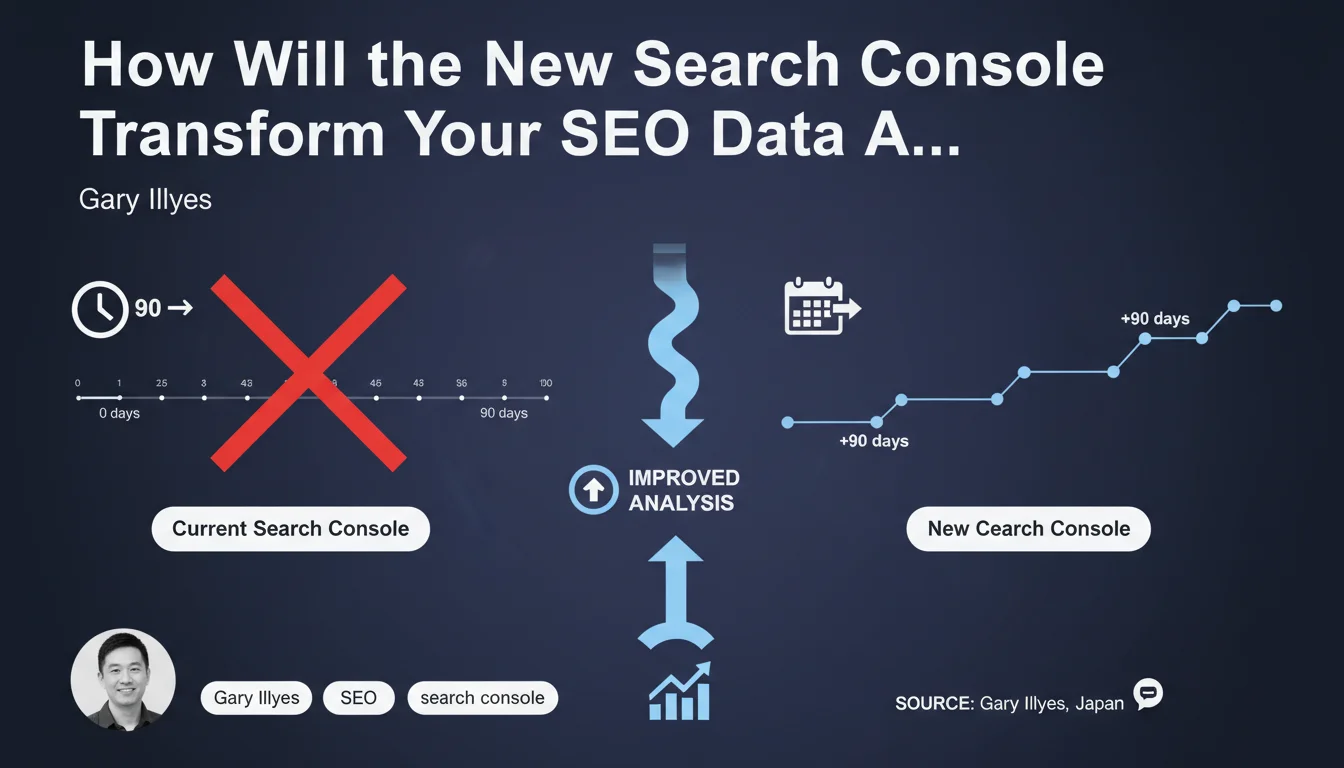
Google has officially confirmed the imminent arrival of a new version of Search Console, with major improvements long awaited by the SEO community. The main evolution concerns the extension of the data retention period, which will finally exceed the current 90-day limit for performance reports.
Beyond this crucial feature, the new interface also promises optimized mobile compatibility, a modernized design, and new, more flexible analysis date ranges. These improvements respond to the repeated requests from SEO practitioners who were running into the limitations of the current interface.
- Extended history beyond 90 days for search analysis
- Redesigned interface with improved ergonomics and modernized design
- Enhanced mobile compatibility to check your data on the go
- New date ranges for more in-depth comparative analyses
- Launch date not officially announced
Why Was This 90-Day Limitation So Problematic?
The current 90-day limit is a major obstacle for any serious SEO analysis. It's impossible to compare year-over-year performance, identify seasonal trends, or measure the real long-term impact of optimizations.
SEO professionals are forced to regularly export their data to third-party tools or spreadsheets to maintain a usable history. This time-consuming manipulation creates risks of errors and unnecessarily complicates analysis work.
What Does This Change for SEO Performance Analysis?
Access to an extended data history will enable much more refined and strategic analyses. You'll finally be able to compare your performance from one quarter to another, measure the evolution of your rankings over long periods, and identify seasonal patterns in your organic traffic.
This evolution transforms Search Console into a true strategic analysis tool rather than just a tactical dashboard. SEO decisions will be able to rely on solid data and confirmed trends rather than observations limited in time.
SEO Expert opinion
Does This Announcement Really Address the Needs of SEO Professionals?
Google's announcement is clearly excellent news, but it arrives several years late compared to market expectations. Third-party SEO tools have long offered much more extensive data histories, forcing professionals to multiply solutions for complete analysis.
Caution remains advisable, however: Google has communicated no specific launch date or details about the exact extent of this retention period. Past experience teaches us that Google's announcements can take months, even years, to fully materialize.
What Are the Limitations and Grey Areas of This Announcement?
Several essential questions remain unanswered. What exactly will the new retention period be? Will it be 6 months, 12 months, or 16 months like some current reports? Will historical data be retroactively available or only from the launch date?
Moreover, no information has been given about new analysis features that would accompany this history extension. Year-over-year comparison tools, automated seasonality analyses, or trend alerts would be essential to fully exploit this additional data.
How Does This Evolution Fit Into Google's Overall Strategy?
This update demonstrates Google's recognition of the growing importance of first-party data for site publishers. In a context where query visibility is eroding with Analytics' "not provided," Search Console is becoming the preferred tool for understanding user search behavior.
We can also see a desire to centralize webmasters within the Google ecosystem and reduce their dependence on third-party tools. A more powerful Search Console could discourage the use of competing solutions for organic performance tracking.
Practical impact and recommendations
How Should You Prepare for the Transition to This New Version?
Even without a specific date, it's wise to anticipate this migration now. Start by documenting your current data export processes, custom dashboards, and regular reports to facilitate their reconstruction in the new interface.
Take advantage of this period to conduct a complete audit of your current usage of Search Console. Identify the features you use most, the reports critical to your business, and the friction points in the current interface.
- Continue to export and archive your Search Console data every month to preserve all history
- Document your custom reports and current analysis processes
- Identify the critical KPIs you regularly track in the tool
- Train yourself on new features as soon as they become available in beta
- Plan for a familiarization period with the new interface
What Analysis Opportunities Will This Evolution Unlock?
Access to an extended history will finally enable year-over-year comparative analyses, essential for any site with a seasonal component. You'll be able to measure the real effectiveness of your optimizations by comparing the same periods from one year to another.
Long-term trend analyses will become possible directly in the native interface. Identifying progressive visibility erosion or conversely regular organic growth will be much simpler, enabling more relevant strategic adjustments.
SEO ROI reports will also gain credibility with data over significant periods. You'll be able to demonstrate the impact of your actions over complete cycles and justify your investments with tangible proof.
Should You Revise Your SEO Tracking and Analysis Strategy?
This major evolution invites a rethinking of the overall architecture of your SEO monitoring system. The integration of Search Console data with your other sources (Analytics, ranking tools, crawlers) will need to be reconfigured to take advantage of this extended history.
Setting up new dashboards exploiting this long-term data will require sharp technical and analytical expertise. This is an opportunity to build a true SEO business intelligence system rather than simple tactical reports.
- Rethink your SEO tool stack based on Search Console's new capabilities
- Plan the creation of new dashboards exploiting the extended history
- Establish year-over-year comparative analysis processes
- Train your teams on new analysis possibilities
- Integrate this data into your strategic reporting
💬 Comments (0)
Be the first to comment.