
Official statement
What you need to understand
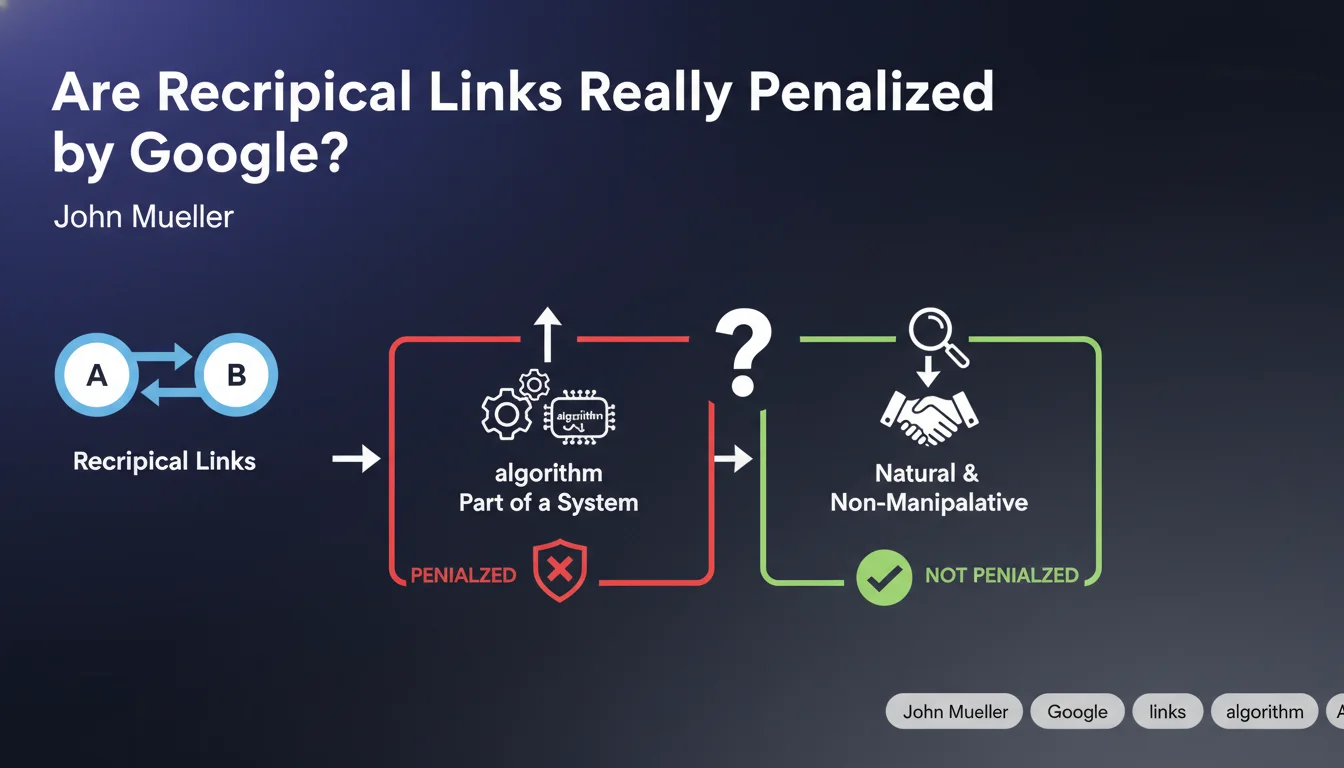
Reciprocal links (A links to B, and B links to A) have long been considered a risky practice in SEO. This fear is based on the idea that they constitute an attempt to manipulate PageRank.
However, John Mueller clarifies Google's position: link exchanges are not automatically considered spam. The fundamental distinction lies in the intent and context.
Google evaluates the natural legitimacy of these links. If your sites exist for valid commercial or editorial reasons (not solely for SEO purposes), cross-links between them are perfectly acceptable.
- Reciprocal links are not prohibited by nature, contrary to popular belief
- It's the manipulative intent that's problematic, not the reciprocity itself
- Legitimate site networks can logically link to each other
- Footer links to other company properties are acceptable
- Common sense and user value should guide your decisions
SEO Expert opinion
This clarification from Mueller is consistent with what we observe in search results. Large companies with multiple thematic sites regularly link to each other without visible penalties.
The important nuance concerns the ratio and context. A site where 80% of backlinks are reciprocal will inevitably raise suspicions. Similarly, systematic exchanges with over-optimized anchors remain problematic.
The real test remains that of added value for the user. A reciprocal link that genuinely helps the visitor find a relevant complementary resource will always be better perceived than a mechanical exchange without thematic coherence.
Practical impact and recommendations
- Audit your existing reciprocal links: keep those that bring real value, remove purely tactical exchanges
- Don't create a network of sites solely for SEO: each property must have its own reason to exist
- Diversify your backlink sources: even when legitimate, reciprocal links should not constitute the bulk of your profile
- Contextualize your links: place them in a relevant editorial context rather than systematically in the footer
- Document the legitimacy of your relationships: in cases of subsidiaries, commercial partnerships, or editorial collaborations, the connection between sites should be obvious
- Avoid over-optimized anchors: use natural formulations even in reciprocal links
- Test the user value: ask yourself if a visitor would naturally click on this link and find a benefit
Analyzing a complex link profile and the subtle balance between optimization and naturalness require deep expertise in algorithmic signals. These strategic decisions about your backlink structure can have a significant impact on your long-term visibility. Getting support from a specialized SEO agency allows you to obtain an objective audit of your situation and develop a link building strategy tailored to your digital ecosystem, while respecting guidelines and maximizing your performance.
💬 Comments (0)
Be the first to comment.