
Official statement
What you need to understand
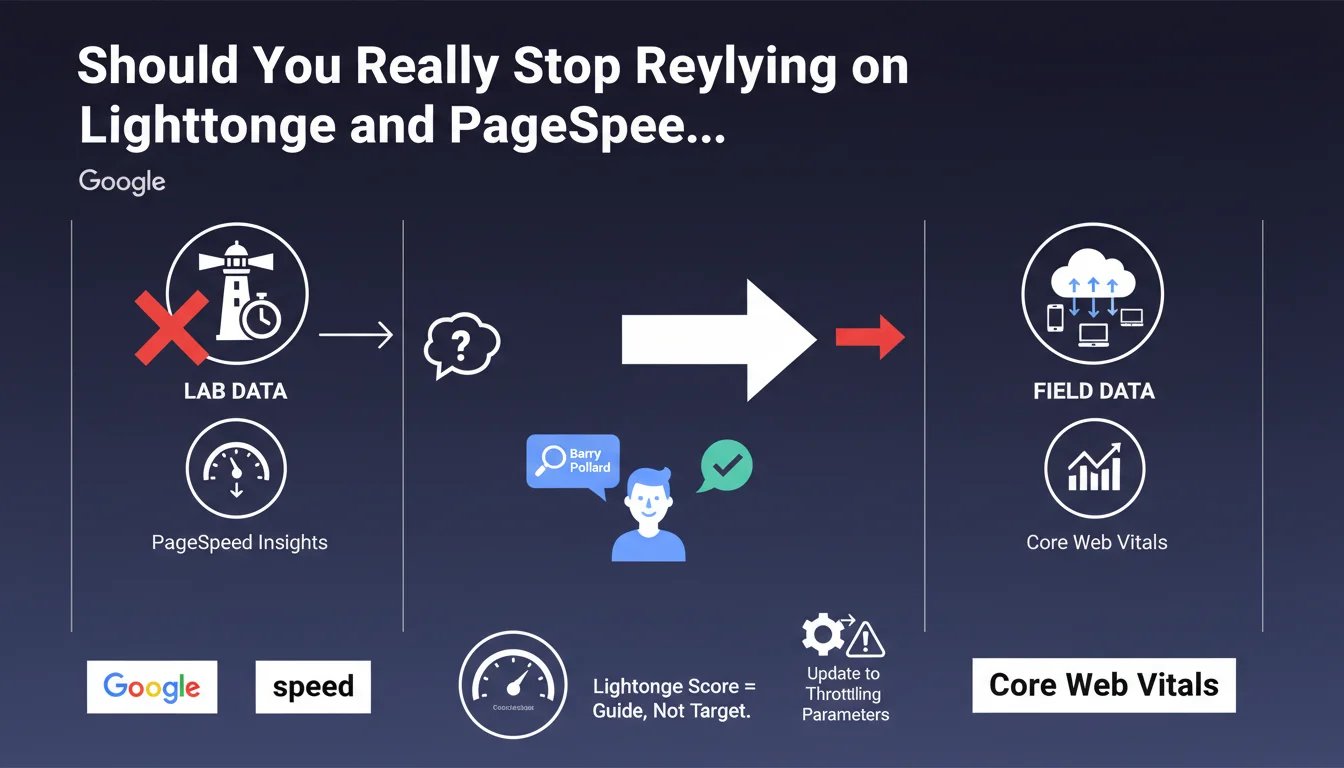
Google is providing a major clarification on how to properly evaluate Core Web Vitals. The company emphasizes the fundamental distinction between two types of data: field data which reflects real user experience, and lab data generated in controlled environments.
This announcement takes on its full meaning with the planned update to throttling parameters in PageSpeed Insights. These changes will directly impact Lighthouse scores, which may create confusion among SEO practitioners accustomed to relying solely on these metrics.
The key message is that the Lighthouse score should serve as a guide, not an absolute goal. This represents an important paradigm shift for web performance optimization.
- Field data (CrUX) reflects real user experience across different devices and connections
- Lab data (Lighthouse) is useful for diagnostics but only represents a simulated environment
- Google uses only field data for ranking in its search results
- Lighthouse scores will evolve with the throttling update, without impacting actual ranking
- A good Lighthouse score does not guarantee good performance under real conditions
SEO Expert opinion
This position from Google is perfectly consistent with what we observe in the field. Many sites with average Lighthouse scores (70-80) perform very well in search results, while others with perfect scores (100) don't benefit from any particular advantages. The reason? Google uses the CrUX report (Chrome User Experience Report) for its ranking decisions.
However, an important nuance must be made: lab data remains valuable for identifying specific issues and testing solutions before deployment. It provides a reproducible and controlled environment, ideal for debugging. The trap would be to ignore it completely.
The throttling update in PageSpeed Insights will likely cause many Lighthouse scores to drop, potentially creating unwarranted panic. It's crucial to prepare your clients or teams for this evolution by explaining that only field metrics truly matter for SEO.
Practical impact and recommendations
- Systematically prioritize Search Console and the "Core Web Vitals" report which displays field data (CrUX) from your actual URLs
- Consult PageSpeed Insights by first looking at the "Discover what your real users are experiencing" tab before the lab data
- Use the CrUX dashboard on Looker Studio for detailed analysis of your real performance over a rolling 28-day period
- Don't panic if your Lighthouse scores drop after the throttling update - check your field data first
- Keep Lighthouse as a diagnostic tool to identify specific optimization opportunities (unoptimized images, render-blocking JavaScript, etc.)
- Stop aiming for a score of 100 on Lighthouse - focus on getting your URLs to "Good" (green) in field data
- Test your optimizations in the lab, but validate their impact with field data after deployment
- Document the difference between the two types of data in your client reports to avoid misunderstandings
- Segment your field analyses by device type (mobile/desktop) as Google evaluates this data separately
- Set up continuous monitoring of CrUX data with alerts on performance degradation
Optimizing Core Web Vitals based on field data represents a profound methodological shift that requires new analytical and technical skills. It's no longer simply about improving a score, but about understanding and optimizing real user experience through complex data.
This approach requires sharp expertise in data analysis, advanced technical optimization, and a fine understanding of different Google tools. For businesses that want to maximize their performance without investing months in training and experimentation, support from an SEO agency specialized in web performance can prove judicious to accelerate results and avoid costly mistakes.
💬 Comments (0)
Be the first to comment.