
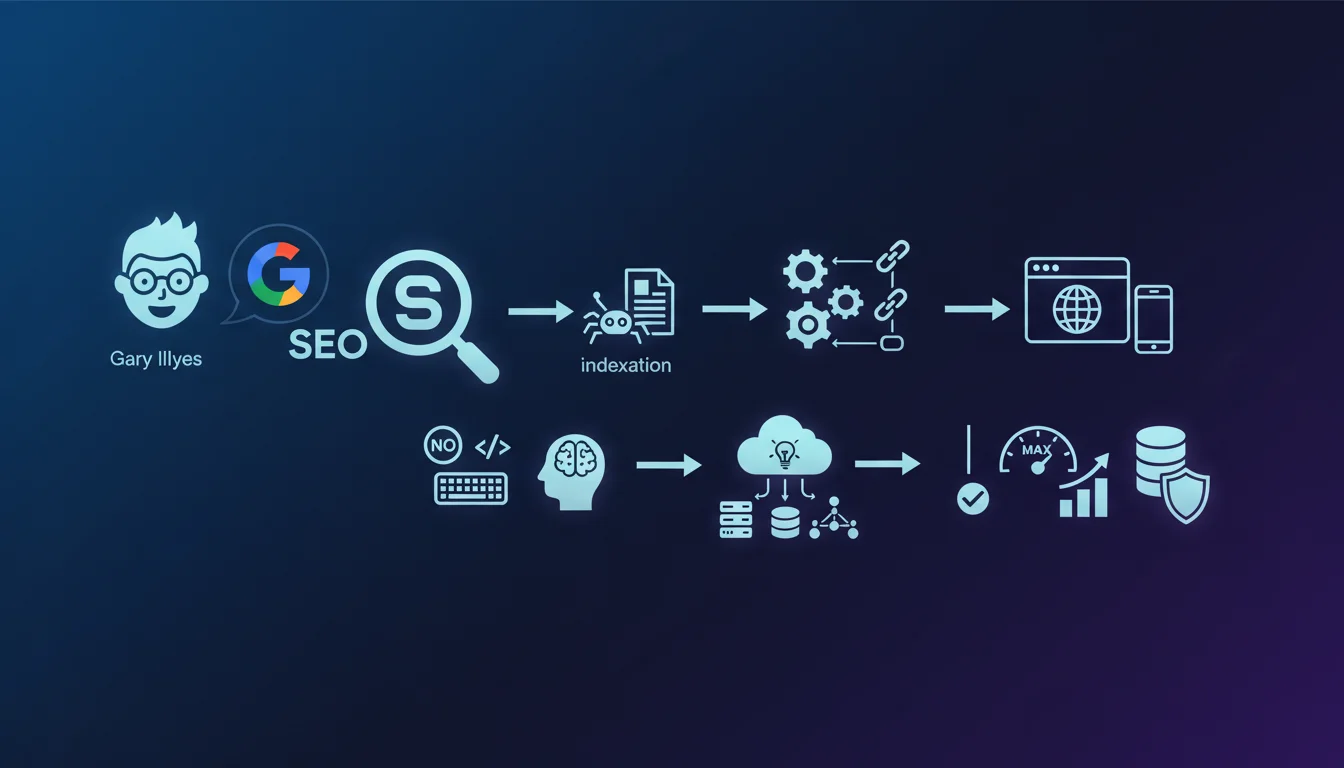
Official statement
One of the major points discussed by the two colleagues is the persistent divide between developers and SEOs, which is a source of tension and concrete errors, such as the example of a plugin that generated 100 million useless URLs. Hence the importance of better collaboration to avoid problems related to crawling or indexing.
What you need to understand
Google states that it is not mandatory to master programming to effectively work in the SEO profession. This statement aims to demystify a widespread belief that SEO would be reserved for technical profiles.
However, the nuance is crucial: while coding is not required, understanding the technical functioning of the web remains essential. Google's teams emphasize the need to master fundamental concepts that directly impact crawling and indexing.
The level of technical expertise varies considerably depending on your SEO specialization: a content manager won't have the same needs as an expert in technical migrations or international SEO. This diversity of profiles enriches the discipline.
- Essential concepts to master: HTTP headers, HTTPS, HTTP/1.1 vs HTTP/2 differences, JavaScript's impact on rendering
- Developer-SEO collaboration: a persistent divide causing major errors (example: 100 million useless URLs generated)
- Profile adaptation: the required technical level depends on your area of SEO expertise
- Error prevention: better technical understanding prevents crawling and indexing issues
SEO Expert opinion
This position from Google perfectly reflects the reality on the ground in 2024. Modern SEO has become a multifaceted discipline where very diverse profiles coexist: content strategists, data analysts, technical experts, linking specialists.
Nevertheless, I regularly observe that SEOs with solid technical foundations possess an undeniable competitive advantage. They identify problems more quickly, communicate effectively with technical teams, and anticipate the impacts of modifications. The example of 100 million parasitic URLs perfectly illustrates the consequences of a lack of technical dialogue.
The developer-SEO divide mentioned is real and costly. It often stems from a lack of common language and mutual understanding of constraints. The best results I've observed come from teams where SEOs understand the technical implications and where developers integrate visibility challenges.
Practical impact and recommendations
- Train yourself on essential HTTP concepts: status codes (301, 302, 404, 500), HTTP headers (Cache-Control, X-Robots-Tag), differences between HTTP/1.1 and HTTP/2
- Master the basics of HTTPS: SSL certificates, HTTP to HTTPS redirects, mixed content, ranking impact
- Understand JavaScript's impact: difference between server-side and client-side rendering, hydration, lazy-loading, testing tools (Search Console, Mobile-Friendly Test)
- Learn to read server logs: identifying Googlebot crawls, detecting crawl budget issues, analyzing crawl patterns
- Familiarize yourself with developer tools: Chrome DevTools (Network, Console tabs), Googlebot simulators, HTML validators
- Build bridges with developers: participate in technical meetings, document your requests precisely, create SEO guidelines for developments
- Audit plugins and extensions: verify they don't generate useless URLs, duplicate content, or performance issues
- Implement validation processes: SEO checklist before each deployment, staging environment testing, post-migration monitoring
- Invest in continuous training: web technologies evolve rapidly (Core Web Vitals, HTTP/3, new robots.txt directives)
These technical optimizations require specialized expertise and constant monitoring of web standards evolution and Google recommendations. Implementing a solid technical strategy, particularly during migrations or redesigns, requires fine coordination between multiple professions.
For companies with limited internal resources or facing complex technical challenges, surrounding yourself with external experts can prove decisive. A specialized SEO agency provides not only in-depth technical expertise, but also experience from multiple contexts and the ability to communicate effectively with your development teams to ensure lasting results.
💬 Comments (0)
Be the first to comment.