
Official statement
What you need to understand
What's the Difference Between the Lang Attribute and the Hreflang Attribute?
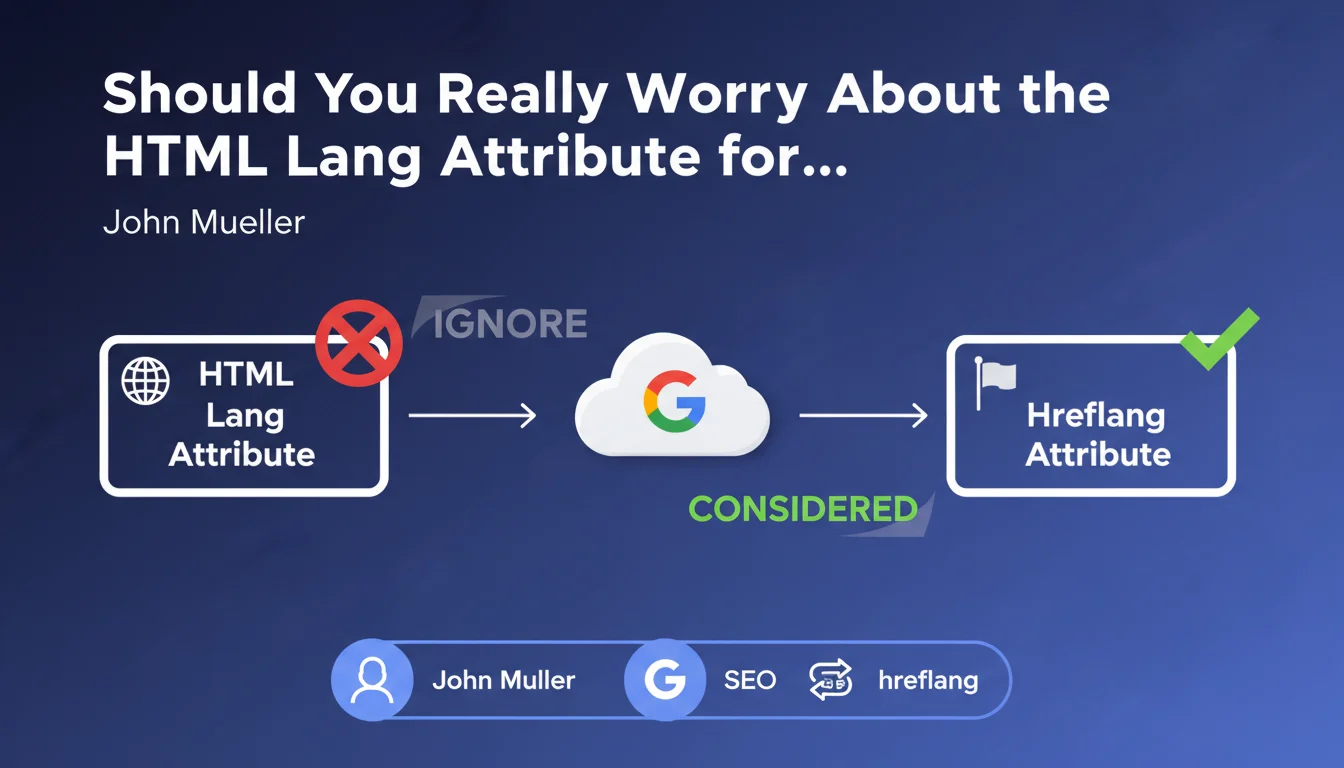
The HTML lang attribute is a tag element that indicates the primary language of a page's content (for example <html lang="en">). It's a web standard aimed at improving accessibility and user experience.
The hreflang attribute, on the other hand, is an annotation specifically designed for search engines. It allows you to indicate alternative language versions of the same page and helps Google serve the right version to the right geographic or linguistic audience.
Why Does Google Ignore the Lang Attribute for Its Search Engine?
Google has developed its own automatic language detection algorithms that directly analyze the textual content of pages. These systems are sophisticated enough to identify the language without needing the lang attribute.
The company prefers to rely on signals dedicated to international SEO like hreflang, which provides more precise information about the relationships between different language versions of a site. This also avoids the frequent declaration errors that occur with the lang attribute.
What Are the Key Takeaways from This Statement?
- The lang attribute doesn't influence ranking in Google or geographic targeting
- Google automatically detects the content language through algorithmic analysis
- Only the hreflang attribute allows proper management of international SEO
- The lang attribute remains useful for accessibility and voice synthesis, but not for SEO
- Don't confuse web standards (lang) with SEO signals (hreflang)
SEO Expert opinion
Is This Statement Consistent with Real-World Observations?
Absolutely. The practical tests I've conducted on hundreds of multilingual sites confirm that the lang attribute alone has no impact on ranking or language targeting in Google. I've observed sites without a lang attribute ranking well and others with a correctly implemented lang but experiencing international targeting problems.
On the other hand, proper implementation of hreflang consistently solves cannibalization issues between language versions. It's clearly the signal that Google prioritizes in its search results to serve the right version to the right users.
Should You Completely Ignore the Lang Attribute in Your Code?
No, that would be a misinterpretation. The lang attribute remains important for web accessibility (WCAG) and improves user experience with screen readers and browsers. It also helps automatic translation tools and certain CSS features.
My recommendation: implement the lang attribute to comply with web standards and accessibility, but never rely on it for your international SEO strategy. It's a good development practice, not a ranking lever.
In What Cases Could This Rule Change?
It's unlikely that Google will change its position on this point. The company has invested heavily in natural language processing technologies (like BERT and MUM) that make the lang attribute redundant for their needs.
However, other search engines like Bing or Yandex might have different approaches. For a multi-channel SEO strategy, it therefore remains relevant to maintain the lang attribute, while knowing that its impact on Google is zero.
Practical impact and recommendations
What Should You Actually Do on Your Multilingual Site?
Prioritize hreflang implementation if you manage a site available in multiple languages or for multiple countries. That's where your SEO energy should be focused for international search optimization.
Maintain the lang attribute in your HTML code for accessibility and technical quality reasons, but don't consider it as a ranking factor. Simply ensure that the value matches the content language.
- Verify that each page has a properly configured hreflang attribute
- Ensure that the language codes used in hreflang comply with the ISO 639-1 standard
- Create a bidirectional reference page between all language versions
- Include an x-default reference for users outside geographic targets
- Test the implementation with Search Console (international targeting report)
- Keep the lang attribute for accessibility but don't dedicate SEO time to it
What Mistakes Should You Avoid in Your International SEO Strategy?
The most common mistake is confusing the two attributes and thinking that the lang attribute is sufficient for international SEO. This leads to situations where Google serves the wrong language version to users.
Another pitfall: poorly implementing hreflang (incorrect codes, non-reciprocal references, missing self-reference). These errors create cannibalization problems between language versions that can seriously impact organic traffic.
Also avoid neglecting alternative tags like canonical tags, which should point to the correct language version, not to a single version for all languages.
How Can You Audit and Optimize Your Multilingual Site Effectively?
Use Google Search Console to identify hreflang errors in the dedicated report. This tool will show you pages with international targeting issues and configuration errors.
Conduct geolocation tests using VPNs or tools like "International Targeting" to verify that Google is indeed serving the right version based on location. Also monitor performance by country in your analytics.
- Audit the consistency between hreflang declarations and the actual site structure
- Check for absence of redirect chains between language versions
- Ensure that translated content is unique and not duplicated
- Verify that canonical tags point to the correct language version
- Monitor impressions by country in Search Console
💬 Comments (0)
Be the first to comment.