
Official statement
What you need to understand
The question of the ratio between follow and nofollow links has long fueled debates within the SEO community. Some practitioners believed that a link profile that was "too clean" with only follow links could appear suspicious in Google's eyes.
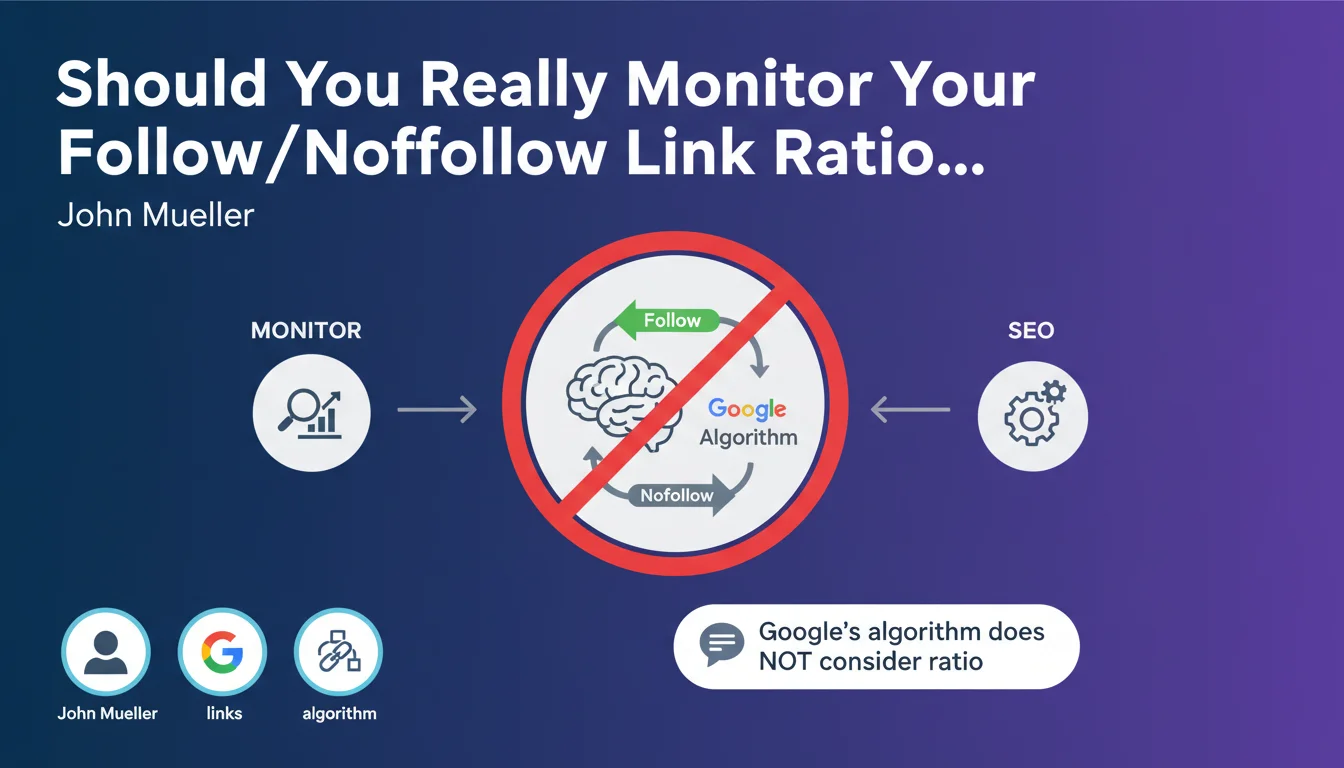
Google, through John Mueller, definitively clarifies this point: the algorithm does not calculate any ratio between these two types of links. There is no ideal percentage to respect, nor any typical profile considered "natural" by the search engine.
This statement puts an end to several persistent myths in the industry, notably the idea that you should "dilute" your follow links with nofollows to appear natural, or that a certain magic percentage would guarantee better performance.
- Google's algorithm does not measure a follow/nofollow ratio
- There is no "ideal" link profile based on these proportions
- Practices aimed at manipulating this ratio are pointless
- The value of a link depends on other far more important factors
SEO Expert opinion
This statement is perfectly consistent with what we have observed in the field for years. The sites that perform best in SEO have never shown any particular correlation with a specific follow/nofollow link ratio.
This confirms that Google focuses on far more sophisticated quality signals: the thematic relevance of links, the actual authority of referring sites, the editorial context, and the intent behind the link. The simple technical follow/nofollow attribute is just one indicator among others.
However, this clarification frees SEO professionals from a superfluous concern. The energy devoted to calculating and optimizing these ratios can now be invested in truly impactful activities.
Practical impact and recommendations
- Stop calculating or monitoring the follow/nofollow ratio of your backlinks
- Do not artificially manipulate this ratio by adding nofollows "to look natural"
- Use nofollow only when it is relevant: sponsored links, unmoderated UGC, unreliable sources
- Focus on quality: thematic relevance, authority of the source site, editorial context
- Prioritize natural editorial partnerships rather than artificial technical strategies
- Invest your time in acquiring links from sources that are truly relevant to your audience
- Refocus your KPIs: measure the quality of referring domains, not technical ratios
- Simplify your approach: a link useful to your users will generally be good for your SEO
Building a robust and sustainable link profile requires a comprehensive strategic approach that goes far beyond purely technical aspects. This expertise demands constant monitoring of algorithmic developments, a deep understanding of the quality signals valued by Google, and the ability to deploy coherent acquisition campaigns over the long term. For companies looking to structure a truly high-performing link building strategy, support from a specialized SEO agency provides access to proven methodology and helps avoid costly mistakes, by focusing on what genuinely generates measurable results.
💬 Comments (0)
Be the first to comment.