
Official statement
What you need to understand
What exactly is Dynamic Rendering and why this update now?
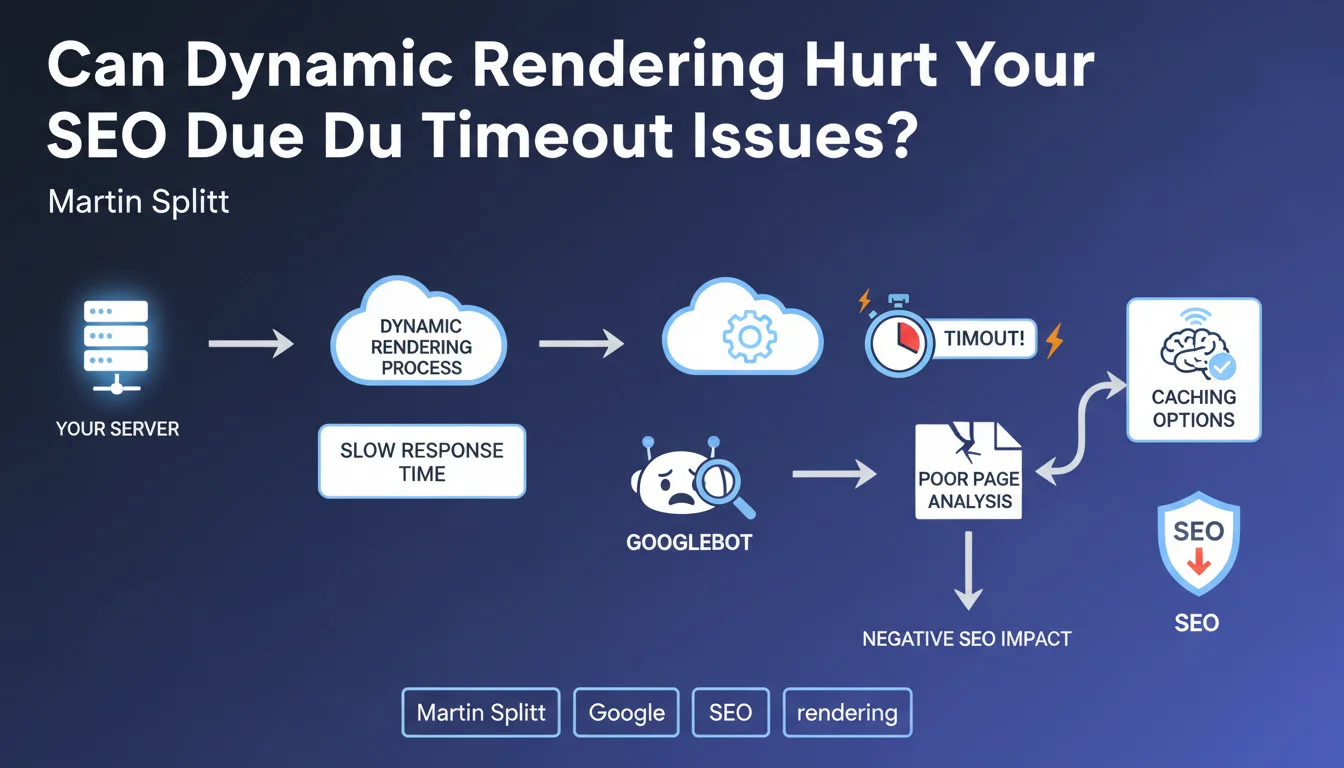
Dynamic Rendering is a technique that involves serving pre-rendered static content to crawlers (like Googlebot) while maintaining a full JavaScript version for users. This approach has long been considered an acceptable compromise for JavaScript-rich sites.
Google is now clarifying its position: this solution is merely a temporary workaround and not a recommended long-term architecture. The company is encouraging developers to favor more sustainable native solutions.
Why is Google discouraging this approach now?
The evolution of Googlebot's capabilities to process JavaScript is making Dynamic Rendering less and less necessary. The search engine can now efficiently index client-side generated content in most cases.
Maintaining two distinct versions of a site also creates technical debt and risks of divergence between what users and search engines see, which could be interpreted as unintentional cloaking.
- Googlebot handles JavaScript better than before, reducing the need for workarounds
- Dynamic Rendering generates technical complexity and high maintenance costs
- Risk of desynchronization between user and bot versions
- Google favors server-side rendering (SSR) or static site generation (SSG)
What are the alternatives Google recommends?
Google is clearly steering toward modern architecture solutions: Server-Side Rendering (SSR), Static Site Generation (SSG), or a hybrid approach. These methods generate complete HTML directly from the server.
Modern frameworks like Next.js, Nuxt.js, or Angular Universal facilitate these implementations. The goal is to send directly exploitable content without depending on an intermediate dynamic rendering layer.
SEO Expert opinion
Is this statement consistent with practices observed in the field?
Absolutely. Since 2019-2020, we've observed constant improvement in JavaScript processing by Googlebot. Tests show that well-designed pure JavaScript sites index correctly, even without Dynamic Rendering.
However, field reality reveals important nuances. Very heavy sites with complex dependencies or long loading times still encounter indexing problems. Dynamic Rendering sometimes remains the only viable short-term option for certain legacy projects.
In what cases is Dynamic Rendering still temporarily justified?
For complex monolithic applications developed in React, Vue, or Angular without SSR, a complete overhaul can require 6 to 18 months. Dynamic Rendering allows you to maintain visibility during this transition.
Sites with heavy technical constraints (legacy systems, infrastructure limitations, tight budgets) may also justify its temporary maintenance. The key is to have a clear migration plan.
What real risks do you face by keeping Dynamic Rendering?
The main risk isn't an immediate penalty from Google, but progressive obsolescence. Google could eventually consider this technique as cloaking if the versions diverge too much.
More concretely, you accumulate growing technical debt: high maintenance costs, difficulty recruiting developers familiar with this approach, and potentially degraded performance compared to modern solutions.
Practical impact and recommendations
What should you do concretely if your site uses Dynamic Rendering?
Start with a complete technical audit to assess the feasibility of migrating to SSR, SSG, or a hybrid solution. Test current indexing of your JavaScript content without Dynamic Rendering on non-critical pages.
Establish a progressive migration plan over 6 to 18 months depending on your site's complexity. Prioritize critical sections for SEO (category pages, product pages, strategic landing pages).
- Conduct a JavaScript indexation audit via Search Console and rendering tests
- Evaluate modern frameworks compatible with your technical stack (Next.js, Nuxt, etc.)
- Test SSR/SSG on a subset of non-critical pages first
- Measure impact on Core Web Vitals and crawl metrics
- Train development teams on new architectures
- Document behavioral differences between old and new versions
What mistakes should you avoid during the transition?
Never remove Dynamic Rendering without prior validation that Googlebot correctly indexes your JavaScript content. Use the URL Inspection tool in Search Console to verify actual rendering.
Also avoid migrating your entire site at once. A progressive section-by-section approach allows you to identify and correct issues without impacting your overall organic visibility.
How can you verify that your new architecture is SEO-friendly?
Use tools like Screaming Frog in JavaScript mode, Oncrawl, or Botify to compare visible content with and without JS enabled. Critical content must be identical in both cases.
Monitor your Search Console metrics for at least 3 months post-migration: indexation rate, crawl time, page coverage, and ranking performance. Any significant deviation requires immediate investigation.
💬 Comments (0)
Be the first to comment.