
Official statement
What you need to understand
This statement from Google clarifies a frequent confusion among SEO practitioners: publishing the same content (or minor variations) across multiple different sites is not an effective strategy, even when you own all these sites and therefore there is no plagiarism in the legal sense.
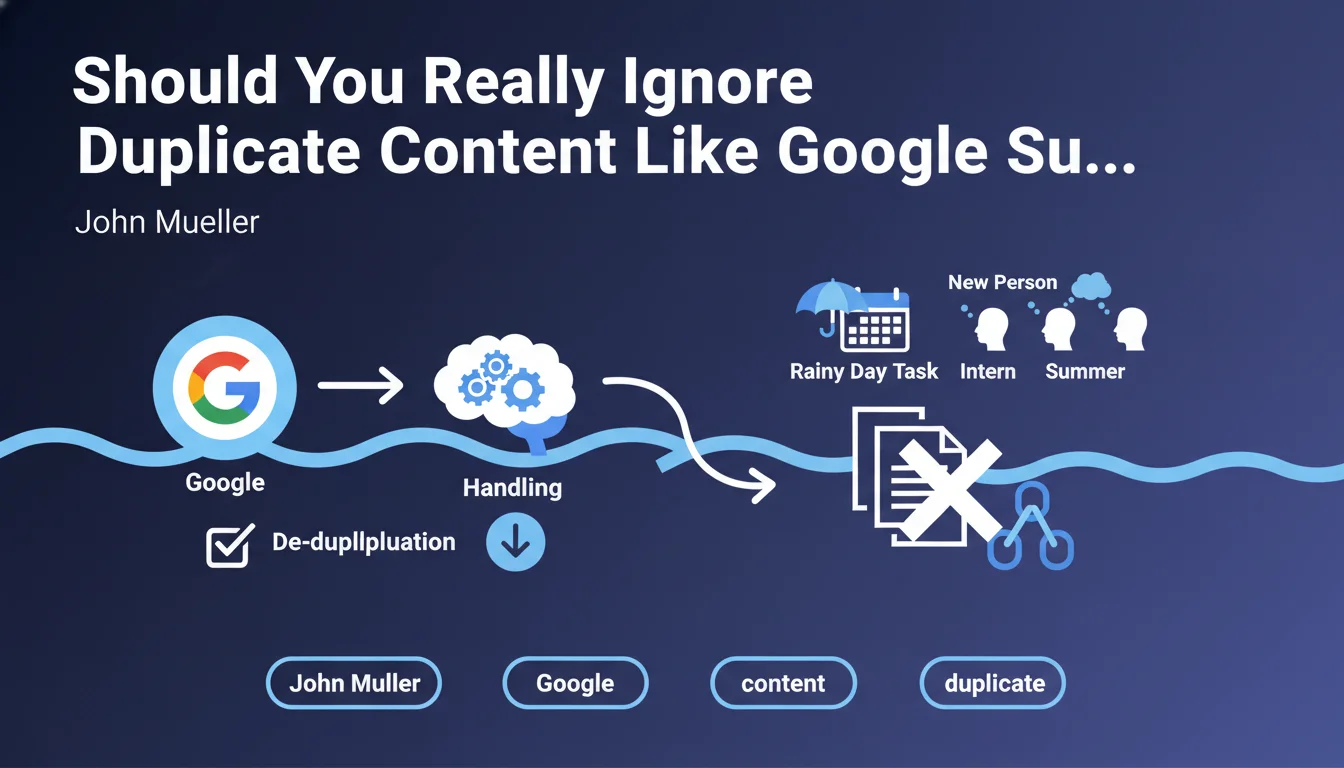
Google distinguishes here between two distinct situations. On one hand, cross-site duplication (same content on multiple domains) which is simply ineffective: search engines will only display one version in the results, thus diluting your efforts. On the other hand, massive creation of nearly identical pages on the same site which can be considered an attempt at manipulation and lead to manual penalties.
Essential points to remember:
- Duplicate content does not trigger an automatic penalty, but rather invisibility through filtering
- Modifying a few words of an existing article adds no value in Google's eyes
- The optimal strategy consists of creating unique and relevant content for each platform
- Excessive multiplication of similar pages on the same site can trigger manual actions
- A consolidated article covering multiple variations is preferable to multiple nearly identical pages
SEO Expert opinion
This position is perfectly consistent with what we've observed in the field for years. Content duplication is primarily an efficiency problem rather than a penalty risk. In practice, Google applies a deduplication filter: when multiple pages present identical or very similar content, only one version will be indexed and displayed in the results. The others will simply be ignored, which represents a considerable waste of resources and crawl budget.
However, there are important nuances. Some types of duplication are legitimate and necessary: e-commerce product sheets using manufacturer descriptions, content syndications with appropriate canonical tags, or AMP/mobile versions of desktop pages. In these cases, correct use of canonical tags, hreflang or other technical signals allows managing the situation without negative impact.
Practical impact and recommendations
Recommended actions following this statement:
- Audit your sites to identify duplicate or near-duplicate content across your different web properties
- Consolidate similar content into a single comprehensive and in-depth article rather than maintaining multiple versions
- If you must republish content elsewhere, substantially rewrite it (at least 60-70% modifications) and provide specific added value
- Use the canonical tag to indicate the original version if you absolutely must duplicate content
- Avoid creating multiple pages targeting minor keyword variations without real content differentiation
- Favor a "pillar content" approach: one comprehensive article covering a topic in its entirety rather than 10 superficial articles
- Verify that your sitemap only contains unique canonical URLs
- Regularly monitor Search Console to detect duplication issues flagged by Google
💬 Comments (0)
Be the first to comment.