
Official statement
What you need to understand
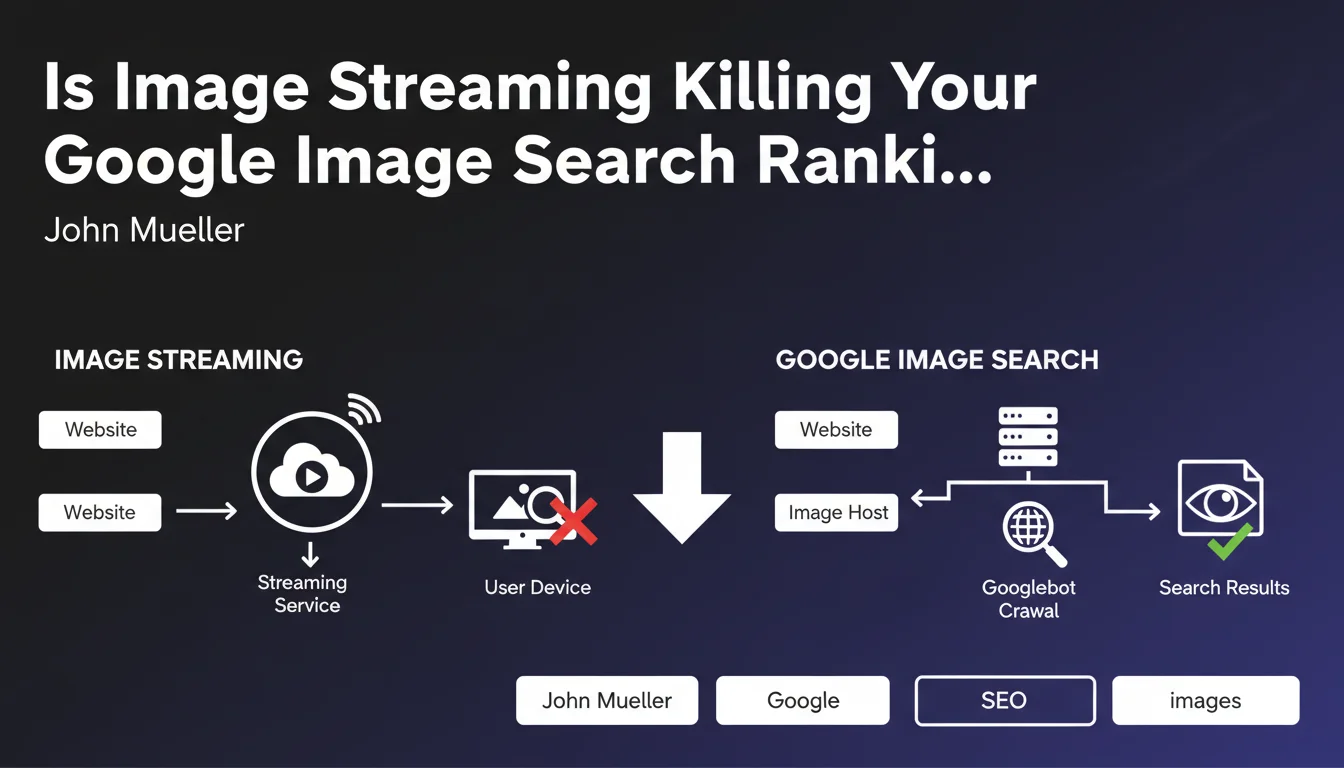
Image streaming refers to a display technique where images are not directly embedded in the HTML code of the page, but rather loaded dynamically via streams similar to YouTube video embedding. This approach may seem technically elegant, but it poses serious problems for search engine optimization.
Unlike traditional images implemented with the standard <img> tag, image streaming typically uses technologies such as iframes, aggressive lazy loading, or third-party services that hide the actual visual content from indexing bots. Google cannot crawl these images in the same way as a conventional image.
John Mueller's statement is unequivocal: this technique constitutes a nearly insurmountable barrier to indexing in Google Images. Search engines need direct access to image files to analyze them, index them, and offer them in image search results.
- Image streaming hides content from Google crawlers
- Google Images cannot index what is not directly accessible
- This technique deprives your site of a major source of organic traffic
- Images often represent 20 to 40% of SEO traffic for e-commerce and visual sites
- Technical implementation takes priority over aesthetics for search engine optimization
SEO Expert opinion
This position from Google is perfectly consistent with what we have observed in the field for years. Sites that have migrated to image streaming solutions or misconfigured CDNs have systematically experienced a drastic drop in their traffic from Google Images, sometimes up to 80-90% decline.
However, there are some important nuances to add. Native HTML lazy loading (with the loading="lazy" attribute) is perfectly supported by Google and poses no indexing problems. Similarly, using a CDN to serve your images remains fully compatible, provided that the <img> tags remain present in the DOM and point to accessible URLs.
The real danger concerns solutions that completely replace the image with an iframe, JavaScript canvas, or proprietary player. These technologies create a layer of abstraction that Googlebot cannot effectively penetrate.
Practical impact and recommendations
- Audit immediately your current implementation: check in the source code that your images use standard <img> tags
- Absolutely avoid gallery or portfolio solutions that use iframes or streaming to display images
- Prioritize native HTML5 lazy loading (loading="lazy") rather than complex JavaScript libraries
- Test your images with the URL Inspection tool in Search Console to verify that Google can see them
- Systematically use alt, title attributes and ImageObject structured data to maximize indexing
- Ensure that your CDN does not block Googlebot and that image URLs remain crawlable
- Create a dedicated image sitemap to facilitate the discovery of your visuals by search engines
- Regularly monitor Google Images performance in Search Console (Performance tab, filter by search type)
- Migrate quickly if you are currently using a streaming solution: every day of delay represents lost traffic
Image streaming represents a major obstacle to the search engine optimization of your visual content. The solution is simple: return to standard implementations with accessible <img> tags.
For sites heavily dependent on image traffic (e-commerce, portfolios, media), a technical overhaul may be necessary. This migration requires a methodical approach to avoid losing traffic during the transition.
Image search engine optimization involves many interconnected technical aspects: structured markup, loading performance, accessibility, information architecture. Given the complexity of these issues and the risks of costly errors in terms of traffic, support from a specialized SEO agency helps secure this transition and implement a sustainable optimization strategy, particularly for sites where images constitute a major commercial lever.
💬 Comments (0)
Be the first to comment.