
Official statement
What you need to understand
The lastmod tag in an XML sitemap indicates to search engines the last modification date of a page. Its role is to help them prioritize the crawl of genuinely updated content.
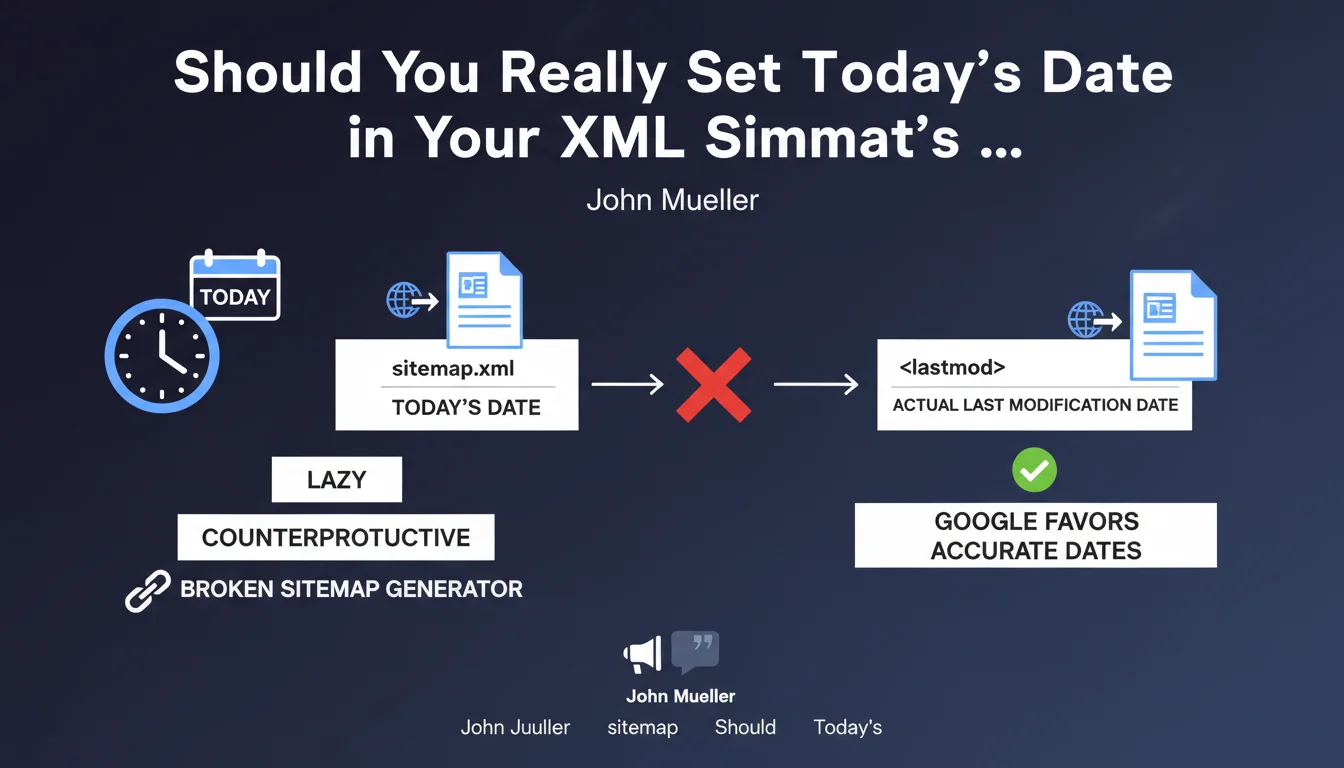
Google warns against a common practice: automatically configuring this tag so that it systematically displays the current date. This approach may seem logical to attract the robots' attention, but it produces the opposite effect by muddying freshness signals.
When all URLs in a sitemap display today's date, Google can no longer distinguish pages that have been actually modified from those that have remained unchanged. The search engine thus loses a valuable indicator for optimizing its crawl budget.
- The lastmod tag must reflect the actual modification date of the content
- Systematically displaying the current date is considered signal spam
- This practice makes it harder to identify priority pages to crawl
- It can result from a misconfigured sitemap generator or a deliberate attempt at manipulation
- Google easily detects this pattern and considers it counterproductive
SEO Expert opinion
This position from Google is perfectly consistent with what we've been observing for years in our technical audits. Sites that use fictitious dates in their sitemaps often see their crawl budget poorly allocated, with obsolete pages crawled just as frequently as fresh content.
However, there are legitimate edge cases: some CMS systems actually regenerate their pages with each request for technical reasons (cache, personalization). In these situations, it's better to completely omit the lastmod tag rather than put a misleading date in it.
The notion of "modification" must be thought of from the user's perspective: would a visitor consider this page to have evolved significantly? This is the criterion that should guide your implementation of the lastmod tag.
Practical impact and recommendations
- Immediately audit your current sitemap to verify that lastmod dates correspond to actual modifications
- Correct automatic generation if your CMS or plugin systematically assigns today's date
- Implement precise tracking of substantial modifications (not just minor updates like price changes)
- Define clear rules: which types of modifications justify a lastmod update (content overhaul, section additions, title/meta modifications...)
- Omit the lastmod tag rather than put a false date if you cannot precisely track modifications
- Check in Search Console whether Google reports problems or inconsistencies in your sitemaps
- Don't confuse technical last modification date (cache regeneration) with editorial content modification
- Document your logic for updating dates to ensure long-term consistency
The lastmod tag is a trust signal sent to Google. Honest and precise use improves crawl efficiency and the discovery of your new content.
Conversely, systematically updated dates destroy this signal and can harm your visibility in search results. Correct implementation requires a thorough understanding of your technical architecture.
These crawl and sitemap optimizations may require specific developments depending on your platform and technical constraints. If you find that your current configuration has these flaws or if you want to implement an optimal sitemap strategy, support from a specialized SEO agency can help you implement these best practices in a personalized way, adapted to your technical ecosystem and crawl objectives.
💬 Comments (0)
Be the first to comment.