
Official statement
What you need to understand
Why Doesn't Google Communicate About All Its Updates?
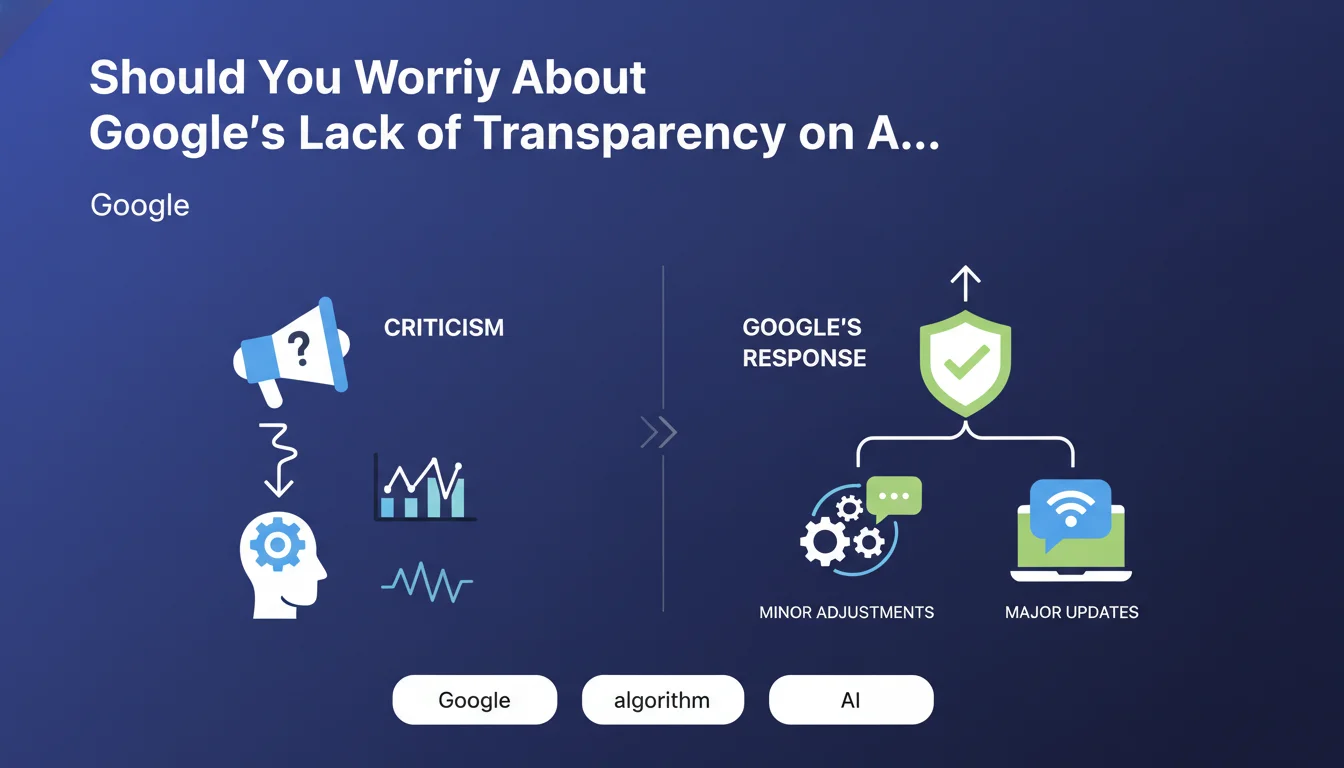
Google deploys approximately 5,000 updates to its algorithm each year. The majority are minor adjustments that affect very specific aspects of the search engine.
Communicating about each of these changes would be counterproductive and create information overload for webmasters. Google therefore favors a selective approach by only communicating about major updates likely to have a significant impact.
Which Updates Are Officially Announced by Google?
Google primarily communicates about Core Updates and important thematic updates such as those concerning spam, helpful content, or page experience.
These announcements typically come through the @searchliaison Twitter account, the Google Search Central blog, and communications from spokespeople like Danny Sullivan or John Mueller.
- 5,000 algorithm updates deployed by Google each year
- Only major updates are officially announced
- Minor adjustments generally have no visible impact on rankings
- Official channels remain the most reliable sources for information
- Complete transparency is technically impossible for Google to manage
How Can You Distinguish a Major Update from a Minor Adjustment?
A major update typically causes significant fluctuations in search results, visible over several days. Tracking tools like SEMrush or Sistrix then show increased volatility.
A minor adjustment, on the other hand, often goes unnoticed and only affects a limited number of queries or sites. These are micro-optimizations of the ranking system that are part of continuous improvement.
SEO Expert opinion
Is This Communication Policy Consistent with Observed Practices?
In reality, Google's communication remains selective and sometimes delayed. Important updates are sometimes confirmed several days after their deployment, when SEO professionals have already noticed movements.
This approach creates a certain frustration within the SEO community, as the lack of advance information makes it difficult to anticipate and explain traffic variations to clients. The principle is consistent, but the implementation remains imperfect.
What Important Nuances Should Be Added to This Statement?
Google fails to mention that certain unannounced updates sometimes have considerable impact. Significant movements regularly occur without official communication, leaving SEO professionals in uncertainty.
Moreover, the very definition of a "major update" remains subjective and evolving. What constitutes a minor change for Google can represent catastrophic traffic loss for certain niche sites.
In Which Cases Does This Justification Fall Short?
The argument of 5,000 annual updates doesn't justify the confirmation delays on Core Updates or important thematic updates. When Google deliberately rolls out a major update, it has the information in advance.
Transparency should also improve regarding recovery criteria after an algorithmic penalty. Legitimate webmasters need clear guidelines to correct their sites, not generalities.
Practical impact and recommendations
How Should You Adapt Your Monitoring Strategy Given This Lack of Transparency?
Set up a multi-source monitoring system that doesn't rely solely on Google's official announcements. Cross-reference data from different tools to identify patterns.
Follow the official accounts (@searchliaison, Google Search Central, John Mueller) but supplement with specialized SEO communities that often detect updates before their confirmation.
- Configure alerts on position tracking tools (SEMrush, Sistrix, Advanced Web Ranking)
- Monitor organic traffic variations in Google Analytics with segments by page type
- Join active SEO communities to benefit from collective intelligence
- Document all changes applied to your site to correlate with variations
- Establish a performance baseline to quickly identify anomalies
What Should You Actually Do When a Traffic Drop Occurs?
Don't panic immediately and wait 48 to 72 hours to confirm the trend. Temporary fluctuations are common and don't always signal an update.
Analyze your server logs to verify Googlebot's actual behavior. A drop in rankings isn't always correlated to an algorithm update: it can result from technical issues or increased competition.
Cross-reference your data with community detection tools like SEMrush Sensor, Mozcast, or Algoroo. If multiple sources confirm high volatility, an update is likely.
What Critical Mistakes Should You Absolutely Avoid?
Never make massive changes immediately after noticing a drop. You risk confusing correlation with causation and worsening the situation by modifying elements that were working well.
Also avoid overreacting to rumors circulating on forums and social media. Wait for confirmations from multiple reliable sources before adjusting your strategy.
💬 Comments (0)
Be the first to comment.